Migori Tobacco Farmers Demand Protective Gear as Health and Environmental Concerns Grow
“We spend a lot of money treating tobacco-related illnesses because these firms do not prioritise our safety,” said Lawrence Onyango, a tobacco farmer from Uriri Sub-county.
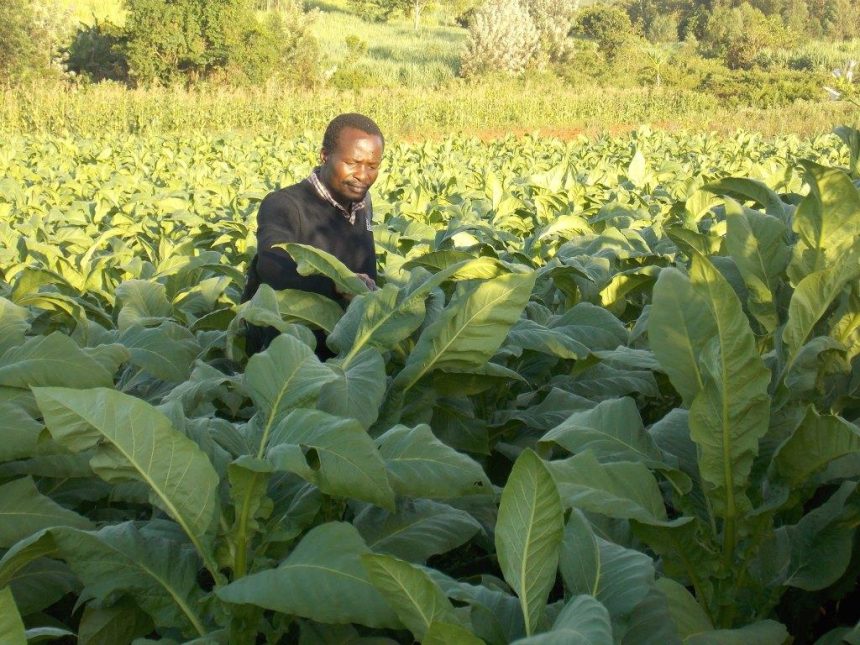
A tobacco farmer tends to his crop in Migori County. Farmers in the region are calling on tobacco companies to provide protective gear, citing growing concerns over health risks associated with tobacco cultivation and handling. Photo Courtesy: Kenya News Agency (KNA).
By Emmanuel Kipkoech
Tobacco farmers in Migori County have urged the government to compel tobacco companies to provide protective gear to growers working on tobacco farms.
The farmers argue that they remain vulnerable to serious health risks because many tobacco firms fail to supply essential safety equipment, including gloves, aprons, gumboots, and nose masks. Growers from Kuria, Suna West, and Uriri sub-counties said that more than 20,000 farmers would benefit if tobacco companies complied with existing regulations.
“We spend a lot of money treating tobacco-related illnesses because these firms do not prioritise our safety,” said Lawrence Onyango, a tobacco farmer from Uriri Sub-county.
Mr Onyango further called on the government to enforce regulations requiring all tobacco companies to provide farmers with the necessary protective equipment while handling tobacco crops.
Health experts warn that tobacco farmers face increased risks of lung infections, skin diseases, and chemical poisoning due to prolonged exposure to tobacco leaves and agricultural pesticides.
According to research by the World Health Organization, tobacco farming can expose workers to harmful nicotine and other toxic chemicals, posing significant health hazards.
However, tobacco companies have rejected claims that they are neglecting farmers’ welfare. A technician from British American Tobacco stated that contracted farmers are provided with protective gear on a credit basis.
“We provide the materials because they are necessary, although they are expensive,” the technician explained.
An official from Star Tobacco Company also defended the firm’s position, arguing that some farmers are reluctant to pay for the protective equipment supplied through credit arrangements.
Meanwhile, officials from the National Environment Management Authority (NEMA) and forestry offices have raised concerns over the environmental impact of tobacco farming in Migori County.
“The continued use of firewood to dry tobacco leaves is destroying forests and drying up rivers,” one officer said.
The officials warned that tobacco curing practices are contributing to deforestation and environmental degradation, threatening the region’s natural resources.
About Author