Singapore Increases Economic Growth Prediction Because Of Rising Artificial Intelligence Demand
Singapore relies on trade to drive its economy while sustaining exposure to global economic slowdown risks.
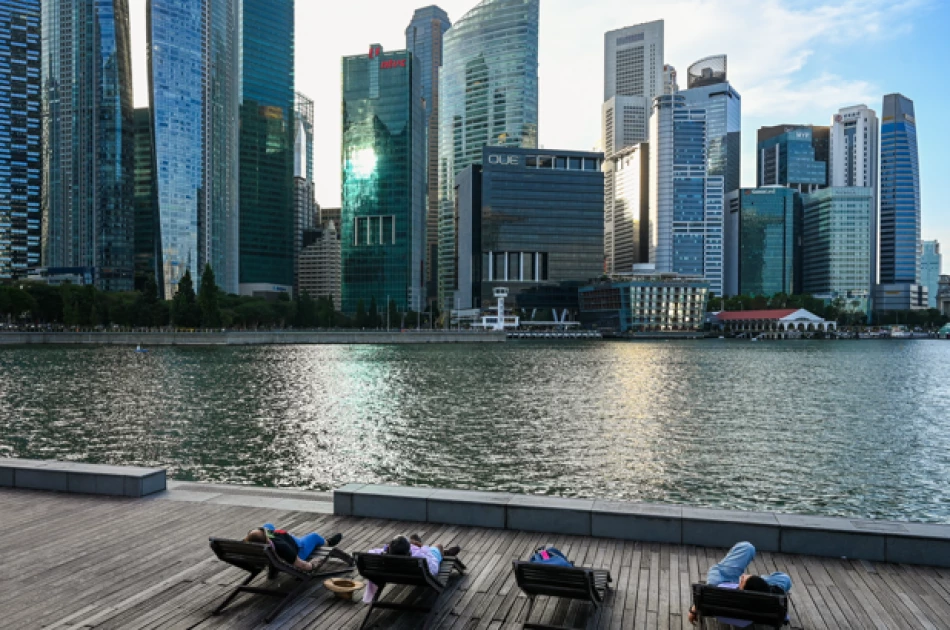
People relax on beach chairs along the boardwalk during sunset at Marina Bay in Singapore on February 9, 2026. (Photo by Roslan RAHMAN / AFP)
By Ruth sang
Singapore has raised its 2026 economic growth prediction because of strong demand for artificial intelligence (AI) products and ongoing global trade recovery from US tariff restrictions which former president Donald Trump implemented.
The Ministry of Trade and Industry announced in a Tuesday statement that the economy will grow at 2.0 to 4.0 percent rate for 2026 which exceeds the previous estimate of 1.0 to 3.0 percent growth.
The economy grew by 5.0 percent in 2025 which exceeds the previous estimation and leads to the current increase because of strong final quarter growth.
The global economy performed better than expected according to the ministry because most major economies achieved stronger-than-expected growth during the fourth quarter of 2025. It will maintain its current progress into the next year.
US tariff measures failed to disrupt global trade because effective tariff rates turned out to be lower than the original announcement. Officials explained that trade diversion occurred as countries changed their supply chains and that strong AI-related export growth from increased investment helped maintain global economic activity.
Singapore, which serves as a major center for advanced electronics manufacturing, has gained from higher semiconductor and memory chip and server component production, which AI-powered data centers require. The country has attracted AI software and infrastructure investments because its regional financial and digital center status enables it to function as a financial and digital center.
The ministry reported that upcoming quarter growth will have support from AI investment which will continue into 2026 combined with US and Germany and Japan expansionary fiscal policies and global financial conditions that support economic growth.
The ministry predicted that most major economies would see their economic growth decrease from 2025 levels. Non-AI-related global trade will decline because US tariffs and rising trade barriers will create their full impact throughout this year.
Singapore relies on trade to drive its economy while sustaining exposure to global economic slowdown risks.
About Author