Cleft Palate Stole Lucy Chesegut’s Childhood, but Hope Is Finally Within Reach
Doctors advised her parents to return later for a second operation to repair the cleft palate once she had healed. However, that surgery never took place.
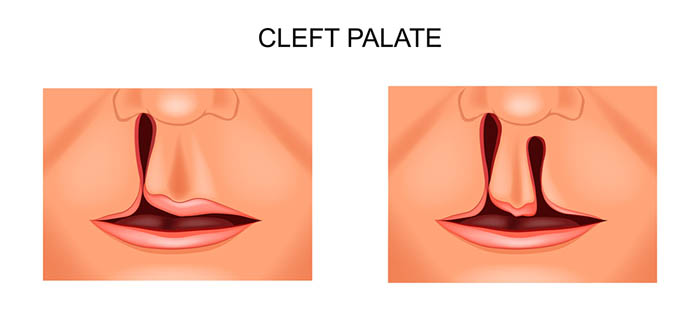
Images showing Cleft lip and palate condition. Photot/Courtesy.
By Linda Olendo
For most 19-year-olds, life is filled with plans for higher education, careers and the future. For Lucy Chesegut, a young woman from Mt Elgon in Bungoma County, the past two decades have been defined by a struggle that began at birth and changed the course of her life.
Born with a cleft lip and palate, Lucy spent much of her childhood battling feeding difficulties, social isolation and stigma. What could have been corrected through early medical intervention instead became a condition that interrupted her education, shattered her confidence and denied her the opportunity to pursue her dream of becoming a teacher.
Today, Lucy works as a house manager in Kimilili, carrying the weight of a childhood marked by rejection and misunderstanding.
“Once the cleft palate has been repaired, I have been told I will be able to eat without fear of choking, and a speech therapist will help me improve my speech,” she says with optimism.
Lucy was born in Milimani village in Mt Elgon as the fifth child in a family of nine. Unlike her siblings, she was born with an opening in her upper lip and another in the roof of her mouth, making feeding difficult from the moment she entered the world.
Even now, she struggles to eat certain foods. Food particles often pass through her nose due to the opening in her palate, creating discomfort and increasing the risk of choking.
For the first two years of her life, Lucy lived without treatment. Her family lacked access to specialized healthcare, while limited information and financial constraints made it difficult to seek help.
The physical challenges were compounded by stigma from members of the community.
Some neighbours believed she was cursed. Others feared she would spread illness to their children. The misconceptions left Lucy isolated during her formative years.
“I spent most of my time indoors playing alone because I wanted to avoid the judgmental looks from people in the village,” she recalls.
When she was two years old, a medical camp in Bungoma County offered her family a glimmer of hope. Surgeons successfully repaired her cleft lip, significantly improving her appearance.
Doctors advised her parents to return later for a second operation to repair the cleft palate once she had healed. However, that surgery never took place.
“I never got the palate surgery because my parents thought I was already healed after my lip was repaired,” Lucy says.
Although her appearance improved, the speech and feeding challenges remained.
At the age of five, she enrolled in a local primary school. Instead of finding acceptance, she encountered ridicule from classmates who mocked the way she spoke.
Some laughed whenever she answered questions in class. Others subjected her to cruel remarks that gradually eroded her self-esteem.
The bullying became so severe that her mother eventually withdrew her from school.
“My mother was heartbroken seeing what I was going through. One day, as I prepared for school, she told me to remove my uniform and stay at home,” Lucy recalls.
That decision brought her education to an abrupt end.
While her siblings continued their studies, Lucy remained at home helping with household chores. The dream of becoming a primary school teacher slowly faded away.
At 17, she began working as a house manager, believing that the condition she had lived with for so long would never be corrected.
Her life took a new turn during a church service when a doctor noticed her condition and referred her to Inter-Christian Fellowships Evangelical Missions (IcFEM) Mission Hospital in Bungoma County.
The doctor informed her that treatment would be provided free of charge and that transportation expenses would be covered.
For the first time in years, Lucy felt hopeful.
Medical experts say cleft lip and palate occur when tissues of the lip or mouth fail to fuse properly during pregnancy. The condition can affect feeding, speech, hearing and dental development if left untreated.
According to global health organizations, hundreds of thousands of children are born with cleft conditions each year. While surgery can significantly improve outcomes, many families in low-income communities face barriers such as limited access to healthcare facilities, a shortage of specialists and the cost of treatment.
Healthcare workers at IcFEM Mission Hospital say children born with cleft palate often experience feeding difficulties because food and liquids can pass through openings in the mouth and nose.
Nutritionist Miriam Musasizi explains that proper feeding techniques are essential to reduce the risk of choking and infections.
She notes that caregivers should be trained on specialized feeding positions that help food move safely through the digestive tract.
The shortage of speech therapists in many parts of Kenya also remains a challenge, leaving numerous patients without the support needed to fully recover after surgery.
Health experts are calling for stronger community follow-up programmes to identify children who missed treatment and connect them with care before complications affect their education and social development.
As Lucy prepares for the surgery she has waited nearly two decades to receive, she remains hopeful about the future.
She dreams of speaking clearly, eating comfortably and regaining the confidence that years of stigma took away.
For 19 years, a cleft palate shaped nearly every aspect of her life. Now, she is looking ahead to a future that once seemed impossible, determined to reclaim opportunities that were denied to her for far too long.
About Author