Sickle Cell Disease Kenya: Calls Grow for Affordable Treatment, Screening and Better Healthcare Access
“Blood donation is an act that can save lives. Young people have an important role to play in supporting patients who depend on blood transfusions,” RVTTI Principal Loice Kutto
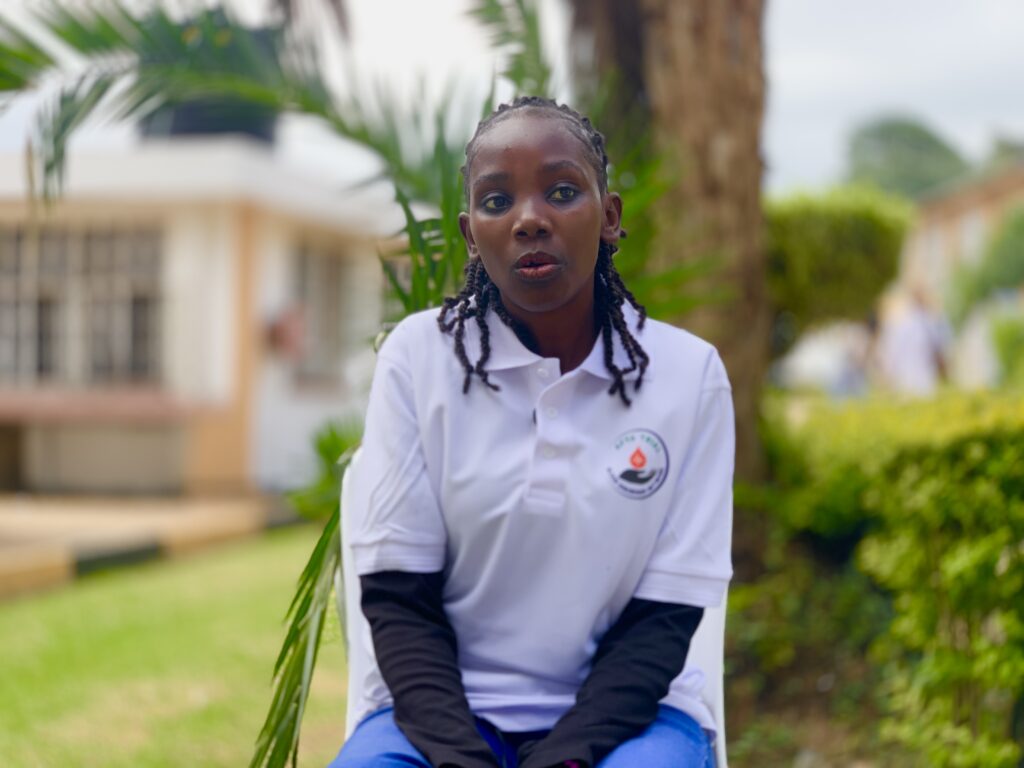
Sickle cell patient Clarice Ooro addresses journalists during World Sickle Cell Day commemorations in Uasin Gishu, sharing her journey and calling for expanded healthcare support, affordable medication, and better access to outpatient care for patients living with the condition. Photo by James Gitaka
By James Gitaka
For 35-year-old Clarice Ooro, living with sickle cell disease has meant navigating a lifetime of hospital visits, medication costs, and persistent misconceptions about a condition that affects thousands of Kenyan families.
Yet despite the challenges, the mother of two stands as living proof against one of the most enduring myths surrounding the disease — that people living with sickle cell rarely survive into adulthood or have children.
Speaking during World Sickle Cell Day commemorations in Uasin Gishu County, Ooro joined healthcare professionals and advocates in calling on the Ministry of Health to expand coverage for sickle cell patients under Kenya’s Social Health Authority (SHA), arguing that many families continue to shoulder significant outpatient treatment costs.
“Many patients are still struggling to afford essential medicines and routine care,” Ooro said. “Expanding coverage for drugs and outpatient services would greatly reduce the financial burden on affected families.”
Her appeal comes amid growing efforts by Kenya’s health sector to improve diagnosis, treatment, and long-term care for people living with the inherited blood disorder.
According to Dr. Alex Gachoya, a medical officer with the Academic Model Providing Access to Healthcare (AMPATH), the introduction of SHA has improved access to inpatient care for sickle cell patients. However, he noted that outpatient services — including medications, regular clinical reviews, laboratory monitoring, and preventive treatment — remain inadequately covered.
“We have seen progress in inpatient coverage, but there is still a need to strengthen outpatient support for patients living with sickle cell disease,” Dr. Gachoya said.
The call highlights a broader challenge facing healthcare systems across sub-Saharan Africa, where sickle cell disease remains one of the most common inherited blood disorders and a major contributor to childhood illness and mortality.
According to the World Health Organization (WHO), an estimated 7.74 million people worldwide were living with sickle cell disease in 2021, while approximately 515,000 babies were born with the condition that year. Nearly 80 percent of cases occur in sub-Saharan Africa. The disease contributed to more than 81,000 deaths among children under five globally in 2021.
In Kenya, health officials estimate that roughly 14,000 children are born with sickle cell disease every year, making it a significant public health concern. Without early diagnosis and comprehensive treatment, many affected children face severe complications, including infections, stroke, organ damage, chronic pain crises, and premature death.
To address the burden, the Ministry of Health has begun piloting infant screening programs in counties with the highest prevalence of the disease.
Dr. Gachoya revealed that the government has identified 17 high-burden counties for targeted interventions. Of these, 12 are located in Western Kenya, four along the Coast region, and Nairobi County.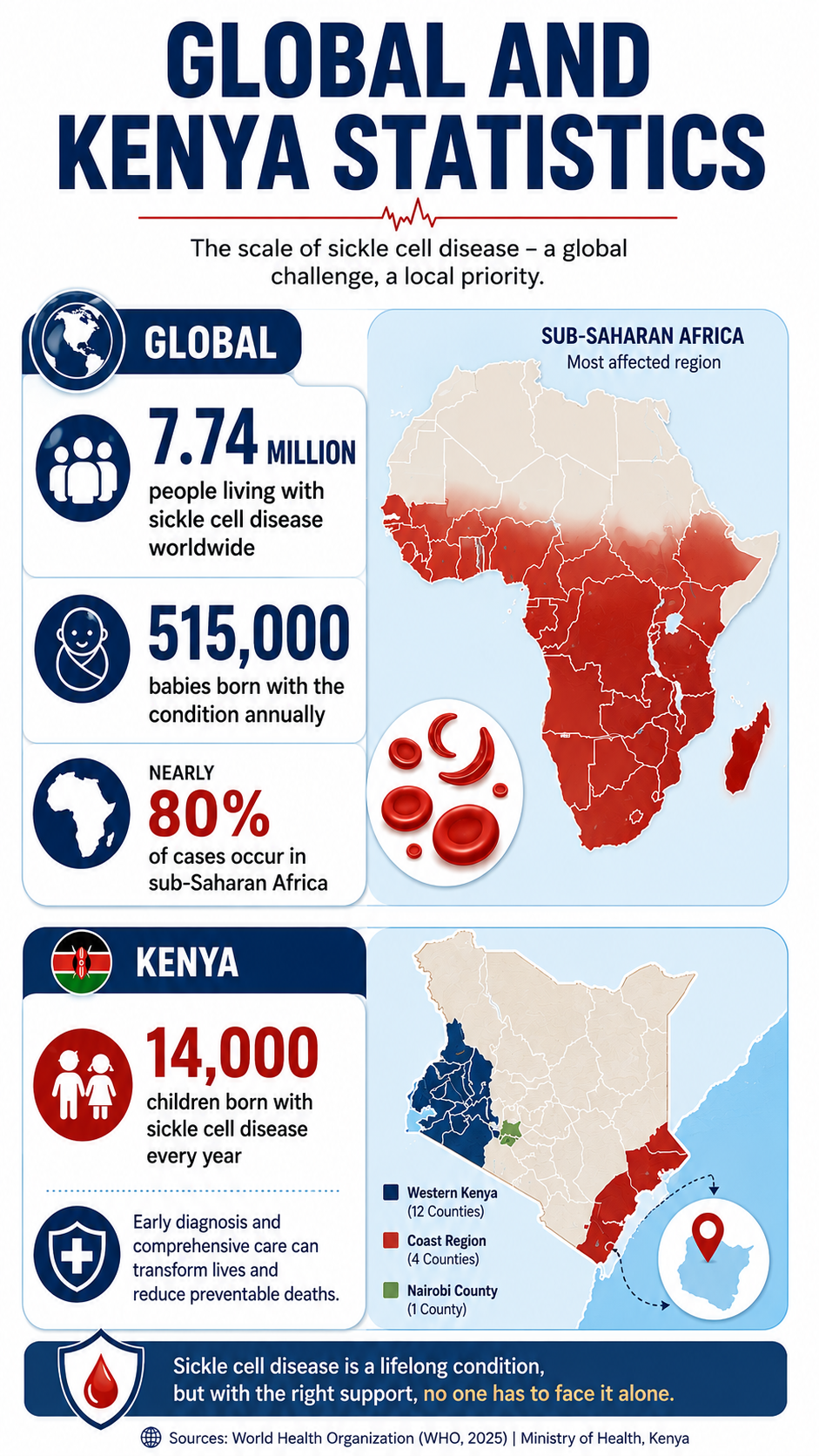
The initiative aims to ensure children born with sickle cell disease are diagnosed early and linked to specialized care before complications arise.
Health experts say newborn and infant screening remains one of the most effective strategies for reducing mortality associated with the disease, as early treatment significantly improves survival rates and quality of life. Studies have shown that many deaths can be prevented through timely diagnosis, vaccination, preventive antibiotics, and access to comprehensive clinical care.
Beyond medical interventions, stakeholders are also focusing on strengthening blood donation programs, which remain critical for managing severe complications associated with sickle cell disease.
Rift Valley Technical Training Institute (RVTTI) Principal Loice Kutto urged young people to become regular blood donors, emphasizing that blood transfusions often play a vital role in treating patients experiencing severe anemia and other life-threatening complications.
“Blood donation is an act that can save lives. Young people have an important role to play in supporting patients who depend on blood transfusions,” she said.
Meanwhile, AMPATH continues to scale up its comprehensive sickle cell disease program in Western Kenya through a four-pillar approach that focuses on capacity building, improving clinical care, strengthening research, and advancing advocacy efforts.
The program seeks to reduce preventable deaths while improving long-term outcomes for patients and families affected by the disease.
For advocates like Ooro, however, the fight extends beyond hospitals and treatment centers. It is also about changing public perceptions.
She challenged widespread misconceptions that people living with sickle cell disease cannot lead productive lives, marry, or raise families.
Her story, she said, demonstrates the importance of awareness, early diagnosis, and access to quality healthcare.
As Kenya expands efforts to combat sickle cell disease through screening, research, and improved treatment services, patients and healthcare providers agree on one priority: ensuring that no child or family is denied lifesaving care because of cost.
KEY STATISTICS AND SOURCES USED
• WHO (2025): Approximately 7.74 million people globally were living with sickle cell disease in 2021, with 515,000 new births recorded that year. Nearly 80% of cases occur in sub-Saharan Africa.
• WHO Africa: More than 300,000 babies with severe haemoglobin disorders are born annually worldwide, with the majority occurring in low- and middle-income countries.
• Kenya Ministry of Health estimates indicate that approximately 14,000 children are born with sickle cell disease annually in Kenya.
• WHO identifies early diagnosis, newborn screening, vaccination, and comprehensive care as critical interventions for reducing mortality among children living with sickle cell disease.
About Author