Treasury Appoints Board to Launch Kenya’s National Infrastructure Fund
Officials say the financing model is designed to ease pressure on the national budget and reduce dependence on sovereign debt for projects capable of generating commercial returns.

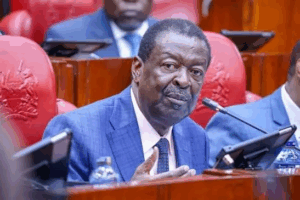
Treasury Cabinet Secretary John Mbadi. Photo: Courtesy.
By Robert Mutasi
The Kenyan government has moved closer to launching the National Infrastructure Fund after Treasury Cabinet Secretary John Mbadi appointed six members to the fund’s governing board, paving the way for one of the country’s largest infrastructure financing initiatives.
In a Gazette Notice dated July 8, Mbadi appointed James Mworia Mwirigi, Fahima Ali Ahmed Zein, Christopher Kibui Maranga, Latoya Ouna, Lawrence Kibet and Mohammed Abdirahman Hassan to serve on the National Infrastructure Fund Board.The six members will serve three-year terms effective July 8, 2026.
The appointments mark a key milestone in implementing the National Infrastructure Investment Fund Act, 2026, legislation enacted by Parliament to establish a dedicated financing mechanism for large-scale public infrastructure projects.
The National Infrastructure Fund is intended to finance commercially viable infrastructure projects while reducing Kenya’s reliance on tax revenues and external borrowing. The government says the fund will attract private capital and other alternative financing sources to accelerate the delivery of strategic development projects.
Unlike traditional government-funded infrastructure programmes, the fund will draw resources from the privatization of selected state assets, alongside investments from institutional investors, pension funds and private financiers.
Officials say the financing model is designed to ease pressure on the national budget and reduce dependence on sovereign debt for projects capable of generating commercial returns.
Under the National Infrastructure Investment Fund Act, the fund’s objectives include expanding infrastructure development, mobilizing private investment, reducing reliance on public borrowing for commercially viable projects and strengthening Kenya’s ability to originate, structure and execute complex infrastructure investments.
The fund is expected to support projects in the transport, energy, water and irrigation sectors.
Priority investments include highways, railway networks, airports, seaports, irrigation systems and electricity generation projects considered commercially sustainable.
President William Ruto has described the National Infrastructure Fund as one of the most significant economic reforms undertaken since Kenya’s independence.
Speaking while assenting to the National Infrastructure Fund Bill earlier this year, Ruto said the initiative would reshape the country’s development financing model by relying more heavily on domestic savings and private investment rather than excessive public borrowing.
“The establishment of the National Infrastructure Fund is the most consequential initiative in the development history of our nation,” the president said.
“The fund marks a new chapter in financing our transformation, making us the architects of our own future.”
According to the president, the fund is expected to mobilize more than Sh5 trillion to finance critical infrastructure over the coming years.
Among the flagship projects identified for financing are the generation of 10,000 megawatts of clean energy, construction of 50 mega dams, 200 micro-dams and more than 1,000 small dams, as well as the development of 2,500 kilometers of dual carriageways and 28,000 kilometers of roads across the country.
The fund is also expected to finance the extension of the Standard Gauge Railway from Naivasha to Malaba and Kisumu, in addition to supporting the planned expansion of Jomo Kenyatta International Airport.
Economists say the success of the National Infrastructure Fund will depend on its ability to attract private investors while maintaining strong governance, transparency and accountability. If implemented as planned, the initiative could reduce pressure on Kenya’s public finances and provide a sustainable model for financing major infrastructure projects without significantly increasing the country’s debt burden.
About Author