Stakeholders Call for United Front Against Corruption Ahead of Africa Anti-Corruption Day
Uasin Gishu Journalists Association Chairperson James Gitaka said journalists and political leaders have a critical responsibility to expose corruption and promote ethical leadership.
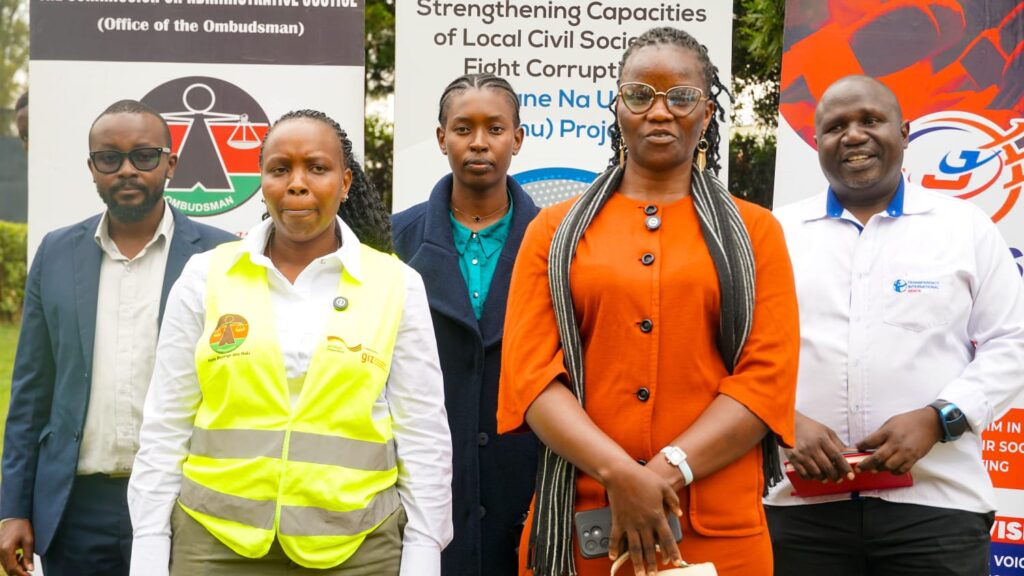
Photo: Hubz Media.
By Ian Kiprotich
Civil society organizations, journalists, public institutions and students have renewed calls for stronger collaboration in the fight against corruption, saying integrity and accountability must become shared values if Kenya and the rest of Africa are to achieve sustainable development.
The stakeholders made the remarks during a forum at the Eldoret Media Hub held ahead of Africa Anti-Corruption Day, observed annually on July 11 to promote transparency, good governance and public participation in combating corruption across the continent.
Transparency International officer Tom Juma said corruption continues to undermine development by diverting resources meant for essential public services, infrastructure and economic growth. He noted that police services remain among the institutions most frequently associated with bribery, underscoring the need for sustained reforms and stronger accountability measures.
“Corruption has denied Africa many development opportunities by taking away resources that should improve the lives of citizens. We must continue working together to reduce bribery and strengthen accountability across all sectors,” Juma said.
Uasin Gishu Journalists Association Chairperson James Gitaka said journalists and political leaders have a critical responsibility to expose corruption and promote ethical leadership.
“There is still a great deal of work to be done by both the media and African leaders. The fight against corruption begins with cultivating a culture of integrity at the individual, institutional and national levels,” Gitaka said.
Commission on Administrative Justice officer Eunice Keter urged members of the public to understand and exercise their constitutional rights, saying informed citizens are better equipped to demand transparency and quality public services.
“The public should be aware of their right to fair administrative action and access to information. When citizens understand these rights, they are better placed to hold public institutions accountable,” she said.
Uasin Gishu Journalists Association Media Coordination Manager Ibrahim Too said changing public attitudes toward corruption remains one of the biggest challenges facing anti-corruption campaigns.
Too said previous engagements with young people revealed that many only view corruption as a problem when they are personally disadvantaged by it.
“We want young people to reject corruption completely, not only when it affects them negatively. Integrity should be a value that guides every decision regardless of personal benefit,” he said.
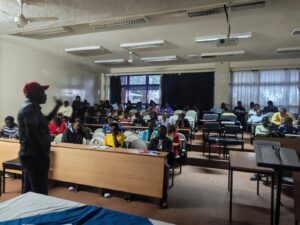
The forum also gave young people an opportunity to share their perspectives on integrity and ethical leadership.
Sonia, a journalism student at Moi University, urged job seekers not to pay bribes in pursuit of employment opportunities despite the country’s high unemployment rate.
“Young people should trust the recruitment process and apply for jobs based on merit. Paying for employment only promotes corruption and denies deserving candidates equal opportunities,” she said.
Her colleague, Geen Ogolla, said the fight against corruption begins with personal responsibility.
“Integrity starts with each one of us. When someone pays a bribe to secure an opportunity, another qualified person loses that chance. We must all refuse to participate in corruption,” Ogolla said.
Gen Z representative Diana Nanjala called on the government to strengthen civic education programmes, particularly for persons with disabilities living in rural and marginalized communities.
She said many people with disabilities remain unaware of their constitutional rights and the protections provided under the law, limiting their ability to demand equal access to public services.
Rahab Gati, a journalism student at The Eldoret National Polytechnic, encouraged aspiring journalists to uphold professional ethics and use investigative reporting to expose corruption and promote accountability.
Participants agreed that defeating corruption requires collective action from governments, oversight institutions, the media, civil society and ordinary citizens. They urged young people to become champions of integrity and accountability in their schools, workplaces and communities as Africa marks another year of commitment to combating corruption.
About Author