Kenya Waives Import Duty on First 100,000 Electric Vehicles, President Ruto Announces
President William Ruto has announced a duty waiver on the first 100,000 electric vehicles imported into Kenya, saying the move is aimed at accelerating clean energy adoption and reducing the country’s dependence on volatile global fuel markets.
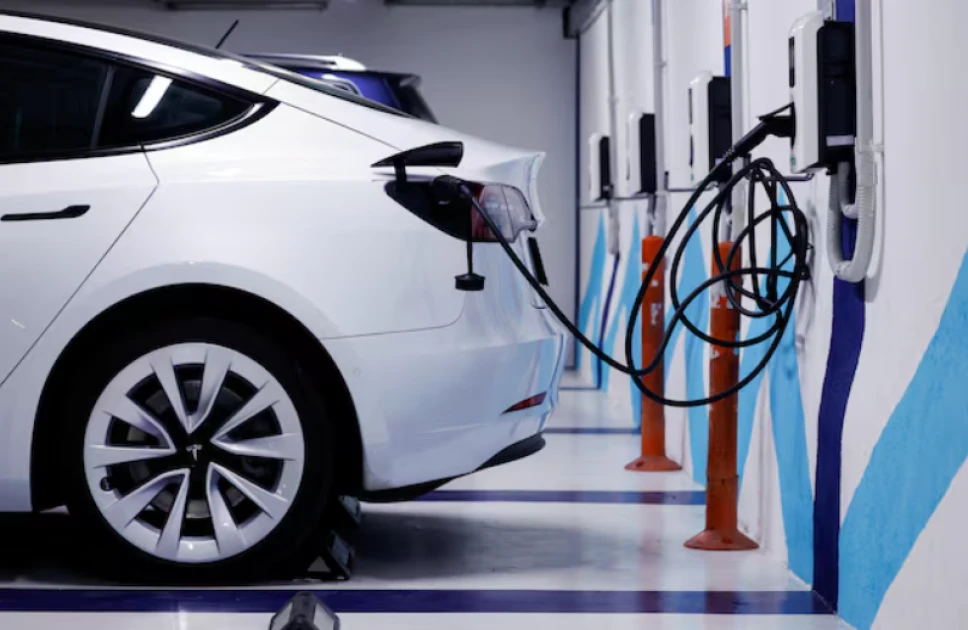
An electric vehicle is plugged into a charging station in Bilbao, Spain.Photo/Courtesy
By Ruth Sang
President William Ruto has announced that Kenya will waive import duty on the first 100,000 electric vehicles that come into the country. He said this comes as the government keeps pushing for clean energy, and at the same time cutting back on how much the country depends on fossil fuels.
In a live address from State House in Mombasa on Friday, Ruto noted that the tax relief will cover both privately owned e-mobility units and those used for public service, like passenger or fleet operations.
“I’m also making a declaration that the first 100,000 electric vehicles to be imported into Kenya, whether for public service or private use, will be duty free,” he said, fairly clearly.
According to the Head of State, this is meant to help the country remain steadier during those recurring global fuel price swings. He also framed it as a way to improve energy security, so the country is not caught off guard as often.
“We must embrace electric vehicles as a first step” Ruto said, then added that the government is ramping up investments in renewable energy, electric mobility, modern public transport systems and key energy infrastructure. Not just one thing, really more than one lever.
Ruto also revealed that through the Ministry of Interior, Kenya has already procured 3,000 electric vehicles meant to support security work and administrative operations across the country.
Further on, the President said Kenya is in talks with private investors to set up local electric vehicle manufacturing plants, with the intention of positioning Kenya as a regional center for cleaner mobility solutions. Basically, making the country a production and service point, not only a buyer.
On the regional side, Ruto said Kenya is working with East African partner states and private sector actors to commercialize oil reserves in Turkana and other areas. He also pointed to efforts toward building a regional oil refinery.
“The government of Kenya, working together with our East African partner states and the private sector, is determined to bring into production our oil reserves and resources in Turkana and across the East African region,” he stated.
He finished by saying the planned refinery , along with expanded renewable energy investments, is set to lower dependence on outside fuel supply chains and shield future generations from global energy shocks.
About Author