Ruto Defends Fuel Price Measures, Announces Ksh.10 Diesel Reduction Amid Global Fuel Crisis
President William Ruto has defended Kenya’s response to the global fuel crisis, announcing a Ksh.10 reduction in diesel prices.
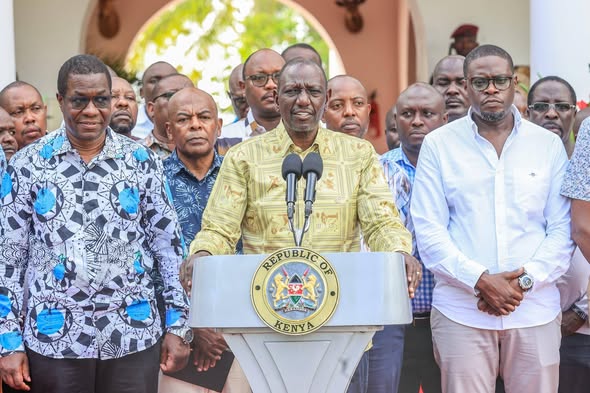
President William Ruto defends government fuel price interventions. Photo/Courtesy
President William Ruto has defended the government’s response to the rising cost of fuel, saying Kenya is facing the impact of a global energy crisis triggered by the ongoing conflict in the Middle East.
In a statement issued after meeting transport sector stakeholders at State House, Mombasa, Ruto acknowledged the burden high fuel prices have placed on households, businesses, farmers and transport operators across the country.
“We are fully aware of the frustration, pain and burden that families, businesses, farmers and transporters have endured due to rising fuel prices over the past few weeks,” the President said.
Ruto noted that the fuel crisis is affecting countries worldwide through supply shortages and disruptions in global supply chains, insisting that Kenya is not isolated from the challenge.
According to the President, the government has already spent KSh28.19 billion under fuel stabilisation measures and VAT relief programmes during the April-May and May-June pricing cycles to cushion consumers from further price increases.
“Without Government intervention during this period, Super Petrol would retail at KSh230 a litre instead of the current KSh214, while diesel would retail at KSh277 instead of KSh232,” he stated.
To provide additional relief, Ruto announced a KSh.10 reduction in diesel prices in the upcoming June-July fuel pricing cycle.
“To further cushion Kenyans, I have directed a KSh10 reduction for diesel,” he said.
The President also urged Kenyans to remain patient and avoid politicising the crisis.
“Let us not allow irresponsible political opportunists to politicise a crisis that is global in nature. Together, we shall overcome these challenges,” Ruto added.
During the talks with transport stakeholders, the government also agreed on several reforms aimed at easing pressure on the transport sector, including possible temporary relief on loan repayments, addressing insurance claim disputes, regulating minimum fares for digital taxis and allowing continued use of graffiti and artwork on matatus.
About Author