“The Inspector-General must ensure that those who caused mayhem in Embu are arrested and arraigned. Not just in Embu, but everywhere we experience political violence, including those leaders responsible for planning violence.” National Assembly Majority Leader Kimani Ichung’wah.
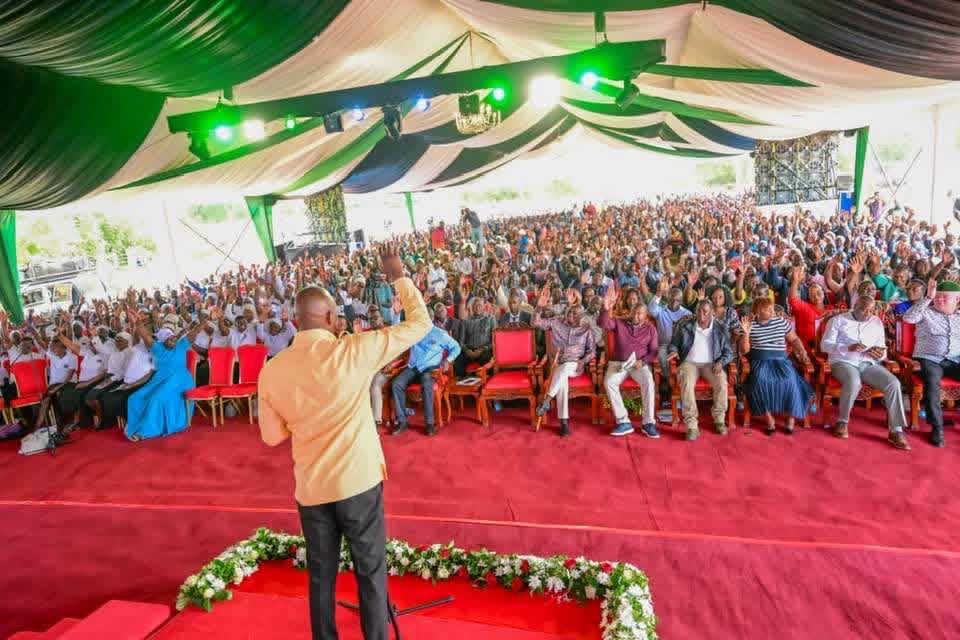
Kenya Kwanza leaders led by President William Ruto’s aide Farouk Kibet, Majority Leader Kimani Ichung’wah and Majority Whip Silvanus Osoro during a fundraiser at Francis De Sales Parish, Kipkaren River, Uasin Gishu County, where they called for political tolerance and peaceful campaigns ahead of the 2027 General Election.
By James Gitaka
Kenya Kwanza leaders led by President William Ruto’s aide Farouk Kibet, National Assembly Majority Leader Kimani Ichung’wah and Majority Whip Silvanus Osoro have intensified calls for political tolerance, warning that ethnic mobilisation, hate speech and political violence could threaten Kenya’s stability as the country moves towards the 2027 General Election.
The leaders spoke during a fundraiser at Francis De Sales Parish in Kipkaren River, Uasin Gishu County, where they also called on the National Police Service to arrest and prosecute individuals found culpable of organising or participating in political violence.
Among the political leaders present were Lurambi MP Titus Khamala, Endebess MP Dr Robert Pukose, Trans Nzoia Woman Representative Lilian Siyoi, West Mugirango MP Stephen Mogaka, Mbeere MP Leo Wamuthende, Webuye East MP Martin Pepela, Lugari MP Innocent Mbaya, David Ndakwa, former Health Cabinet Secretary Susan Nakhumicha and Navakholo MP Emmanuel Wangwe.
The gathering came days after violence erupted during a political meeting in Embu, leaving one person dead and several vehicles destroyed, an incident that has renewed concerns about political intolerance as politicians begin positioning themselves for the next election.
Ichung’wah demands arrests over Embu violence
Ichung’wah called on Inspector-General of Police Douglas Kanja to ensure that investigations into the Embu violence result in arrests and prosecution of those found responsible.
He said the police should investigate not only people directly involved in clashes but also anyone suspected of planning, financing or facilitating political violence.
“The Inspector-General must ensure that those who caused mayhem in Embu are arrested and arraigned. Not just in Embu, but everywhere we experience political violence, including those leaders responsible for planning violence.”
Ichung’wah said accountability was necessary to deter politicians and their supporters from turning political meetings into scenes of confrontation.
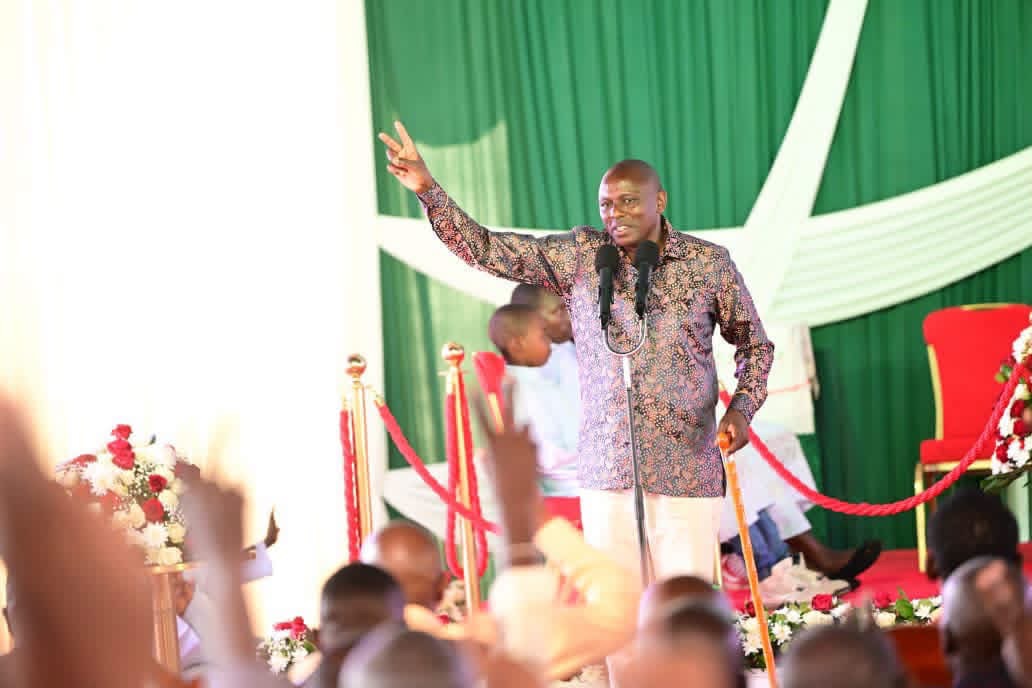
Kimani Ichung’wah addresses congregants during the fundraiser at Francis De Sales Parish, Kipkaren River, urging police to arrest and prosecute individuals found responsible for planning or perpetrating political violence.
“Those preaching disunity, hatred and tribalism don’t know what they are doing. We are heading to elections. We ask that all leaders be heard, but let us have tolerance.”
The Majority Leader also appealed to religious institutions to scrutinise the messages of politicians seeking platforms in churches and other places of worship.
“Let the Church not give a platform to leaders preaching politics of division and hatred.”
His remarks come as political parties and emerging alliances begin laying the groundwork for the 2027 contest, with the opposition seeking to consolidate support against the Kenya Kwanza administration.
Kibet attacks politics of division
Kibet, one of President Ruto’s key political allies, similarly urged Kenyans to reject leaders he accused of promoting ethnic divisions and political confrontation.
He said the country needed forgiveness and tolerance rather than political rhetoric capable of turning communities against each other.
“The country needs forgiveness. We forgive those preaching tribalism. Let us have tolerance.”
Kibet also criticised politicians he said were encouraging violence at rival political gatherings before blaming their opponents for the resulting chaos.
“Don’t bring violence in other politicians’ meetings and blame others. Let us not have Kenyans fighting.”
Farouk Kibet addresses congregants during a fundraiser at Francis De Sales Parish, Kipkaren River, Uasin Gishu County, where he called for political tolerance, national unity and peaceful campaigns ahead of the 2027 General Election.
He said Kenyans should instead judge the government on its record, citing roads, fertiliser, education and other programmes as areas where he argued the administration had made progress.
Kibet also claimed that support for President Ruto was growing in parts of the country and took aim at former Deputy President Rigathi Gachagua, who has emerged as one of the administration’s most prominent critics.
His remarks reflect the increasingly combative political environment ahead of the 2027 elections, with both the ruling coalition and opposition figures seeking to expand their regional and national support bases.
Osoro calls for peaceful campaigns
National Assembly Majority Whip Silvanus Osoro urged politicians to avoid rhetoric that could inflame ethnic tensions and called for peaceful political competition.
Osoro said leaders should allow their opponents to campaign freely while ensuring that political differences do not translate into violence.
He urged Kenyans and especially the youth to reject tribal politics and allow voters to make their decisions peacefully.
“Let us uproot tribalism among Kenyans. Kenya should maintain peace during the elections next year. Let every Kenyan campaign safely.”
The call comes against the backdrop of Kenya’s history of election-related violence, particularly the 2007-08 post-election crisis that resulted in more than 1,000 deaths and the displacement of hundreds of thousands of people.
The violence prompted far-reaching reforms aimed at strengthening institutions, improving electoral management and promoting national cohesion. However, concerns over hate speech, ethnic mobilisation and political violence continue to feature prominently in election preparedness discussions.
Wangwe: “Let us uproot tribalism”
Navakholo MP Emmanuel Wangwe echoed the calls for national unity, saying Kenya’s political leadership had a responsibility to ensure that elections did not become a source of fear for ordinary citizens.
Wangwe called for political tolerance and peaceful campaigns, urging leaders to compete on ideas and policies rather than ethnicity.
“Let us uproot tribalism among Kenyans. Kenya should maintain peace during the elections next year. Let every Kenyan campaign safely.”
The presence of leaders from different constituencies at the Kipkaren River fundraiser provided a broad political platform for the message of peaceful political competition.
Embu violence raises fresh concerns
The calls followed violent scenes in Embu that have intensified debate about political tolerance and the ability of security agencies to prevent election-related violence.
The incident has become an early warning sign for political leaders and security agencies as Kenya approaches the 2027 elections.
Ichung’wah said the response should be based on accountability rather than political affiliation, arguing that anyone found to have organised violence should face the law.
“Those responsible for planning violence are well known, and I urge Kenyans to send them home.”
The call for prosecution also places responsibility on the National Police Service to conduct impartial investigations and ensure that evidence gathered is sufficient to support prosecutions.
For Kenya’s political class, the test will be whether increasingly competitive campaigns can be conducted without intimidation, ethnic mobilisation or violence.
Leaders issue El Niño rains warning
The political leaders also used the Kipkaren River gathering to urge residents to prepare for heavy rains expected during the October-December period.
Kibet warned people living along riverbanks and in areas prone to flooding and landslides to move to safer locations.
“Those living on river banks and areas prone to mudslides, let’s move to safer areas.”
He also cautioned parents against sending children to schools where damaged bridges or flooded roads could expose them to danger.
“Don’t send your children to school where there are no bridges. Let’s all remain safe.”
The warning comes as the government and humanitarian agencies step up preparedness for heavy rainfall, with flood-prone and landslide-prone areas expected to face heightened risks.
Kibet urged farmers to take advantage of the rains to increase food production while remaining alert to weather-related hazards.
“Farmers, let’s get to the farms and grow more food.”
The warning is particularly relevant to communities in western Kenya and the Rift Valley, where flooding, swollen rivers and landslides have previously disrupted transport, destroyed property and displaced families.
Eldoret Media Hub, a working space for journalists based in Uasin Gishu County set up by the Uasin Gishu Journalists Association (UGJA) through a Media Council of Kenya (MCK) grant.
The facility was officially opened in August 2021 by the MCK Chief Executive Officer David Omwoyo.