TI-Kenya to Launch Red Card Campaign Ahead of 2027 Elections as Masinde Calls for Tougher Action Against Corruption
“The reason why this country continues to suffer from corruption is that we have allowed people with stains on their character to continue to vie for public office,” Masinde said.

Sheila Masinde, Executive Director of Transparency International Kenya, speaks during a past event, highlighting the need for transparency, integrity and accountability in public leadership and the fight against corruption.
By James Gitaka |HubzMedia
Transparency International Kenya (TI-Kenya) is set to launch its Red Card Campaign ahead of the 2027 General Election, seeking to mobilise citizens against corrupt and unethical leadership while strengthening accountability in public office.
Conducted every five years around the electoral cycle, the citizen-driven campaign seeks to rally public support against corruption and unethical leadership, raise awareness and empower frontline constitutional institutions to implement Chapter Six of the Constitution of Kenya on Leadership and Integrity.
The planned campaign comes amid renewed calls for stronger enforcement of integrity standards for political aspirants, improved oversight of public resources and closer collaboration between civil society organisations (CSOs), the media and legislators to combat corruption.
Speaking during roundtable discussions that brought together the media, civil society organisations and members of the African Parliamentarians Network Against Corruption (APNAC), CSPEN, CARNAC and other stakeholders, TI-Kenya Executive Director Sheila Masinde called for a renewed commitment to enforcing leadership and integrity standards as the country prepares for the 2027 elections.
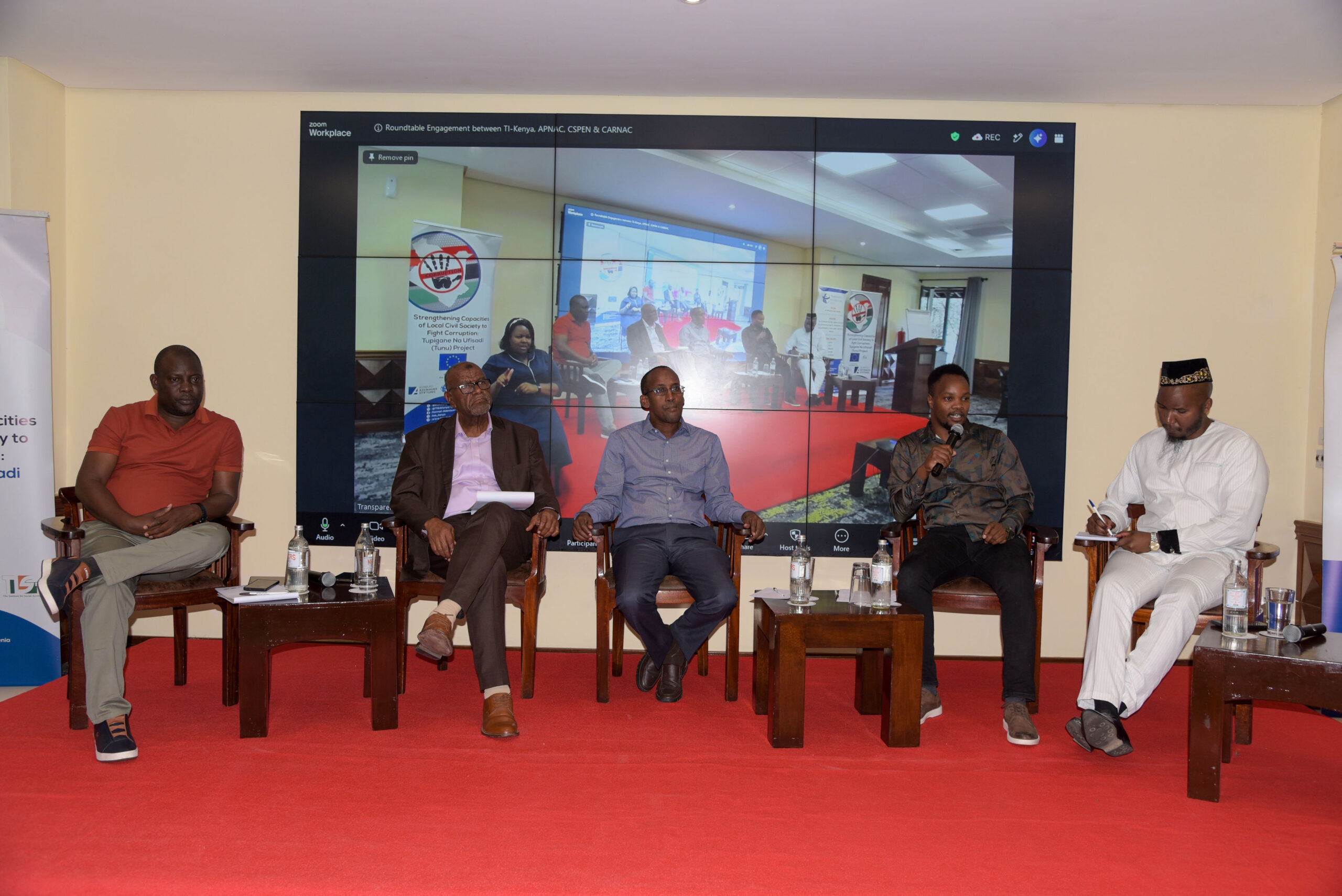
The two-day engagement, held at the Great Rift Valley Lodge and Golf Resort under TI-Kenya’s Tupigane na Ufisadi (TUNU) Project, focused on strengthening collaboration among accountability actors, improving legislative oversight and addressing gaps in the implementation of anti-corruption laws.
The discussions also featured panel sessions bringing together legislators from the National Assembly and county assemblies, led by APNAC chairperson Hon. Shakeel Shabbir, Hon Omar Mwinyi The Member of Parliament for Changamwe Constituency and Hon. Dr. David Ole Sankok, a member of the East African Legislative Assembly (EALA), participated alongside members of CARNAC and other stakeholders.
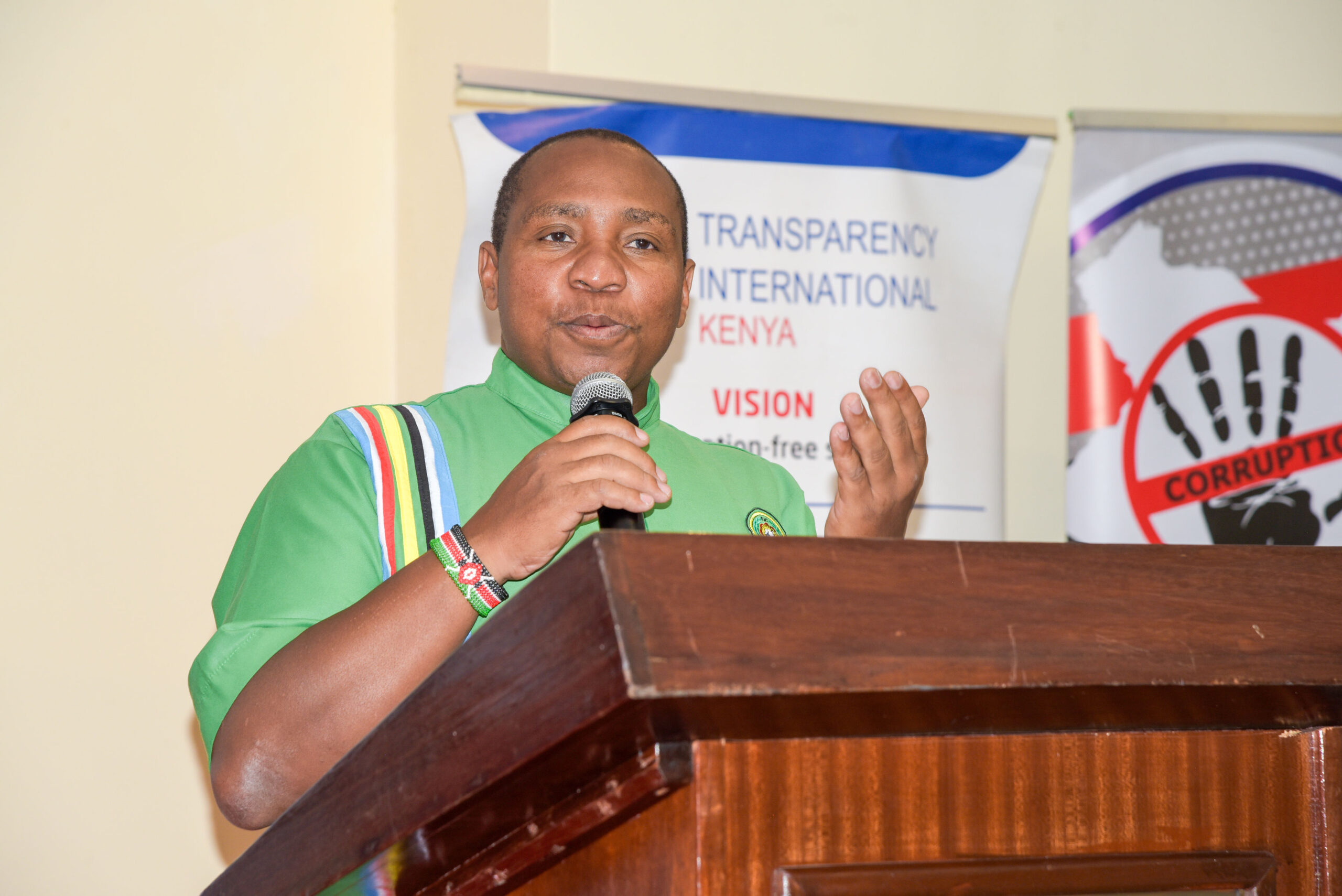
Addressing journalists during the engagement, Masinde emphasised the need for institutions responsible for vetting political aspirants to give greater consideration to the moral and ethical standards prescribed under Chapter Six of the Constitution.
“The reason why this country continues to suffer from corruption is that we have allowed people with stains on their character to continue to vie for public office, whether elected or appointed, and are then cleared,” Masinde said.
She argued that Kenya’s approach to determining the suitability of individuals for public office had, in some instances, placed excessive emphasis on criminal proceedings and the exhaustion of appeal mechanisms at the expense of the broader ethical principles envisaged by the Constitution.
According to Masinde, Chapter Six establishes standards of integrity that should guide the selection and vetting of public officials, and institutions must take their responsibility to uphold these principles seriously.
She called for a more consistent application of leadership and integrity requirements ahead of the 2027 elections, stressing that public office should be occupied by individuals who demonstrate the ethical standards expected of those entrusted with public resources and authority.
Her remarks placed leadership integrity at the centre of discussions on electoral accountability, with the planned Red Card Campaign expected to mobilise citizens to scrutinise the conduct of leaders and demand greater accountability from those seeking elective positions.
Masinde calls for a shift towards corruption prevention
Beyond leadership integrity, the TI-Kenya executive director identified weak implementation of existing laws as a major obstacle to the fight against corruption, arguing that greater emphasis should be placed on preventing graft before public resources are lost.
“We are not focusing on prevention as we should. We need to focus more on prevention,” Masinde said.
She pointed to access-to-information provisions, public participation mechanisms, whistleblower protections and conflict-of-interest laws as important safeguards intended to promote transparency and prevent the misuse of public resources.
Masinde noted that these legal frameworks could help citizens and oversight institutions identify risks, raise concerns and intervene before suspected corruption escalates into the loss of public funds.
However, she said the effectiveness of these safeguards continued to be undermined by inadequate implementation and a lack of political will.
“We have a deficit in terms of implementation, despite all the laws that we have, because of that political infiltration by the political elite and those who are bent at ensuring that laws are not fully applied for their own interests or to maintain the status quo,” she said.
Masinde warned that once public money had been stolen or spent, recovering it could become a lengthy and complicated process involving investigations, prosecution, court proceedings and efforts to trace assets.
She said preventive measures were therefore critical to ensuring that corruption was addressed before it caused financial losses and undermined public service delivery.
The TI-Kenya executive director also called for leaders willing to enforce existing laws without favouritism, arguing that accountability would remain weak if legal provisions were selectively applied.
Civil society and county assemblies urged to work together
Masinde said closer collaboration between civil society organisations and county assemblies was essential to strengthening accountability, particularly in the management of devolved funds and the delivery of public services.
She explained that civil society organisations often work directly with communities, enabling them to collect evidence, document public concerns and identify gaps in service delivery that may require legislative or administrative intervention.
County assembly members, on the other hand, have constitutional responsibilities relating to oversight, representation and legislation, placing them in a position to use community-generated evidence to question county executives and push for corrective action.
“The partnership between civil society and county assemblies is very critical because county assemblies are responsible for oversight, representation, and of course legislation,” Masinde said.
She added that evidence gathered by civil society could help legislators identify priority issues, strengthen existing laws and demand accountability from county governments over the use of public resources.
The partnership, she said, should enable county assemblies to focus their oversight activities on documented concerns raised by citizens, particularly where there are questions about stalled development projects, service delivery or the management of public funds.
The discussions underscored the importance of ensuring that information collected by communities reaches the relevant decision-makers and is acted upon through established accountability mechanisms.
CSOs demand action beyond audit reports
Joash Odira, a member of the Siaya County TUNU Network and coordinator of the Siaya Social Accountability Network, called for stronger cooperation between civil society organisations, county assembly members and other stakeholders in addressing corruption at the grassroots level.
Odira said the meeting provided an opportunity for accountability actors to explore how they could combine their efforts to address conflict of interest, improve transparency and ensure public resources were used for their intended purposes.
He noted that many counties had already enacted laws intended to promote accountability, but their impact remained limited where implementation was weak.
“We need to start asking ourselves, the question is not about how many laws do we have, but the question is about how are these laws helping us to curb corruption, to ensure there is integrity, to ensure there is accountability,” Odeira said.
He urged legislators to work more closely with civil society organisations to ensure that concerns documented by communities were escalated to the relevant authorities and translated into reforms.
Odira cited stalled projects and suspected misappropriation of funds as examples of issues where community evidence could inform legislative oversight and help identify gaps in the management of public resources.
He also challenged accountability institutions to ensure that their findings and recommendations resulted in concrete action rather than being repeatedly documented without resolution.
“Can we have accountability registers so that we look at whatever was recommended from the Auditor-General report, how is it then being actioned and who is tasked to ensure that it is actioned?” he posed.
Odira said such registers could help track recommendations made by the Auditor-General, the Controller of Budget and the Ethics and Anti-Corruption Commission, while identifying the institutions or officials responsible for implementing them.
He argued that a systematic follow-up mechanism would help prevent recurring audit queries and ensure that weaknesses identified in the management of public resources were addressed.
The social accountability coordinator said civil society organisations were ready to work with county assemblies, the National Assembly and regional legislative institutions to strengthen oversight and ensure that community concerns received the attention they deserved.
Media and civil society collaboration critical to accountability
The engagement also brought the media and civil society organisations together to strengthen cooperation in communicating public accountability concerns and supporting evidence-based engagement on corruption.
The collaboration is significant because civil society organisations often generate information through community monitoring, social accountability initiatives and engagements with citizens, while the media plays a key role in bringing matters of public interest to wider attention.
Effective cooperation between the two sectors can help ensure that information presented to the public is accurate, consistent and sufficiently detailed to explain the issues, the evidence available and the steps required to address them.
The discussions highlighted the importance of responsible information-sharing, particularly when reporting on suspected corruption, public expenditure and the conduct of public officials.
By linking community-generated evidence with legislative oversight and public-interest reporting, the stakeholders sought to strengthen the flow of information between citizens, accountability institutions and decision-makers.
Such cooperation can also help citizens understand the findings of oversight bodies, follow up on commitments made by public officials and participate more meaningfully in decisions concerning the use of public resources.
About Author