Djibouti Parliament Removes Presidential Age Limit, Clearing Path for Guelleh’s Sixth Term
There are ongoing concerns over the freedom of the press and the extensive powers held by the head of the executive over state institutions.

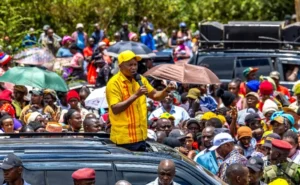
He based his argument on the instability happening in its neighboring countries of Somalia, Ethiopia, and Eritrea, justifying the need for Djibouti to have the same leadership. Photo/courtesy
By Phanice Rono
Djibouti’s National Assembly has unanimously voted to abolish the upper age limit for presidential candidates, a decision that could enable 77-year-old President Ismaïl Omar Guelleh to seek a sixth term in office.
Earlier, the constitution barred those older than 75 from contesting the presidency. The amendment passed removes that limit and is a significant change to long-standing eligibility requirements.
This reform aims at encouraging political stability in a region often plagued by insecurity, explained Parliament Speaker Dileita Mohamed Dileita. He based his argument on the instability happening in its neighboring countries of Somalia, Ethiopia, and Eritrea, justifying the need for Djibouti to have the same leadership.
The amendment has yet to be formally ratified, possibly by the signature of the president or a referendum, before a second parliamentary vote. Political analysts, however, feel the approval will be a formality given the dominance of Guelleh’s party in the legislature.
Opposition groups and other critics have attacked the move as a major blow against democracy in Djibouti. They say this decision further consolidates Guelleh’s power, weakens political pluralism, and diminishes prospects for free competition in future elections. There are ongoing concerns over the freedom of the press and the extensive powers held by the head of the executive over state institutions.
Guelleh, who has led Djibouti since 1999, has not said if he intends to seek reelection in 2026. However, with the withdrawal of the age limit, one of the few remaining constitutional obstacles to his continued presidency has been cleared. Guelleh has secured re-election with comfortable margins throughout his tenure, but the opacity and fairness of those elections have repeatedly come under question by international observers and human rights groups.
The constitutional change comes as Djibouti continues to hold a high degree of strategic significance on the global stage. Indeed, due to its placement along the Bab el-Mandeb Strait-a vital waterway linking the Red Sea to the Indian Ocean-the nation hosts a number of foreign military bases, including those of the United States, China, and France.
As the country heads toward the 2026 elections, focus now shifts to whether the constitutional change will trigger political reforms or further entrench one of Africa’s longest-serving leaders in power.
About Author