Media Houses Vow to Defy Communication Authority’s Live Broadcast Ban Amid National Protests
In their conclusion, the media stakeholders reaffirmed their commitment to editorial independence, professionalism, and constitutionalism.

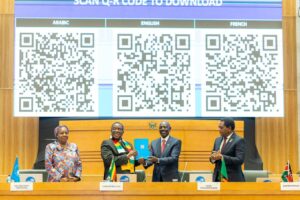
Kenya Media Sector Working Group vows to defy CA's broadcast ban, defending press freedom and the public’s right to information amid national protests. Photo/NCBC Africa.
By Robert Assad
Kenya’s leading media organizations have vowed to defy a controversial directive by the Communications Authority of Kenya (CA) that sought to suspend live broadcast coverage of the ongoing national protests.
Through a strongly worded joint statement, the Kenya Media Sector Working Group (KMSWG) called the directive unconstitutional and a direct attack on press freedom and the public’s right to information.
The statement, issued on Tuesday, insists that media houses will continue normal programming, rejecting what they described as an attempt to silence the media and the people.
“Switching off the media is not a solution to what the country is facing,” read the joint statement. “These are outdated and unproductive decisions that can only aggravate the matter.”
The CA’s directive, issued earlier in the day, ordered all television and radio broadcasters to halt live coverage of the June 25 protests, citing alleged violations of Articles 33(2) and 31(1) of the Constitution, and Section 461 of the Kenya Information and Communications Act.
However, KMSWG reminded the Authority—and the public—that a recent High Court ruling clarified the CA has no legal mandate to regulate broadcast content. That power, the group emphasized, lies solely with the Media Council of Kenya.
“The Constitution provides mechanisms for addressing any allegations of unprofessional media conduct,” KMSWG noted. “Any aggrieved party should seek redress through these established legal channels—not through censorship.”
The group also warned against potential internet shutdowns, stating that uninterrupted internet access is a constitutional right under Articles 33, 35, and related provisions.
Any attempt to limit access, they said, would be a breach of Kenyans’ rights to freedom of expression, information, and democratic participation, especially during such a critical national moment.
The KMSWG also took a firm stance on violence against journalists, strongly condemning the shooting of NTV journalist Ruth Sarmwei, who was reportedly hit by a rubber bullet while covering the demonstrations.
They called on the police and all security agencies to exercise restraint and respect both journalists and peaceful protesters.
In their conclusion, the media stakeholders reaffirmed their commitment to editorial independence, professionalism, and constitutionalism.
They called on all broadcasters to stand firm in the face of political pressure and to continue informing the public without fear.
“We are a country governed by the rule of law. All government agencies must operate within the confines of the Constitution and court decisions.”
The joint statement was signed by a coalition of key media bodies, including the Kenya Union of Journalists, Kenya Editors Guild, Article 19 Eastern Africa, and Association of Media Women in Kenya (AMWIK), among others.
These organizations form part of the Kenya Media Sector Working Group, a coalition committed to defending media freedom and democratic values in Kenya.
About Author