‘CHILDREN OF THE DUMP’: CHILD LABOR AT KIPKENYO DUMPSITE
Poverty, school dropouts and hazardous working conditions are forcing children into waste picking at Eldoret’s largest dumpsite.
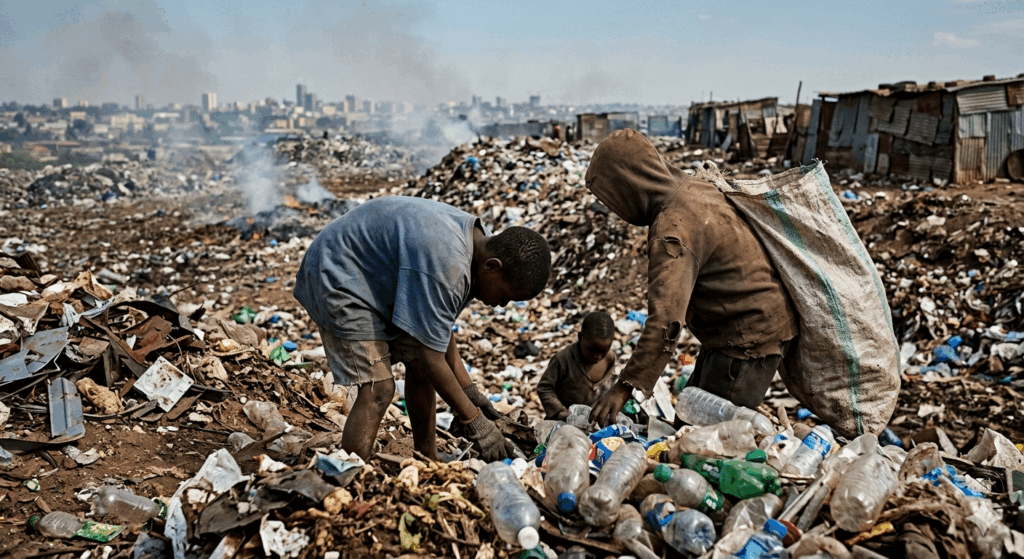
A child searches through heaps of waste at Kipkenyo Dumpsite in Eldoret, where many children work to support their families. Photo by Naomi Cheruiyot
Poverty, school dropouts and hazardous working conditions are forcing children into waste picking at Eldoret’s largest dumpsite.
By Naomi Cheruiyot
On a chilly Wednesday morning, 7-year-old Mark* (not his real name) makes his way to a sprawling dumpsite in Kipkenyo, on the outskirts of Eldoret town in Uasin Gishu County.
He looks fragile for his age. His face is dusty and pale, his clothes are torn and stained, and on his feet are mismatched plastic sandals that are barely holding together. Slung over his back is a large sack, almost bigger than his small frame, which he drags across the waste as he searches for recyclable materials.
Still, with hope in his face, Mark sifts through piles of rotting garbage, searching for plastic bottles, scrap metal, and anything else that can earn him a few shillings.
“I come here every day so I can help my dad because we live alone with him,” Mark says.
Mark attends school only once a week, spending most of his time at the dumpsite.
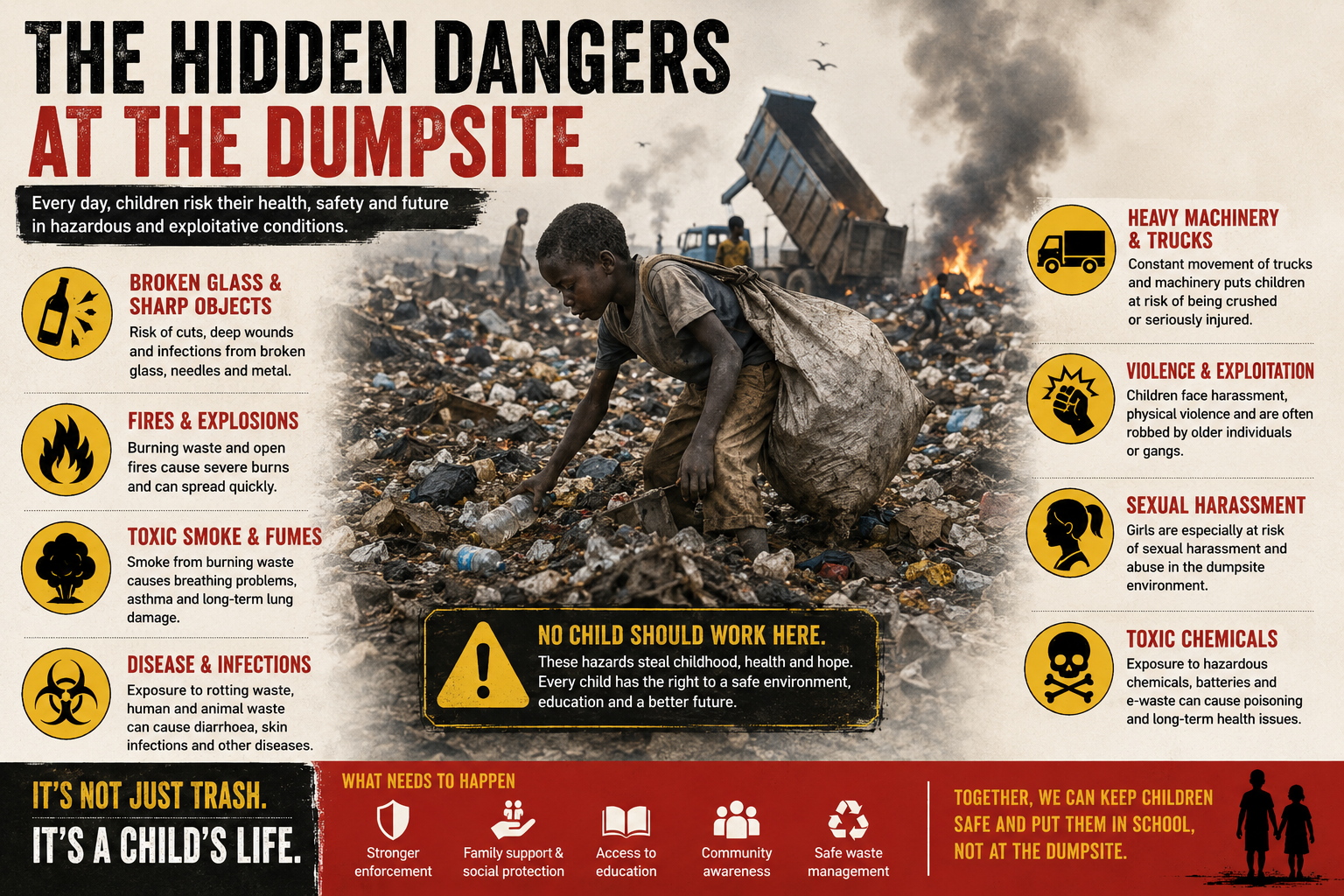
Before this, he attended school regularly when his mother was alive. But after her death two years ago, his father has struggled to raise him. With no stable job and limited income, Mark began accompanying him to the dumpsite, eventually becoming part of the workforce.
Now, the dumpsite has become both his workplace and his lifeline.
He sells plastic bottles to intermediaries at about seven shillings per kilogram, but the amount he collects rarely earns him much. Competition is intense, with many others, including older and stronger boys, searching for the same materials.
“Because we are many here, we can’t find enough bottles or scrap metals to make a lot of money,” he explains.
The environment is not only harsh but also dangerous. Fights frequently break out among children competing for valuable waste.
Mark’s small size puts him at a disadvantage.
“I am too young to fight boys older than me. Sometimes when they see you with many bottles on a lucky day, they can rob and beat you,” he says.
Despite these harsh conditions, Mark still dreams of returning to school full-time and becoming a teacher in the future.
A Dumpsite Turned Workplace
The Kipkenyo dumpsite, located about ten kilometres from Eldoret along Nandi Road, is the final destination for all kinds of waste generated across the town.
Every morning, the rumble of lorries fills the air as trucks from markets, residential estates and the central business district arrive to offload tons of garbage.
The environment is overwhelming, with towering heaps of rotting waste spread across the site as swarms of flies hover around and a heavy, persistent stench fills the air. Occasionally, smoke rises from smouldering fires beneath the garbage, adding to the already hazardous conditions.
Yet beyond being a dumping ground, Kipkenyo has evolved into an informal workplace.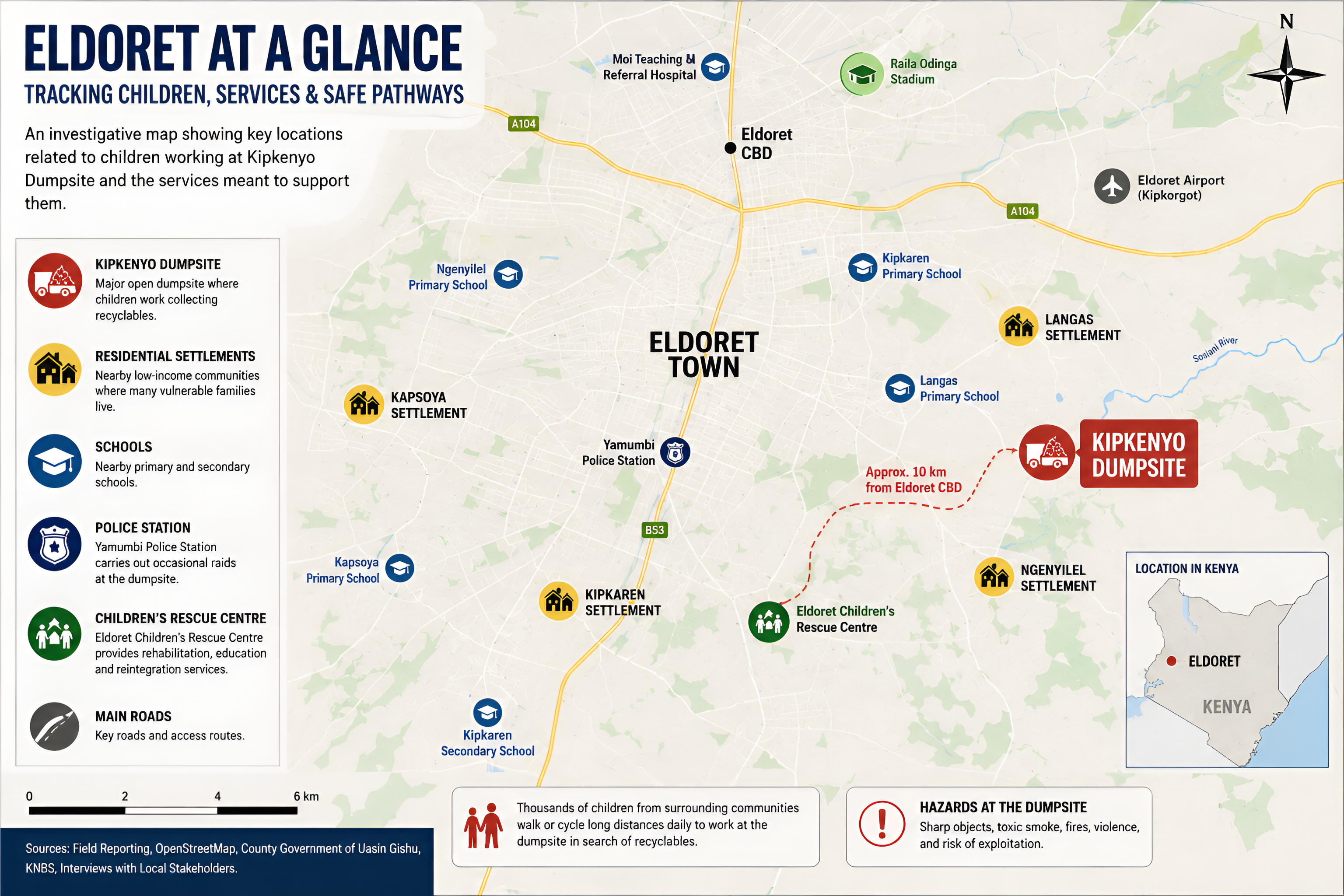
For many vulnerable families, it represents a source of daily survival where men, women and children sift through piles of waste in search of recyclable materials which they sell to intermediaries.
The work is gruelling, and the income is meagre and uncertain, but for families with few or no alternatives, it is essential.
Amid these harsh realities emerges a deeply troubling issue: child labour.
Children who should be protected, in school, or simply enjoying their childhood are instead working in one of the most hazardous environments imaginable.
They walk through the waste barefoot or in worn-out sandals, exposed to sharp objects such as broken glass and rusted metal, toxic fumes from burning garbage, and the constant risk of injury and illness.
Driven by poverty, unemployment within their families, and limited access to social protection, they work alongside adults to help sustain their households.
A National Crisis Reflected in Kipkenyo
The situation at Kipkenyo reflects a broader national crisis.
According to the Kenya National Bureau of Statistics (KNBS), an estimated 1.3 million children aged between 5 and 17 are engaged in child labour in Kenya, many working in hazardous sectors such as agriculture, mining, domestic work and waste picking.
The 2019 Kenya Population and Housing Census also indicates that thousands of children are involved in informal economic activities to support their families, particularly in low-income households.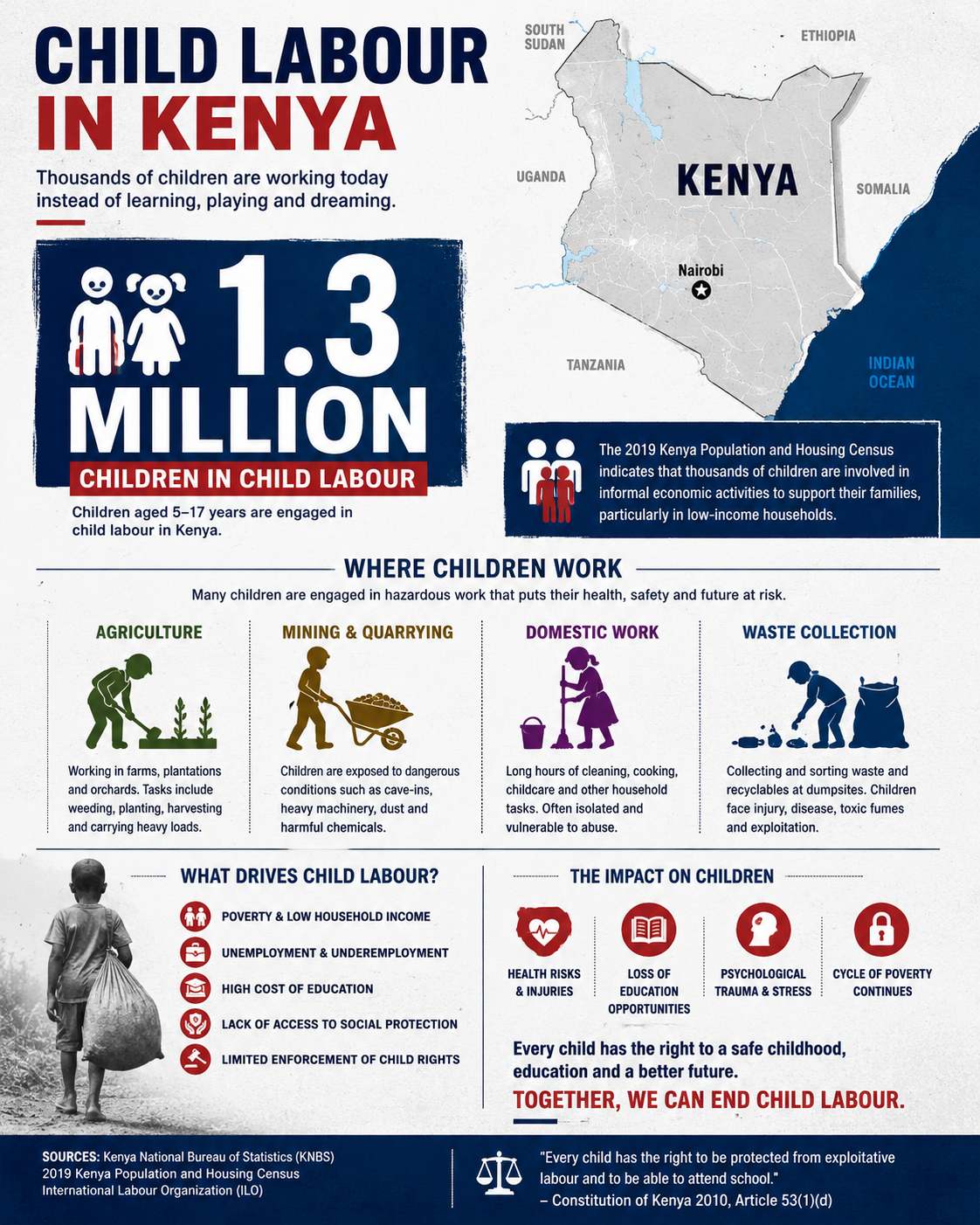
Experts consistently point to poverty, unemployment and lack of access to social protection programmes as the primary drivers of this crisis.
At Kipkenyo, these statistics come to life in the stories of the children themselves.
Kelvin: A Childhood Lost to Survival
A short distance away, 13-year-old Kelvin* moves across the dumpsite carrying a heavy sack filled with plastic bottles.
He has been working here for the past three years.
Like many children at the site, he appears older than his age, his face coated with dust and sweat, his shirt torn and his sandals worn out and barely protective.
Kelvin comes from a family of seven siblings and was forced to drop out of school after his mother, a single parent, could no longer afford school-related expenses.
“I started coming here when I was about ten years old. At first, I only came during weekends, but later I stopped going to school completely.”
Before dropping out, he enjoyed mathematics and dreamt of becoming a mechanic.
But when his mother lost her job as a house help, survival took priority over education.
“While searching, broken glass, metal and other sharp objects cut my hands and legs, but I continue because I cannot go home with nothing.”
He also speaks about the dangers posed by fires at the dumpsite.
“Some people smoke and throw away cigarette remains that start fires, producing choking smoke that makes us cough.”
Despite the challenges, Kelvin still hopes that one day he might return to school if his family receives support.
Janet’s Struggle Between School and Survival
Janet*, a Grade Five student at a local primary school, shares in this hope.
Speaking as she carefully sorts through waste with a sack in hand, Janet says she attends school twice a week in an attempt to balance her education with the need to support her family.
“I miss going to school and playing with my colleagues during break time,” she says emotionally.
Janet started working at the dumpsite two years ago after her mother lost her small vegetable business.
Since then, she has been forced to divide her time between school and “scavenging” — a term commonly used around the dumpsite to describe sorting garbage.
For Janet, the dangers go beyond physical injuries.
As a girl, she faces additional risks, including sexual harassment from older boys and strangers who frequent the area.
The environment is chaotic, especially when trucks arrive and crowds rush to collect newly dumped waste.
In the scramble, she risks being pushed, injured, or losing everything she has gathered.
Despite these risks, she continues working at the dumpsite, hoping the approximately KSh200 she earns each week will eventually allow her to return to school regularly.
She dreams of becoming a nurse.
Parents Trapped in the Same Cycle
Parents working at the dumpsite are equally affected by these harsh realities.
Emily* (not her real name), a mother of six, spends long hours collecting recyclables.
She says falling prices have made their situation even more difficult.
“I used to sell plastics and glass bottles at higher prices, but now they fetch about seven shillings per kilogram. The price drop has forced me to work longer hours in order to collect enough to make a substantial amount of money.”
She also worries about the influence of the dumpsite on children.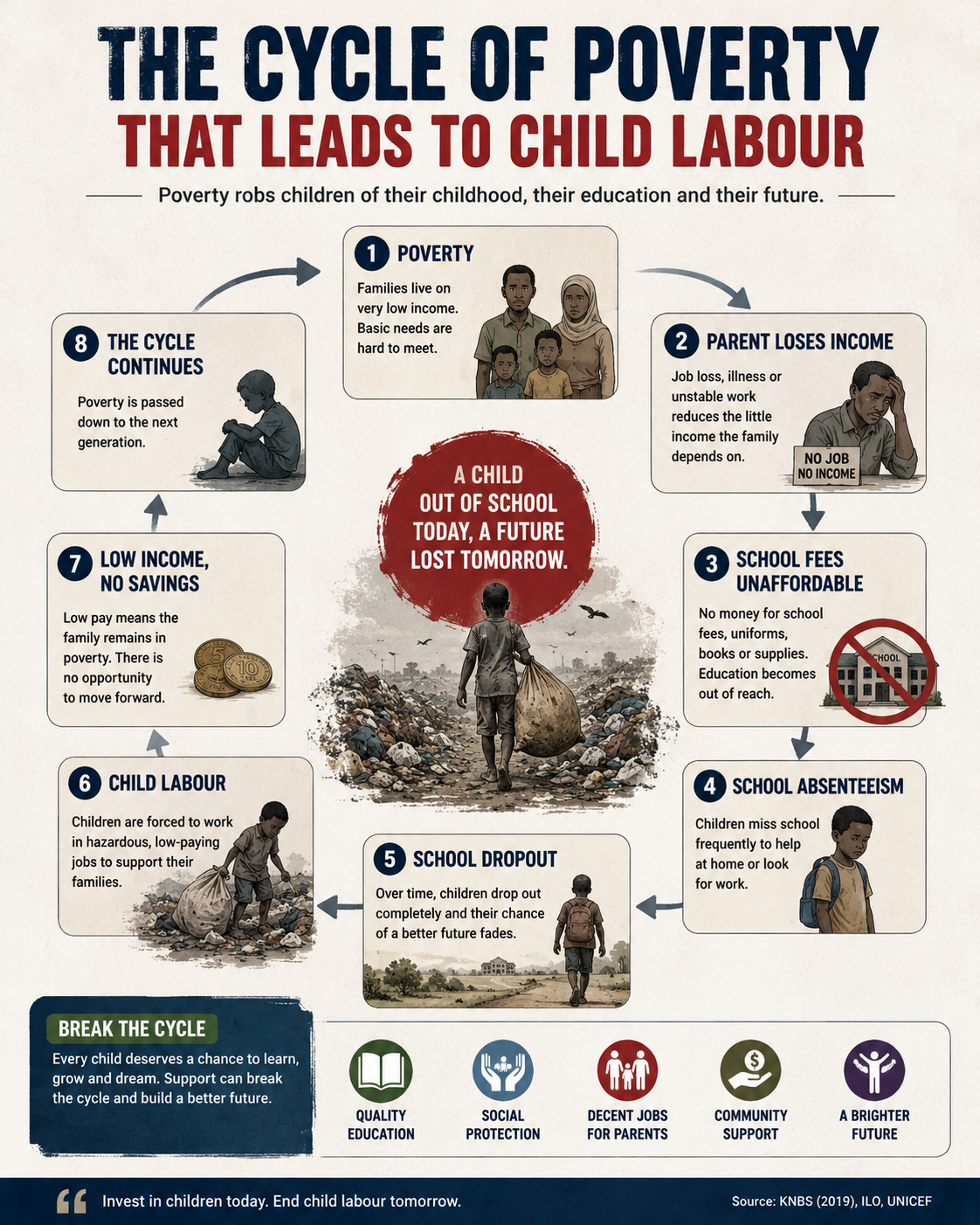
Her own 12-year-old son, who initially accompanied her occasionally, has now dropped out of school and prefers working at the dumpsite with his peers.
“When my son met friends here, he became rebellious at home and at school. I had worked hard to pay for his KEPSEA exams, but he dropped out.”
Another parent, Grace*, regularly comes to the dumpsite with her four-year-old daughter.
With no one to care for the child at home and no money for school, the young girl spends her days sitting near the waste as her mother works.
“This child has grown up in this environment because I can’t afford a nanny to take care of her. She is at the age of starting school, but I don’t have the money.”
Authorities Acknowledge Enforcement Challenges
Despite the visible presence of children working at the dumpsite, authorities say the issue has not been formally reported.
Kapseret Sub-County Education Director Michael Psinen said his office is unaware of children collecting garbage at the dumpsite.
A source at the county government’s Department of Social Protection also said they have no records or data on the situation.
However, security officers at Yamumbi Police Station acknowledge the existence of child labour at Kipkenyo and say they occasionally conduct raids.
Enforcement remains a challenge because the dumpsite is unfenced.
“The children know our vehicles, and when they see them going towards the dump they run away,” says Uasin Gishu County Commander Benjamin Mwanthi.
When rescued, some children are taken to rehabilitation centres or referred to children’s services.
However, many eventually return to the dumpsite, driven by the same economic pressures.
Law Versus Reality
According to Article 53(1)(d) of the Constitution of Kenya 2010, every child has the right:
“To be protected from abuse, neglect, harmful cultural practices, all forms of violence, inhuman treatment and punishment, and hazardous or exploitative labour.”
Yet at Kipkenyo, there is a stark contrast between these legal protections and the reality on the ground.
The dumpsite highlights a deeper systemic issue rooted in poverty, unemployment and inadequate social support systems.
While enforcement efforts such as police raids may offer temporary relief, they do not address the underlying causes that drive children to work.
Rescue Centre Offers Hope
According to David Magut, Manager of the Eldoret Children’s Rescue Centre, addressing the crisis at Kipkenyo requires long-term solutions.
“Children who scavenge at the dumpsite should be rescued, taken to rehabilitation centres, and provided with basic education, skills training, food and medical support by both the government and civil society organisations.”
The centre, operated by the County Government of Uasin Gishu, provides temporary care, protection and rehabilitation for neglected, abused, abandoned and street children.
It focuses on reintegration by offering counselling, medical care, education and vocational training.
According to Magut, the centre currently hosts 159 children rescued from different parts of the region, with more than 10 coming from Kipkenyo dumpsite environments.
The centre has equipped several teenagers with basic skills in masonry, carpentry and tailoring.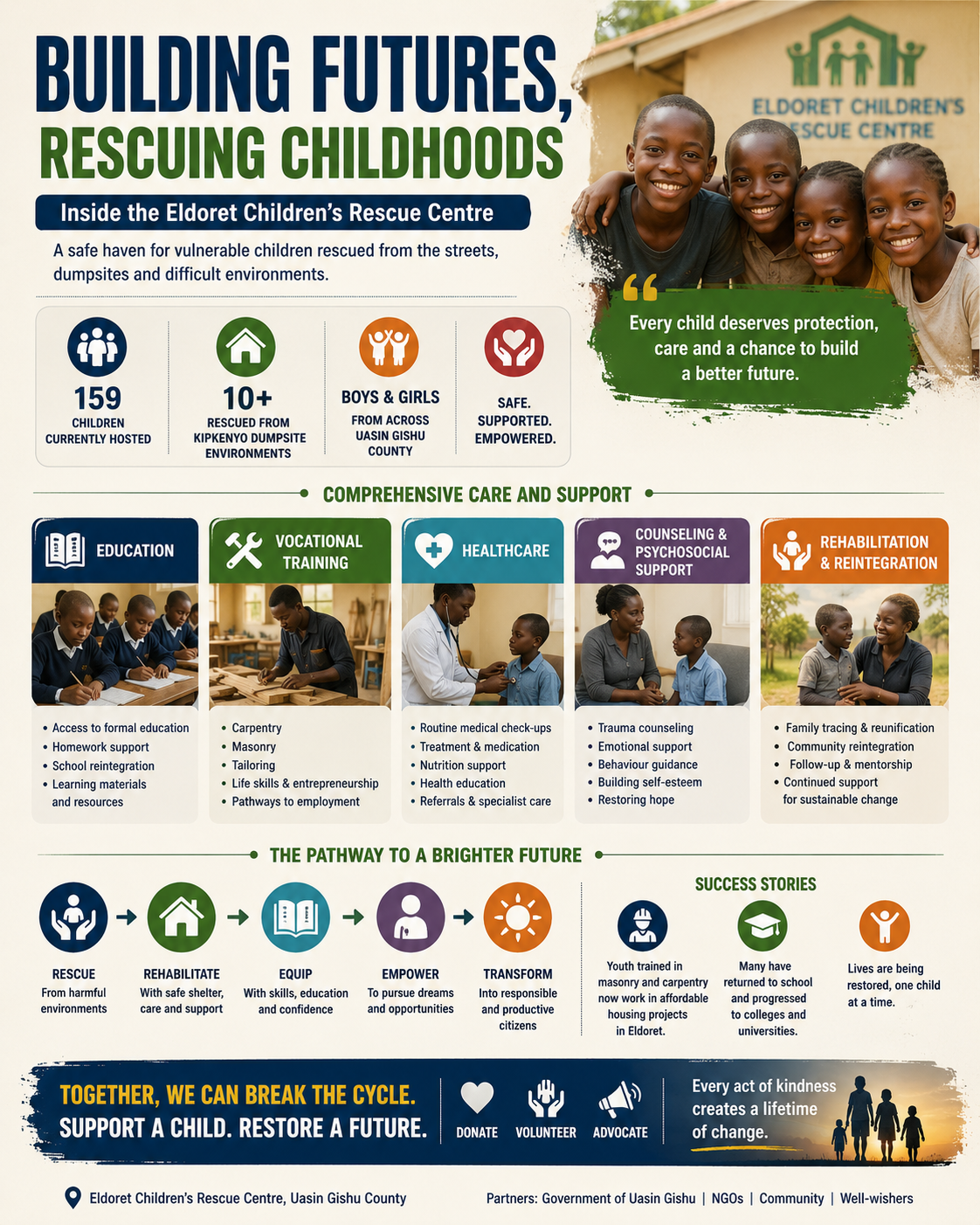
Some have been linked to employment opportunities in ongoing affordable housing projects in Eldoret, while others have progressed to colleges and universities.
“For those who are over 18 and have acquired skills in masonry and carpentry, we have arranged for them to work at the ongoing affordable housing projects here in Eldoret, returning to the centre in the evening,” said Magut.
“We have also requested that students currently undertaking teaching practice be allowed to practice in nearby schools to ease their stay.”
Magut noted that the rescue centre faces challenges including limited funding, inadequate food supplies and insufficient educational materials.
He called for a multi-sectoral approach, urging different departments to work together to improve the lives of vulnerable children.
Childhood Traded for Survival
For children like Mark, Kelvin and Janet, Kipkenyo remains a place where childhood is gradually traded for survival.
A place where dreams are deferred, education interrupted, and the promise of a better future feels increasingly out of reach.
About Author