Manchester United Reveal Site for New 100,000-Seat Mega Stadium
If approved, it will enter an eight-week public consultation period from July 28 to Sept. 22, during which residents and supporters will be invited to review the proposals and provide feedback.
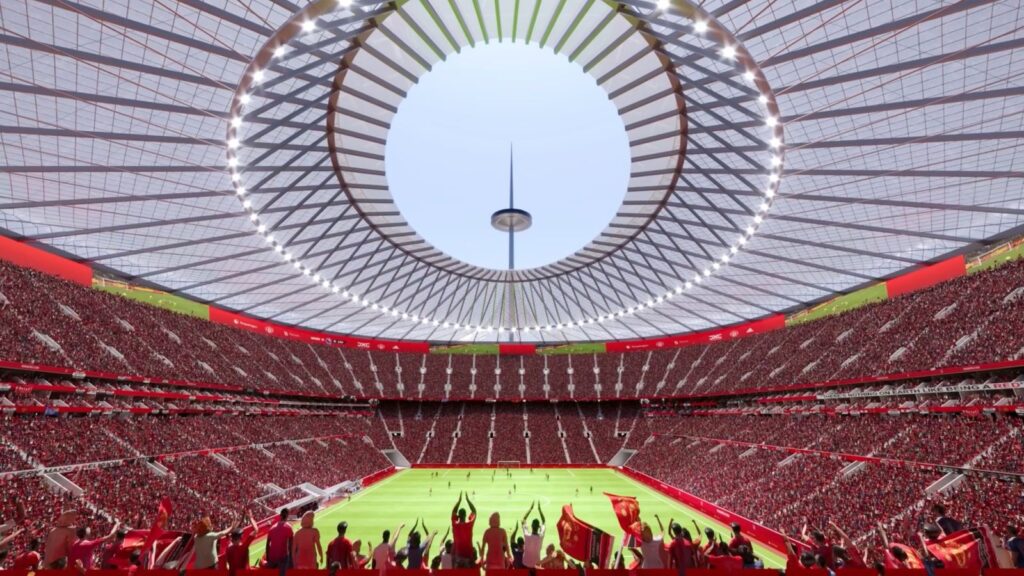
New Trafford Stadium plan. Photo: Courtesy.
By Robert Mutasi
Manchester United have unveiled the location of their proposed new 100,000-seat stadium, a landmark development that forms the centerpiece of an ambitious plan to regenerate the Trafford Wharfside area and reshape the club’s future.
The proposed stadium will be built approximately 350 metres northwest of the current Old Trafford, allowing the club to continue playing at its historic home while construction takes place. The future of the existing stadium has not yet been decided.
The announcement comes just weeks after the club confirmed it had secured most of the land required for the project, clearing a significant hurdle for what is expected to become the largest football stadium in the United Kingdom.
The proposed development is part of a wider masterplan aimed at transforming Trafford Wharfside into a year-round destination for sport, entertainment, business and residential living. The regeneration project also includes thousands of new homes, upgraded public transport, improved pedestrian and cycling routes, and new commercial and public spaces.
The masterplan is scheduled to be considered by Trafford Council on July 20. If approved, it will enter an eight-week public consultation period from July 28 to Sept. 22, during which residents and supporters will be invited to review the proposals and provide feedback.
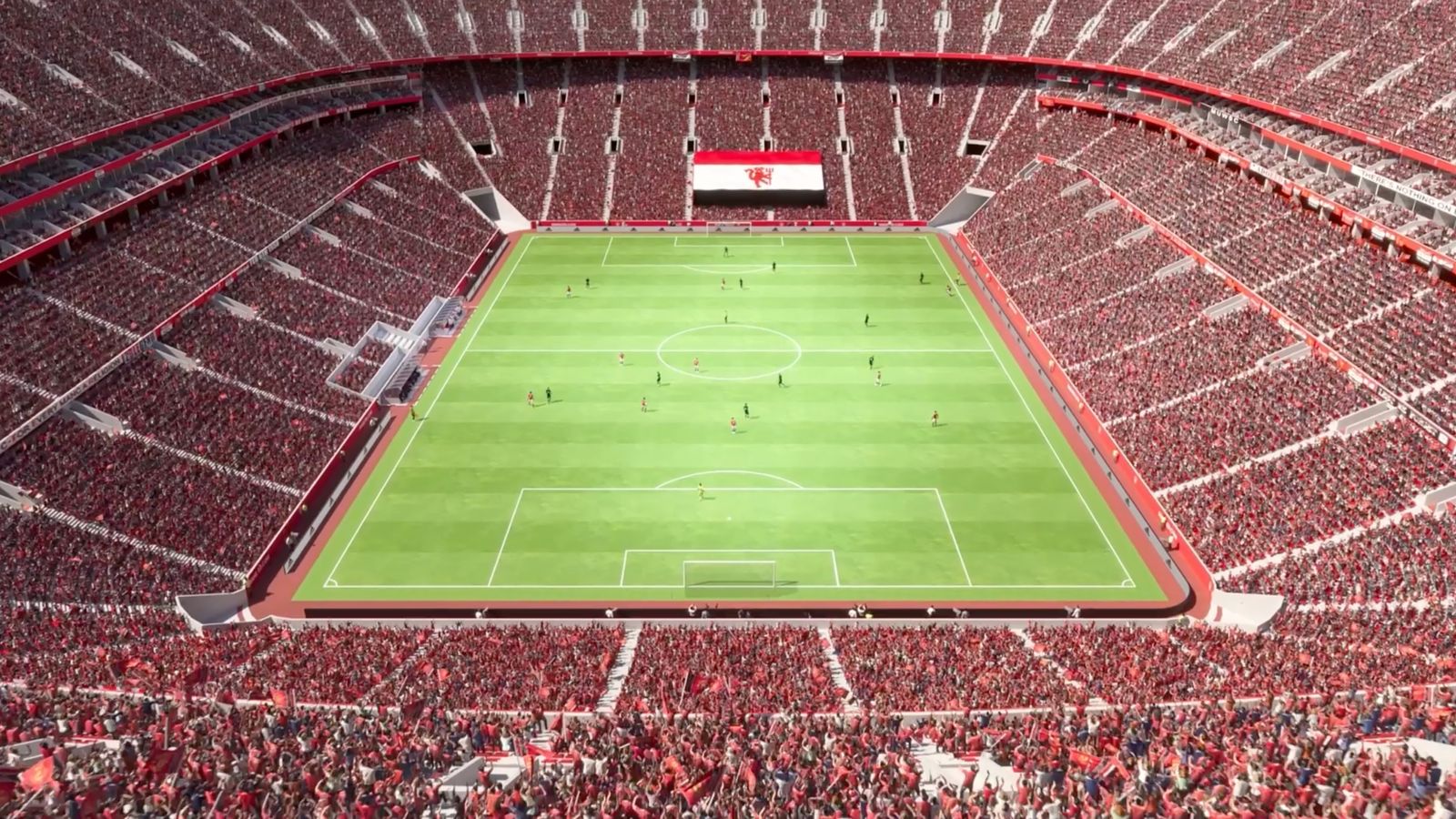
Manchester United released a series of computer-generated images illustrating the proposed development but stressed that the designs remain conceptual and could change as planning progresses.
The club has provisionally named the venue “New Trafford”, reflecting its intention to preserve the identity and heritage associated with Old Trafford while creating a modern stadium capable of hosting the world’s biggest sporting and entertainment events.
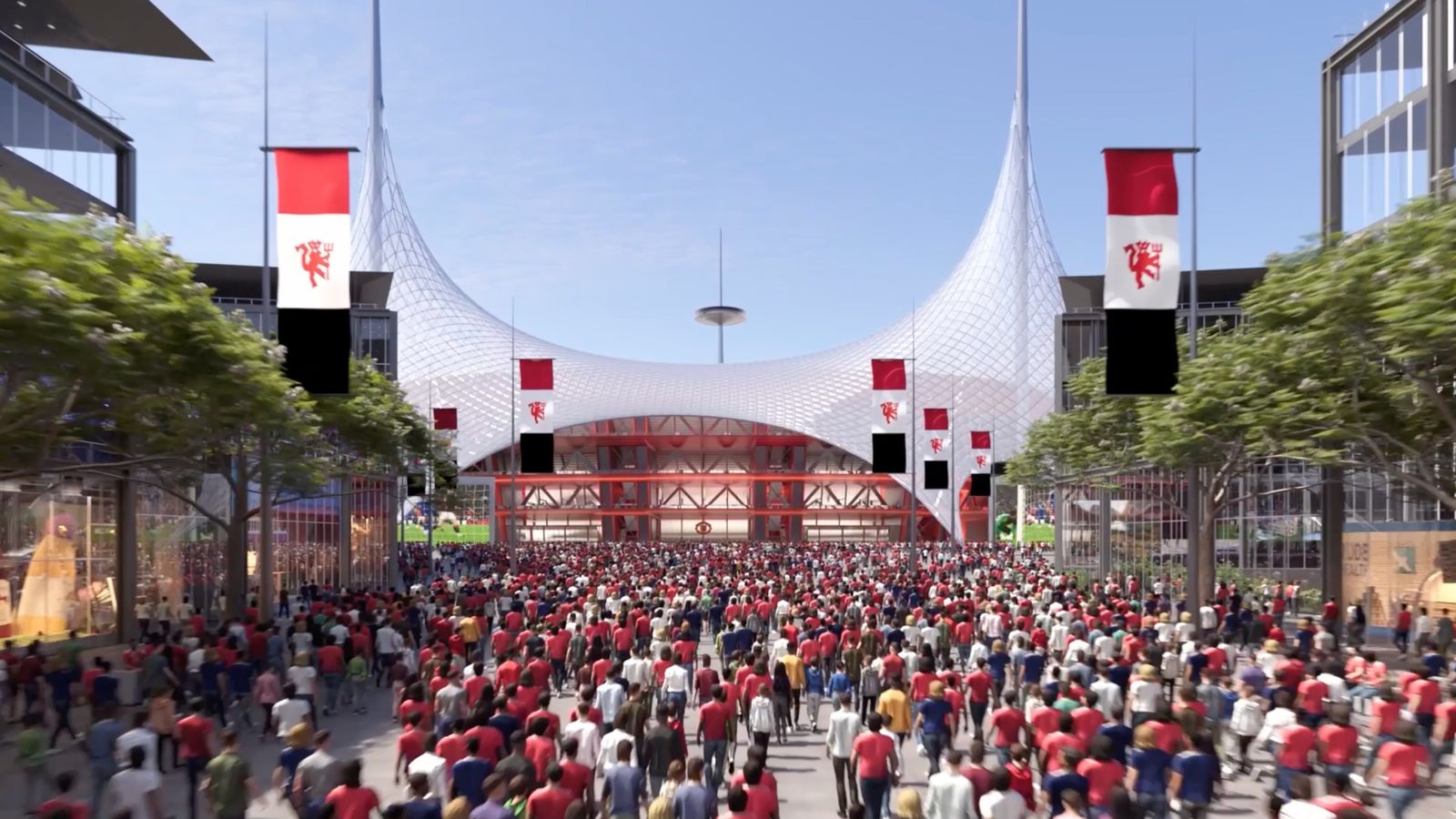
According to project documents, the stadium will feature an innovative umbrella-style roof designed to harvest solar energy and collect rainwater, supporting the club’s environmental sustainability goals.
Architects have also proposed three towering masts that would make the stadium visible from as far as 40 kilometres away. Club officials noted that, on a clear day, the structure could even be seen from the outskirts of Liverpool.
Construction is expected to take approximately five years once planning approval is secured.
The relocation of the stadium site solves one of the major engineering challenges that had complicated previous redevelopment proposals for Old Trafford. The current stadium is constrained by surrounding railway lines and the Bridgewater Canal, leaving little room for expansion.
By moving the project onto a nearby triangular parcel of land currently occupied by industrial units and recreational facilities, the club believes it can construct a larger, state-of-the-art venue without disrupting football operations at Old Trafford.
Manchester United hope the new stadium will become a catalyst for wider economic regeneration across western Manchester, attracting investment, creating jobs and revitalising the surrounding area.
Club executives also revealed their ambition to have the stadium operational in time to support the United Kingdom’s bid to host matches during the 2035 FIFA Women’s World Cup. While officials would like the venue to host Premier League football before then, they acknowledged that planning approvals and consultation processes mean construction cannot begin immediately.
If completed as planned, the new stadium will become England’s largest sporting arena with a capacity of 100,000, surpassing Wembley Stadium’s 90,000 seats.
It would also rank as the second-largest football stadium in Europe, behind only Barcelona’s redeveloped Camp Nou, which is expected to accommodate approximately 105,000 spectators.
Manchester United have played at Old Trafford since 1910. The current stadium has a capacity of nearly 75,000 and remains one of world football’s most iconic venues. Club officials say the new development is intended to preserve that legacy while providing facilities capable of meeting the demands of modern football and major international events for decades to come.
About Author