Kenyans Arrested as Protests Intensify Over Planned US Ebola Quarantine Facility in Nanyuki
The project, backed by the Kenyan and US governments, has sparked legal challenges and public concern despite assurances that it will strengthen Kenya’s disease preparedness efforts.
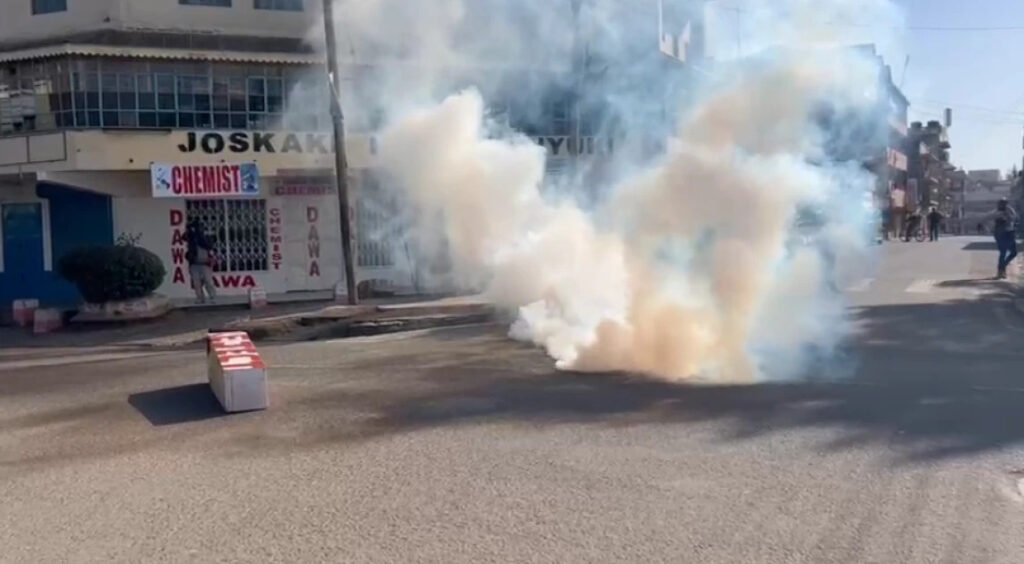
Police arrested several protesters and used tear gas to disperse crowds opposing the construction of a US-funded Ebola quarantine facility at Laikipia Air Base in Nanyuki. Photo/Courtesy
By Ruth Sang
On Tuesday, several people got arrested as the protests kept going, against the buildout of an Ebola quarantine facility at Laikipia Air Base in Nanyuki. It’s basically a project meant to hold American citizens who are arriving from the Democratic Republic of Congo, where there’s a big Ebola outbreak that’s been ongoing for a while.
The site is near the slopes of Mount Kenya and it’s expected to have up to 50 isolation beds, run by American personnel. Still, the plan is getting pushback from residents and local leaders, who say they’re worried it might bring a disease to Kenya that, well, has never been recorded there before.
Dozens of demonstrators showed up near the air base, and some wore protective gear while others carried a mock coffin, with the word “Ebola” on it, as a kind of dramatic, symbolic point. Police then stepped in to break up the crowd, arresting several protesters, and they also fired tear gas during the whole operation.
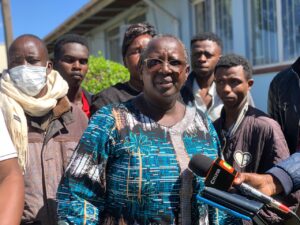
“We do not have that disease in this country, Bringing people who may be carrying the virus puts our lives at risk,” said protester Zipporah Wachira, 30.
These demonstrations are just the latest round in a longer chain of protests about the project. Before that, on June 1, earlier protests turned deadly. Human rights groups reported two deaths, but exactly what happened around those fatalities still isn’t clear, not fully.
Right now the construction is also dealing with court trouble. Kenya’s High Court issued a temporary order to halt the project, at least for now. Meanwhile, political leaders in Laikipia County have also spoken out, saying public concerns should be handled first before construction continues.
Even with all the resistance, President William Ruto’s government has kept backing the project, saying Kenya and the United States have had a long partnership, especially in the health sector.
“The American people and government have supported Kenya’s health programmes for nearly three decades,” President Ruto said recently. “It would be unfortunate for Kenya to reject a facility that is being established at their expense after years of cooperation.”
The government has also tried to calm people down, saying the centre won’t be only for American citizens. Health Cabinet Secretary officials have said the facility is meant to strengthen Kenya’s disease readiness, and they say it could even help support Kenyan patients if needed.
The United States, for its part, has put in $13.5 million toward Kenya’s Ebola preparedness work, covering things like surveillance, response capacity, and public health infrastructure.
This all comes as regional concern grows about the Ebola situation in the DRC. The World Health Organization says the outbreak has led to 515 confirmed infections and 91 deaths, and that has led to the declaration of an international public health emergency.
Even though worries about cross-border spread are high, only Uganda has reported confirmed Ebola cases outside the DRC, with 19 infections. Most of those cases involve Congolese nationals who crossed the border.
And as the argument continues, the quarantine facility proposal is still right at the center of a widening national conversation—trying to balance public health preparedness, international cooperation and what communities are afraid of, all at the same time.
About Author