KenGen Moves to Raise Olkaria I Geothermal Output by 40%
Njenga said restoring the plant would allow it to return to the national grid while preserving its significance in Kenya’s renewable energy development.
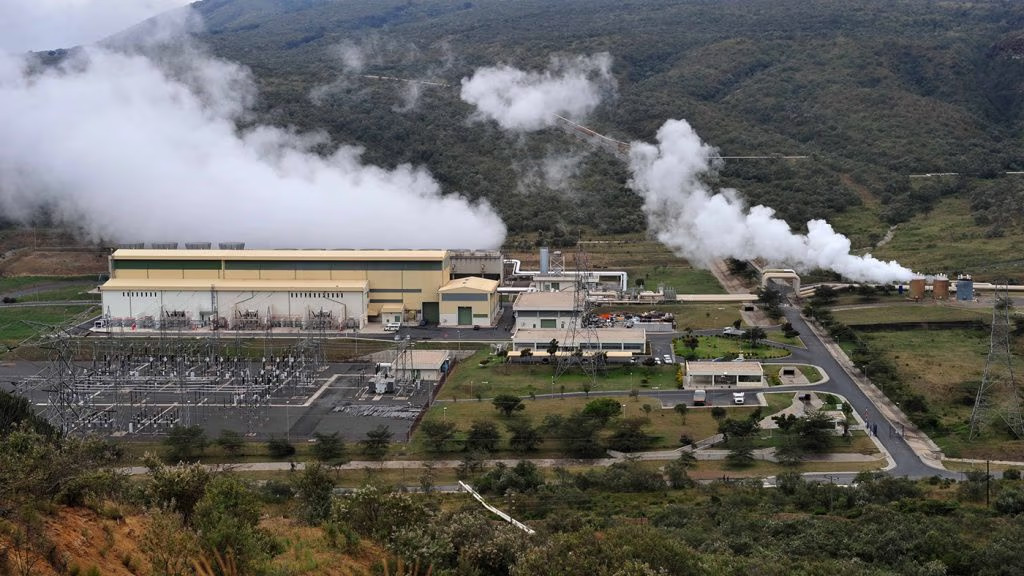
Photo: Courtesy.
By Robert Mutasi
Kenya Electricity Generating Company (KenGen) has stepped up efforts to increase power generation at Olkaria I Geothermal Power Plant by 40 per cent as part of a wider plan to expand the country’s renewable energy capacity.
The utility plans to raise the plant’s output from 45 megawatts (MW) to 63MW through a major rehabilitation and modernization programme expected to extend the facility’s operating life.
KenGen has awarded the Engineering, Procurement and Construction (EPC) contract to SEPCOIII Electric Power Construction Co., Ltd, while Toshiba Energy Systems and Solutions Corporation (Toshiba ESS) will supply steam turbines and generators for the plant’s three units.
The modernization programme is expected to be completed by December 2026.
KenGen Managing Director Peter Njenga described the renovation as a major milestone in the company’s efforts to improve the country’s geothermal generation capacity.
“The renovation of Olkaria I represents a historic milestone for KenGen as we continue our commitment to sustainable energy solutions. By leveraging the latest advancements in geothermal technology, we aim to not only enhance the performance of the plant but also set new standards for renewable energy production in Kenya,” Njenga said.
Olkaria I holds a special place in Kenya’s energy history as the oldest geothermal power plant in Africa. The facility has played an important role in establishing Kenya as one of the leading geothermal energy producers globally.
Njenga said restoring the plant would allow it to return to the national grid while preserving its significance in Kenya’s renewable energy development.
“As the oldest geothermal power plant in Africa, Olkaria I holds significant historical importance and stands as a testament to Kenya’s pioneering efforts in renewable energy production and therefore the excitement for us to have this power plant back on the grid,” he said.
Kenya has an estimated geothermal potential of about 10,000MW, largely concentrated along the Great Rift Valley. However, only a fraction of this resource has been developed.
About 950MW of geothermal capacity has been exploited, with approximately 799MW developed in the Olkaria and Eburru Hill geothermal fields in Nakuru County.
KenGen is seeking to expand its geothermal portfolio as Kenya pursues its transition towards cleaner energy sources. Geothermal power remains particularly important because it can provide relatively stable electricity throughout the year and does not depend directly on rainfall, sunshine or wind conditions.
The company is also exploring opportunities to acquire additional geothermal drilling licences in the Great Rift Valley as it seeks to increase generation capacity.
The expansion is linked to Kenya’s wider Vision 2030 energy ambitions, which include increasing the share of renewable energy in the country’s electricity supply.
KenGen’s geothermal ambitions also extend beyond Kenya. The company has pursued commercial drilling and geothermal development opportunities in the Horn of Africa as part of its diversification strategy.
In February 2019, KenGen secured a contract to provide geothermal drilling services for Ethiopian Electric Power in the Aluto-Langano geothermal field in Ethiopia.
The company later signed another agreement in October 2019 with Tulu Moye Geothermal Operations PLC to drill geothermal wells in Ethiopia. KenGen completed two wells under the contract and proceeded with drilling a third.
KenGen has also expanded its commercial drilling operations to Djibouti, where it secured a project worth approximately KSh709 million.
The rehabilitation of Olkaria I is therefore part of a broader strategy aimed at strengthening KenGen’s geothermal operations while positioning Kenya to exploit more of its estimated 10,000MW geothermal resource in the Rift Valley.
Once completed, the upgraded Olkaria I plant is expected to provide additional reliable renewable electricity to the national grid and demonstrate how ageing geothermal facilities can be modernized to support Kenya’s long-term energy needs.
About Author