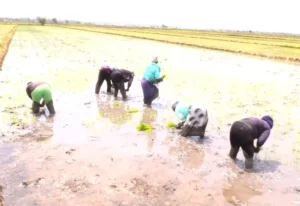
Dry spell in Uasin Gishu threatens farming output and water supply
One farmer said the uncertainty has left many households under pressure, as investment in seeds, fertilizer, and labor risks going to waste.
Photo/Courtesy.
By Eve N. Njeri
A prolonged dry spell in Uasin Gishu County has raised concern over food production and water availability in Kenya’s key agricultural region, widely regarded as the country’s breadbasket.
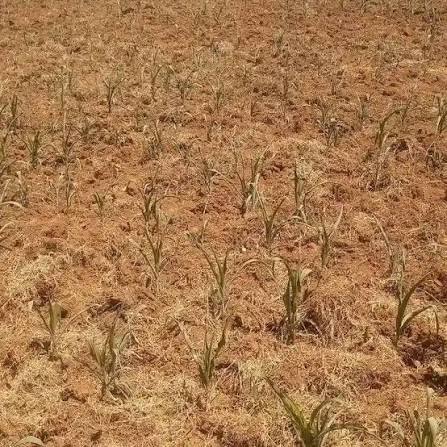
Farmers across the county report mounting losses after weeks of poor rainfall that have left maize and beans fields dry, stunted, and in some cases beyond recovery. The timing has been particularly damaging, coming during a critical growth stage for staple crops.
The Kenya Meteorological Department has attributed the conditions to a significant rainfall deficit linked to shifting atmospheric patterns. Instead of the expected long rains, the North Rift has experienced hotter and drier weather, disrupting normal planting cycles and reducing soil moisture levels.
Climatologists say the situation reflects a broader trend of increasing rainfall variability in Kenya. Studies indicate that climate change is making seasonal patterns less predictable, with direct consequences for rain-fed agriculture, which supports the majority of farming households in the country.
Farmers in affected areas say the outlook for the season is bleak. Many now expect sharply reduced yields, while others fear total crop failure if the dry conditions persist. One farmer said the uncertainty has left many households under pressure, as investment in seeds, fertilizer, and labor risks going to waste.
The crisis is also affecting water availability in urban centres. In Eldoret, declining water levels have strained supply systems managed by the Eldoret Water and Sanitation Company, leading to rationing in several residential areas. Demand continues to outpace supply as reservoirs and natural sources shrink.
A water official confirmed that reduced inflows into key sources have forced authorities to adjust distribution schedules. Residents in some estates now receive water only on specific days of the week.
County authorities are urging long-term measures to reduce dependence on rainfall. Proposed interventions include expanded water harvesting systems, construction of earth dams, and increased investment in irrigation infrastructure to support farming during dry periods.
Experts warn that without sustained climate adaptation efforts, Uasin Gishu’s agricultural sector will remain exposed to recurring drought cycles, threatening both food security and local livelihoods.
About Author