Taita Taveta School Launches ICT Lab to Inspire Digital Learning and Young Conservation Champions
Learners at Kongoni Primary School in Taita Taveta are set to benefit from enhanced digital learning and environmental education following the launch of a 21-computer ICT laboratory aimed at nurturing the next generation of conservation champions.
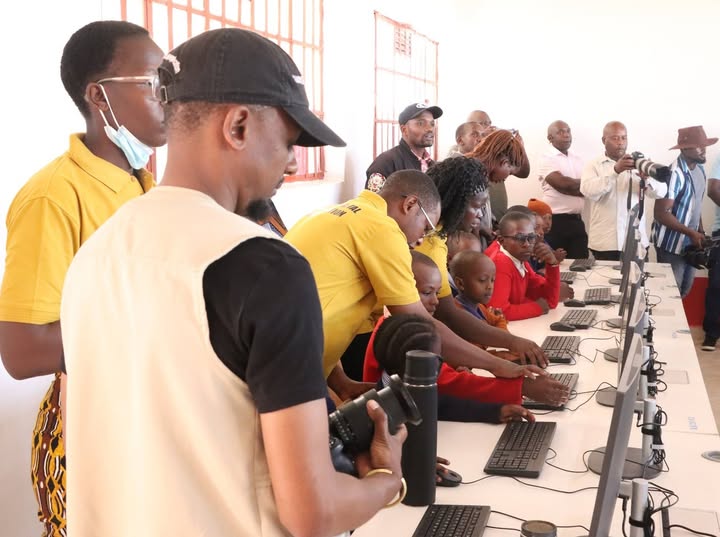
Taita Taveta County officials, African Wildlife Foundation representatives, teachers, and learners during the launch of a new ICT laboratory at Kongoni Primary School in Mwaktau on World Environment Day. Photo/Courtesy
TAITA TAVETA, Kenya — Learners at Kongoni Primary School in Mwaktau, Taita Taveta County, are set to gain improved access to digital education and environmental learning following the launch of a modern Information and Communication Technology (ICT) laboratory designed to nurture the next generation of conservation champions.
The facility, equipped with 21 computers, was officially unveiled during World Environment Day celebrations under the Young Conservation Heroes Programme, an initiative being implemented by the African Wildlife Foundation (AWF) in collaboration with Wildlife Clubs of Kenya.
Speaking during the launch, Taita Taveta County Executive Committee Member for Water, Sanitation, Environment, Climate Change and Natural Resources, Grantone Mwandawiro, said the integration of technology and conservation education would empower learners with practical digital skills while deepening environmental awareness at the community level.
“By combining ICT with conservation education, we are giving children the tools they need to understand environmental challenges and become part of the solution,” Mwandawiro said.
He emphasized that exposing young learners to technology at an early age would strengthen their digital literacy while encouraging active participation in climate action and biodiversity conservation efforts.
“Teaching children at the community level to take efforts towards reversing the effects of climate change builds a strong foundation for instilling a sense of environmental stewardship,” he said.
According to Mwandawiro, the ICT laboratory will enable pupils to access environmental information, conduct research, and develop innovative approaches to addressing conservation challenges affecting their communities.
African Wildlife Foundation Country Director Nancy Githaiga challenged both students and teachers to make full use of the new facility to advance environmental literacy and strengthen conservation advocacy within and beyond the school.
“Let us ensure the school becomes a model institution on conservation matters,” Githaiga said. “I urge learners to become conservation ambassadors and contribute towards creating a cleaner, greener planet for future generations.”
AWF Senior Conservation Education Officer Margaret Mereiyan noted that the Young Conservation Heroes Programme seeks to transform students from passive recipients of information into active custodians of the environment through the integration of technology and conservation learning.
“Our goal is to empower learners to take ownership of environmental protection while equipping them with the digital skills needed to thrive in a rapidly changing world,” Mereiyan said.
She added that the initiative goes beyond classroom learning by promoting a holistic transformation of the school environment through both structural and technical support aimed at enhancing digital and environmental education.
The newly launched ICT laboratory is expected to expand access to digital learning opportunities for pupils in the rural community while fostering greater youth involvement in conservation and sustainable environmental practices.
About Author