When Youth Empowerment Is Captured: The Unanswered Questions Facing County Security Committees
Vijana Ni Nguzo began as a promise to empower Kenya’s youth. But growing concerns over political patronage, selective access to senior government officials, and the role of county security structures raise difficult questions about whether the initiative is serving its intended purpose.
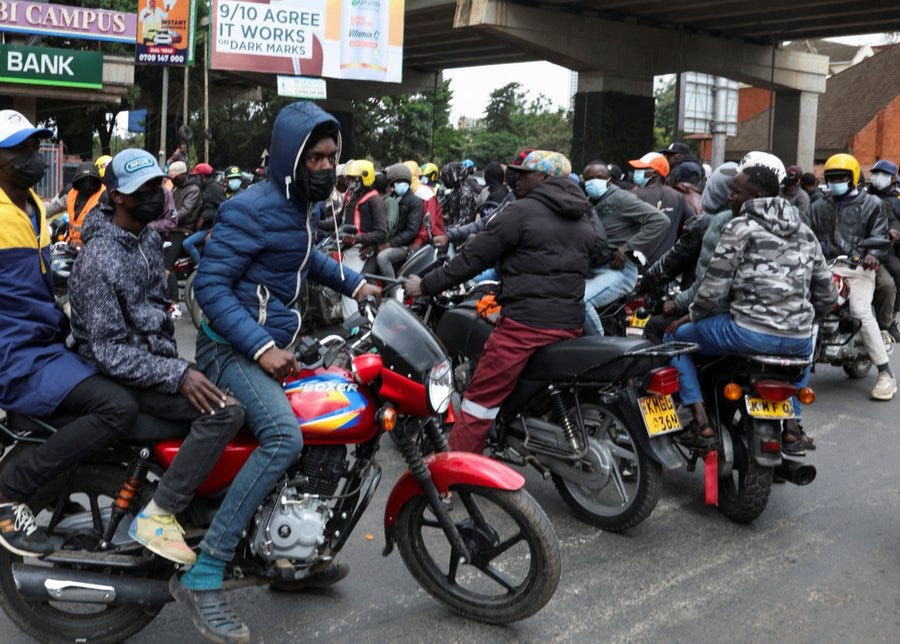
Kenya's 'Goons for Hire' Crisis: A Growing National Security Vulnerability. Photo: The EastAfrican.
By Kimutai Kirui
Human Rights Activist and Governance Champion
Every generation deserves a ladder of opportunity. The tragedy begins when that ladder is transformed into a private staircase reserved for those closest to political power.
The vision behind Vijana Ni Nguzo was both timely and commendable. It sought to provide young Kenyans with opportunities to engage government, access leadership platforms, and participate meaningfully in national development. It carried the promise that leadership would become more inclusive and that youth from every village, estate, and county would have an equal chance to contribute to the country’s future.
Today, however, a troubling pattern is emerging—one that deserves careful public scrutiny rather than political defensiveness.
The concern is not whether the programme itself is noble. It undoubtedly is. The concern is whether its implementation has gradually been captured by political interests that undermine the very principles it was established to promote.
Perhaps the most uncomfortable question is this:
“Do Cabinet Secretaries and Principal Secretaries genuinely know the young people they meet, or are they simply being introduced to them by governors, Members of Parliament and county administrative structures as convenient ‘youth representatives’?”
This question is not intended as an indictment of Cabinet Secretaries or Principal Secretaries. On the contrary, many of them may be engaging these groups in good faith, believing they are interacting with legitimate representatives of local youth.
If there is failure, it may not necessarily lie with the national government officials.
It may instead point to weaknesses within county coordination systems responsible for identifying, vetting and presenting these groups before senior government leaders.
This is where attention inevitably turns to County Security Committees.
Across Kenya, County Security Committees—chaired by County Commissioners and comprising County Police Commanders (formerly OCPDs and county police leadership), intelligence agencies and other security organs—carry a broader responsibility than maintaining law and order. They are expected to understand emerging security threats, monitor organised groups, and advise government on risks that may undermine public order and democratic governance.
If individuals widely associated with political intimidation, organised mobilisation or disruptive conduct continue to gain privileged access to Cabinet Secretaries, Principal Secretaries and other senior state officials through official county structures, legitimate questions arise about whether these committees are exercising sufficient due diligence.
Could county security structures be failing in their advisory role?
Are County Commissioners receiving accurate intelligence regarding the individuals presented before visiting national leaders?
Or are political actors increasingly determining who gains access to senior government officials while security agencies merely facilitate the process?
These questions deserve objective answers.
In counties such as Uasin Gishu, the issue has become increasingly visible.
Governors, Members of Parliament and other political leaders routinely interact with groups of young people during official functions. There is nothing inherently wrong with such engagement. Democratic leadership requires interaction with citizens.
The concern arises when the same familiar faces repeatedly appear at nearly every government function, are introduced as representatives of the county’s youth, gain exclusive access to Cabinet Secretaries and Principal Secretaries, and become the default beneficiaries of government programmes while thousands of equally deserving young people remain excluded.
Representation should never become the monopoly of politically connected networks.
A youth empowerment programme loses credibility when access appears to depend more on political proximity than merit, inclusion and equal opportunity.
Vijana Ni Nguzo began with the inspiring leadership of Kevin Kipleting, the Youth President, carrying genuine hope that doors previously closed to ordinary young Kenyans would finally open.
That aspiration deserves protection.
Yet evidence increasingly suggests that what began as a broad empowerment initiative risks being perceived as a platform serving selective political interests rather than the wider youth population.
The emerging pattern has become difficult to ignore.
Many of the young people accessing meetings with Principal Secretaries and Cabinet Secretaries through the County Commissioner’s office appear to originate from similar political and geographical networks, with many reportedly tracing their roots to South Nyanza—particularly Suba and the larger Homa Bay region—while maintaining local connections through institutions, families and political structures within Uasin Gishu.
The issue is not where anyone comes from.
Kenya belongs equally to all its citizens.
The concern is whether government opportunities intended for all youth are being distributed fairly or whether they increasingly favour organised political networks over deserving young people from every constituency, ward and village.
A section of these individuals has repeatedly been linked to aggressive political mobilisation activities across the North Rift.
Many openly align themselves with local political aspirants, including a female MCA aspirant in Langas Ward.
Others are reportedly registered voters in Homa Bay while maintaining educational or family connections in Langas, Huruma, Shauri, Kipkaren and Kidiwa.
Reports further allege that some operate multiple pseudonymous Facebook and WhatsApp accounts, forming part of coordinated online mobilisation networks.
These observations mirror earlier concerns reportedly raised by Criminal Investigations officer James Lenaso regarding organised digital political networks operating under what he described as a broader “government machinery,” involving networks such as Barsulliek and Karnet that have increasingly featured in local political discourse.
Whether these allegations withstand independent verification is ultimately a matter for investigative agencies.
However, their persistence raises legitimate governance concerns.
More importantly, these same groups continue appearing alongside senior government officials.
Principal Secretary Fikirini Jacobs, Cabinet Secretary John Mbadi, Cabinet Secretary Kipchumba Murkomen and Principal Secretary Raymond Omollo have all, at different times, interacted with these youths during official engagements organised through county government structures or the County Commissioner’s office.
Following one such meeting convened after introductions facilitated through the County Commissioner’s office, Principal Secretary Fikirini distributed sports equipment intended for Uasin Gishu youth.
Subsequent claims alleged that some of the donated items eventually found their way to Suba in Homa Bay.
If true, such allegations warrant transparent clarification—not political accusations, but administrative accountability.
Government resources should always reach their intended beneficiaries.
Equally concerning are repeated reports linking some members of these networks to confrontations during political events.
Incidents involving disruption of public meetings, public demands for money from the Deputy President, chants of “one term” intended to attract political attention, and the reported confrontation involving Kisii Governor Simba Arati while travelling to the airport have heightened public concern about the growing normalisation of organised political intimidation.
The same individuals frequently appear across multiple political rallies, projecting themselves as loyal supporters of different leaders depending on the occasion.
Visibility, however, should never be confused with legitimacy.
Crowds can be organised.
Political loyalty can be performed.
Representation, on the other hand, must be earned through genuine public trust.
Their regular movement between political events within and beyond Uasin Gishu continues to raise important questions regarding organised mobilisation and the expanding influence of informal political networks operating alongside official government functions.
These are precisely the kinds of developments County Security Committees should continuously assess.
Their constitutional responsibility extends beyond policing crime.
It includes safeguarding public order, protecting democratic institutions and ensuring government programmes are not inadvertently exploited by organised political interests.
If politically connected groups repeatedly become the gatekeepers to Cabinet Secretaries and Principal Secretaries while ordinary youth remain invisible, then the system deserves honest examination.
The issue ultimately transcends one programme or one county.
It speaks to the integrity of public administration itself.
Youth empowerment cannot become political patronage.
Government access cannot become a reward for political loyalty.
Nor should County Commissioners, governors or elected leaders allow official government platforms to be perceived as vehicles for advancing organised partisan networks at the expense of broader public participation.
The enduring question therefore remains:
“When will equally deserving sons and daughters from our villages, estates and informal settlements receive the same access, recognition and opportunities currently enjoyed by a politically connected few?”
Leadership should never be measured solely by those invited into the room.
It must also be judged by those who remain standing outside the door.
For Vijana Ni Nguzo to fulfil its original promise, transparency, inclusivity and accountability must replace political gatekeeping.
Otherwise, a programme conceived to empower an entire generation risks becoming yet another reminder that, in politics, opportunity often follows connections while merit waits patiently outside.
About Author