Uasin Gishu Activists Back DCI Crackdown on Drug Cartels, Demand Probe into Police Transfers
“In Uasin Gishu County According to Deputy Inspector General of Police Eliud Lagat, the county recorded 56 arrests linked to illicit alcohol in 2024, rising sharply to 505 in 2025 before dropping to 111 between January and May 2026.”
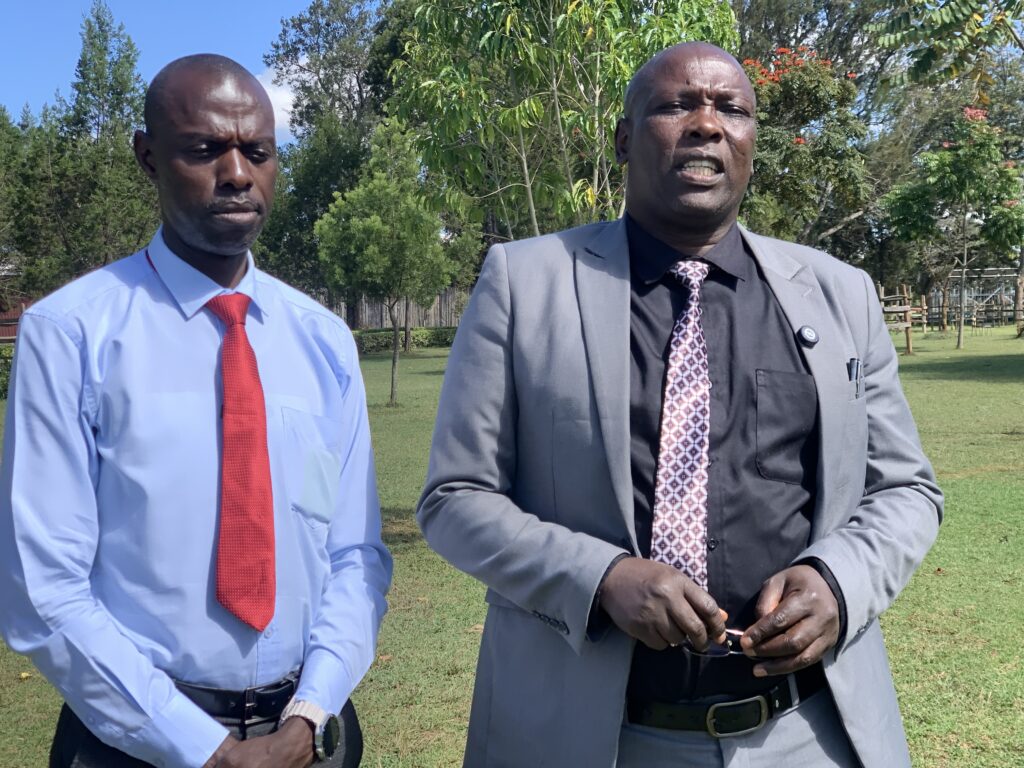
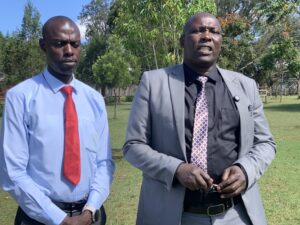
Anti-drug abuse activists Kimutai Kirui and Benson Juma (left) address journalists in Eldoret, Uasin Gishu County, where they called on the government to intensify the crackdown on illicit alcohol, illegal ethanol and drug trafficking networks.
By James Gitaka
Uasin Gishu-based anti-drug abuse activists have welcomed the ongoing government crackdown on illicit alcohol, illegal ethanol and narcotics, urging the Directorate of Criminal Investigations (DCI) to expand its operations to target suspected drug barons, financiers and distribution networks.
The activists, Kimutai Kirui and Benson Juma, have commended DCI Director Mohamed Amin for the intensified campaign but questioned the effectiveness of some security operations in Uasin Gishu, alleging that suspected links between sections of the police service and drug trafficking networks could be undermining enforcement efforts.
They argue that the crackdown should go beyond arrests of small-scale traders and retailers to identify and prosecute individuals suspected of financing, protecting and coordinating the illegal trade.
Kirui and Juma have also called on Interior Cabinet Secretary Kipchumba Murkomen to investigate the alleged transfer of police officers involved in anti-narcotics operations, claiming that frequent changes in deployment could disrupt intelligence gathering and ongoing investigations.
The activists further alleged that some individuals suspected of controlling drug distribution networks enjoy political connections that shield them from arrest. They urged investigative agencies to establish the truth behind the allegations and ensure that nobody is protected from prosecution because of their political or economic influence.
Activists question police transfers and alleged protection networks
Benson Juma said the government must ensure that enforcement operations target the entire criminal supply chain, including individuals suspected of financing and protecting the trade.
He argued that arresting low-level dealers without pursuing the people controlling the networks would undermine the long-term effectiveness of the crackdown.
“The fight against drugs and illicit alcohol must go beyond arresting small-scale traders. The government must pursue the financiers, major distributors and individuals suspected of protecting these networks. Nobody should be above the law, regardless of their political connections or financial influence,” Juma said.
Juma also called for closer scrutiny of police deployment decisions, arguing that officers involved in investigations into suspected drug trafficking networks should not be transferred in circumstances that could compromise ongoing operations.
Kirui, meanwhile, called on the Ministry of Interior to investigate allegations of police collusion with drug traffickers and establish whether the transfer of certain officers was justified.
“We support the efforts being undertaken by DCI Director Mohamed Amin, but the government must address concerns surrounding the conduct of some officers. There must be accountability, and officers who are genuinely committed to fighting drug trafficking should be supported rather than frustrated,” Kirui said.
The activists maintained that sustained intelligence-led operations, professional policing and cooperation between communities and security agencies would be essential in dismantling established drug trafficking networks.
They urged the DCI to investigate the allegations independently and take action against any officers or public officials found to have facilitated criminal activities.
Background: Kenya intensifies nationwide anti-drug operations
The activists’ demands come amid an intensified national campaign against narcotics, illicit alcohol and the illegal distribution of ethanol.
On October 22, 2026, the Kenya News Agency reported that Deputy President Kithure Kindiki had announced 125 enforcement raids conducted within 10 days as the government stepped up efforts to dismantle illicit alcohol and drug trafficking networks.
The operations included nine raids targeting illicit ethanol and another 116 targeting illegal brews. The government also announced plans for tougher legal measures targeting manufacturers, distributors and financiers of illicit alcohol, alongside proposals to seize assets and funds linked to criminal networks.
The campaign follows President William Ruto’s December 31, 2025 directive declaring drug and alcohol abuse a national development and security emergency.
According to figures released by the Ministry of Interior in April 2026, more than 2.8 million litres of illicit alcohol had been seized and over 970 suspects arrested since the nationwide crackdown began in December 2025. The operation also resulted in the recovery of 21,280 litres of ethanol, 4,347 kilogrammes of cannabis, 7.7 kilogrammes of cocaine, 6.4 kilogrammes of ketamine and 1.1 kilogrammes of methamphetamine.
The latest DCI figures also point to an expansion of anti-narcotics investigations. In a report published on November 9, 2026, the agency announced that its National Anti-Narcotics Investigations Bureau (NANIB) had recovered narcotics worth approximately KSh779.6 million between January and October 2026, with 1,631 suspects arrested.
The figures included 21,505.54 kilogrammes of cannabis, 10.23 kilogrammes of cocaine, 7.74 kilogrammes of heroin and 7.67 kilogrammes of methamphetamine.
In a separate operation conducted on November 7 in Kwale County, detectives recovered 454 kilogrammes of suspected methamphetamine valued at approximately KSh3.6 billion and arrested three suspects. DCI Director Mohamed Amin said investigations were continuing to identify other individuals linked to the trafficking network.
Uasin Gishu among counties under scrutiny
Data presented to the National Assembly’s Public Petitions Committee in June 2026 revealed the scale of illicit alcohol enforcement in Uasin Gishu County.
According to Deputy Inspector General of Police Eliud Lagat, the county recorded 56 arrests linked to illicit alcohol in 2024, rising sharply to 505 in 2025 before dropping to 111 between January and May 2026.
Authorities seized 4,417 litres of illicit alcohol in 2024, 37,524 litres in 2025 and another 4,442 litres between January and May 2026.
The broader Rift Valley region recorded the highest volume of illicit alcohol seizures nationally, with 493,073 litres recovered between January 2024 and May 2026.
During the parliamentary proceedings, Lagat acknowledged concerns about corruption within the police service, stating that mechanisms were being pursued with the Ethics and Anti-Corruption Commission to investigate and prosecute officers implicated in illicit alcohol protection networks.
He also highlighted the importance of a coordinated approach involving the police, NACADA, Kenya Revenue Authority, Kenya Bureau of Standards, county governments and other enforcement agencies.
About Author