New SOPs Seek to Strengthen Handling of Sexual and Gender-Based Violence Cases
He observed that despite the existence of the Sexual Offences Act and other legal protections, many cases continue to encounter obstacles
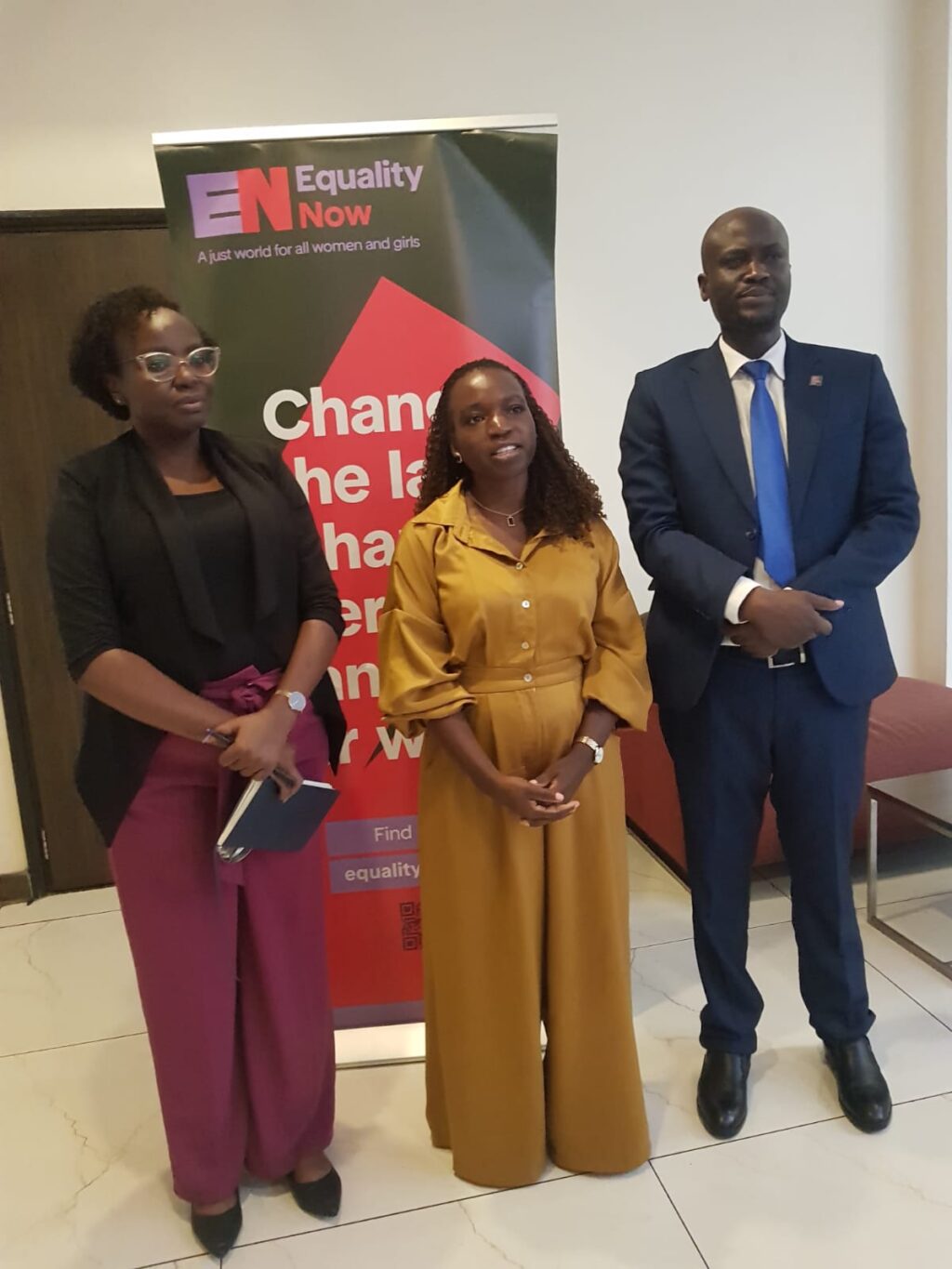
John Paul Murunga Associate Director at Equality Now, at the center Sharon Amedi from.KMET pose for a photo in Kisumu after sensitization forum.
By Grace Wafubwa
Efforts to improve access to justice for survivors of sexual and gender-based violence (SGBV) have gained momentum following the rollout of new Standard Operating Procedures (SOPs) aimed at addressing weaknesses in the investigation, prosecution and determination of cases across Kenya.
The new framework seeks to strengthen coordination among justice-sector institutions and ensure survivors of rape, defilement and other forms of sexual and gender-based violence receive timely, comprehensive and survivor-centred support.
The rollout brought together members of Court Users Committees (CUCs) representing approximately 14 counties in the Lake Region during a sensitisation meeting in Kisumu.
The initiative seeks to address gaps in the justice system that have allowed numerous reported cases to stall between health facilities, police stations, prosecution offices and courts, sometimes resulting in perpetrators escaping accountability.
Speaking during the meeting, John Paul Murunga, Associate Director in Gender-Based Violence at Equality Now, an international non-governmental organisation advocating for the rights of women and girls, said the SOPs were developed to address longstanding challenges affecting the handling of SGBV cases.
Murunga said the procedures clearly outline the responsibilities of different stakeholders, including police officers, investigators, prosecutors, judicial officers, medical practitioners, children’s officers and psychosocial support providers.
“Today we are sensitising CUC members from the Lake Region, with almost 14 counties represented, so that they understand their specific roles in this framework and the work on SGBV to ensure that survivors access safe justice that respects their dignity and security,” he said.
He observed that despite the existence of the Sexual Offences Act and other legal protections, many cases continue to encounter obstacles, particularly during investigations and the transition from reporting to prosecution.
Murunga cited statistics indicating that only one in four survivors of sexual and gender-based violence report their experiences, highlighting the extent of underreporting and the challenges facing efforts to secure justice.
He explained that some survivors seek medical assistance after experiencing violence but never report the incidents to police, while others face difficulties navigating investigations and court proceedings.
The new procedures are expected to establish a coordinated referral and response mechanism that tracks cases from the initial reporting stage through investigation, prosecution and final determination in court.
They also seek to prepare survivors for the judicial process by ensuring they understand the procedures involved in reporting cases, accessing court services and giving testimony.
Murunga said the sensitisation programme had also been extended to other regions, including the Coast, Garissa, Central, Meru and Eastern regions, where similar challenges in handling SGBV cases had been identified.
He expressed confidence that involving judicial officers and other justice-sector stakeholders would strengthen implementation, improve accountability and enhance access to justice for survivors.
Community Participation Key to Strengthening SGBV Response
The development and rollout of the SOPs have also incorporated views from communities and county governments to ensure the framework addresses challenges experienced by survivors at the grassroots level.
Sharon Amendi, who works in gender and community engagement at a KMET partner organisation, said community engagements and school-based interventions had exposed significant weaknesses in the prevention and management of SGBV cases.
She explained that recommendations gathered through engagements with communities were incorporated into the framework to ensure the procedures reflect the realities survivors face when seeking assistance.
“Through our engagement, we have realised that there are gaps in terms of how SGBV cases are being handled, right from the community up to the justice level,” Amendi said.
She noted that the review created opportunities for community representatives and county governments to contribute to the process, particularly in strengthening local support systems.
Their involvement is expected to support initiatives such as establishing safe houses, improving access to information and providing relevant assistance that can strengthen court proceedings.
Amendi said the implementation process would extend to individual court stations, where different stakeholders would be expected to coordinate their services to provide comprehensive support to survivors.
She emphasised that addressing SGBV requires a collective approach involving the judiciary, healthcare providers, psychosocial support organisations and children’s officers.
“The survivor should be able to access services that respect their dignity, ensure their confidentiality and respond to the trauma they go through. This process is not a one-person show; it is not just for the judiciary, but for all the actors within that space,” she said.
She expressed hope that the new procedures would minimise institutional gaps, strengthen the responsibilities of duty bearers and ensure survivors receive respectful and confidential treatment throughout the justice process.
New Framework Targets Impunity
The rollout comes amid continued concerns over sexual and gender-based violence, including rape, defilement, child marriage and other forms of violence against women and girls.
Murunga warned that failure to hold offenders accountable could contribute to repeat offences, with some perpetrators allegedly going on to target multiple victims.
He said effective implementation of the SOPs would help eliminate weaknesses in the justice chain, strengthen institutional accountability and improve public confidence in the justice system.
The sensitisation meeting brought together representatives from the Judiciary, the Office of the Director of Public Prosecutions (ODPP), the National Police Service, civil society organisations, children’s services and other institutions involved in the administration of justice.
The stakeholders are expected to play a central role in implementing the procedures and ensuring survivors receive coordinated support from the point of reporting to the conclusion of their cases.
About Author