Trump Administration Moves to Roll Back Biden-Era Fuel Economy Standards Industry Leaders Expected at White House Announcement
She stressed that as global innovations in clean transportation accelerate, the United States risks falling behind by clinging to outdated vehicle standards.
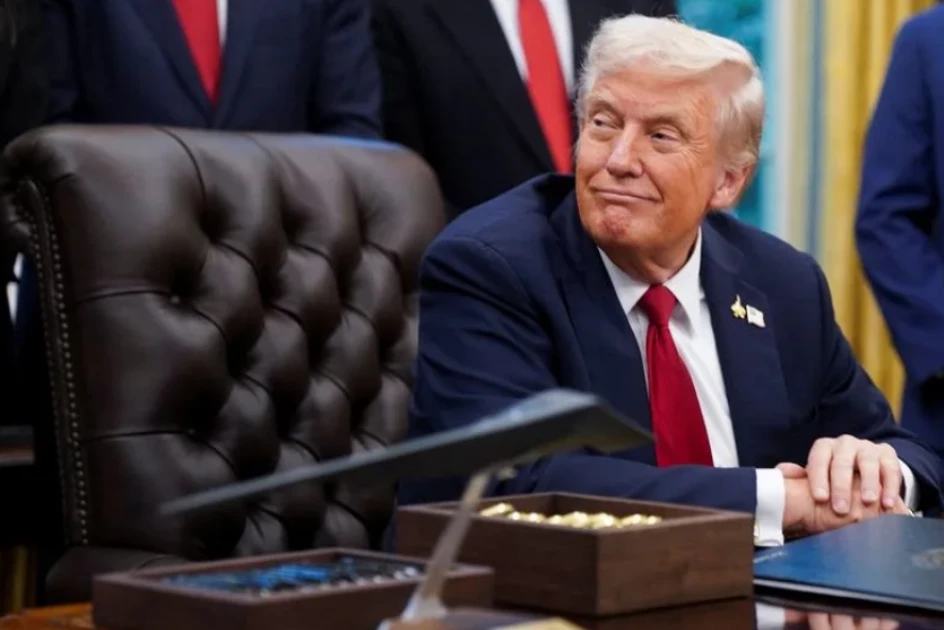
U.S. President Donald Trump. Photo/Courtesy
By Ruth Sang
The administration of President Donald Trump is preparing to overturn the stricter fuel-economy requirements introduced under former President Joe Biden, arguing that the reversal will make new vehicles more affordable for American consumers. An official confirmed on Wednesday that the policy change will be unveiled during an afternoon event at the Oval Office, where Trump is expected to be joined by top executives from Ford, Stellantis, and a senior representative from General Motors. Their presence is seen as a strong indication that major automakers support the shift.
According to a statement shared by the White House on X, the Biden-era efficiency rules would have added an estimated $1,000 to the cost of a new vehicle. The Trump administration says its revised approach will save Americans a combined $109 billion by easing regulatory pressure on the auto industry and consumers.
The rollback targets Corporate Average Fuel Economy (CAFE) standards—long-standing federal rules introduced in 1975 amid the Arab oil embargo to regulate how far vehicles must travel on a single gallon of fuel. While the administration has confirmed its intention to loosen requirements, the complete scope of the policy change has yet to be detailed.
Throughout his term, Trump has consistently criticized the efficiency targets advanced under Biden. The Biden administration had pushed for significant annual increases—raising fuel-economy requirements by 8 percent for model years 2024 and 2025, and by 10 percent for 2026—with the goal of surpassing 50 miles per gallon by 2031. In a proposal released in June, the Trump team argued that Biden officials relied heavily on electric and hybrid vehicle projections when setting those goals, warning that such benchmarks would be unrealistic for gasoline-powered cars and would ultimately steer the market toward electric vehicles.
Trump has frequently condemned what he describes as a forced transition to electric cars. Republicans in Congress have already repealed several clean-energy tax incentives and moved to weaken California’s long-held authority to set its own vehicle emissions standards.
Ford CEO Jim Farley welcomed the anticipated policy shift, saying the company supports “fuel-economy standards that reflect market realities.” Farley emphasized that progress on reducing emissions and improving energy efficiency can continue without compromising consumer choice or affordability, calling the move “a win for customers and common sense.”
However, critics argue that reversing the standards would undermine long-term economic and environmental goals. Gina McCarthy, who served in senior roles under both Presidents Biden and Obama, warned that weakening fuel-efficiency rules will hinder the auto industry’s competitiveness and slow the nation’s transition to cleaner technologies. She cautioned that Americans will end up paying more for fuel and producing more pollution while other countries advance in manufacturing modern, low-emission vehicles.
McCarthy added that the decision reflects a broader pattern, saying the administration has repeatedly failed to prioritize public health or environmental protection. She stressed that as global innovations in clean transportation accelerate, the United States risks falling behind by clinging to outdated vehicle standards. The full details of the revised CAFE regulations are expected to emerge in the coming days, as the administration finalizes the policy shift and prepares for a likely legal and political battle over the future of vehicle-emissions regulation in the U.S.
About Author