THE WATCHDOG: How Kimutai Kirui Became One of Kenya’s Most Persistent Public-Interest Litigants
Whether viewed as a reformist, activist, watchdog, or critic, his impact on public discourse continues to be felt far beyond the courtroom.

Governance and human rights advocate Kimutai Kirui shares a light moment while seated in a vehicle. Kirui is recognized for his involvement in constitutional litigation, public participation initiatives, and accountability advocacy. Photo courtesy: Kimutai Kirui.
By Hubzmedia
For more than a decade, Kimutai Kirui has built a reputation as one of the North Rift’s most visible governance activists, using constitutional litigation, civic mobilization, and public advocacy to challenge decisions by public institutions and demand accountability from leaders.
Based in Uasin Gishu County, Kirui has become a familiar figure in courtrooms, public forums, parliamentary hearings, and community campaigns, where he has consistently pushed for greater transparency, public participation, and constitutional compliance within Kenya’s devolved system of government.
From Citizen Activist to Public-Interest Litigant
Kimutai Kirui: The North Rift Governance Watchdog Challenging Power Through Law and Civic Action
Kirui’s activism is rooted in a belief that ordinary citizens should play a central role in governance and accountability processes.
Unlike many advocacy approaches that rely exclusively on legal representatives or civil society organizations, Kirui has often championed the direct involvement of affected citizens, victims, and survivors in petitions, court cases, and public participation processes.
His philosophy is simple: those most affected by injustice should have a seat at the table when decisions are made.
Over the years, this approach has seen him engage county governments, parliamentary committees, judicial officers, and national government institutions on issues ranging from governance and corruption to human rights and public accountability.
Landmark Cases and Public Campaigns
Among his most notable legal interventions was the 2023 constitutional petition challenging the composition of the Uasin Gishu County Assembly over alleged non-compliance with the two-thirds gender rule.
The petition resulted in court orders that temporarily affected the operations of the County Assembly and sparked national debate on gender representation in elective and nominated positions.
Kirui also played a prominent role in advocacy surrounding the First Choice Recruitment scandal, where thousands of young people alleged financial losses in overseas job placement schemes. Through petitions and civic mobilization, the matter attracted Senate scrutiny and became one of the country’s most widely discussed governance controversies.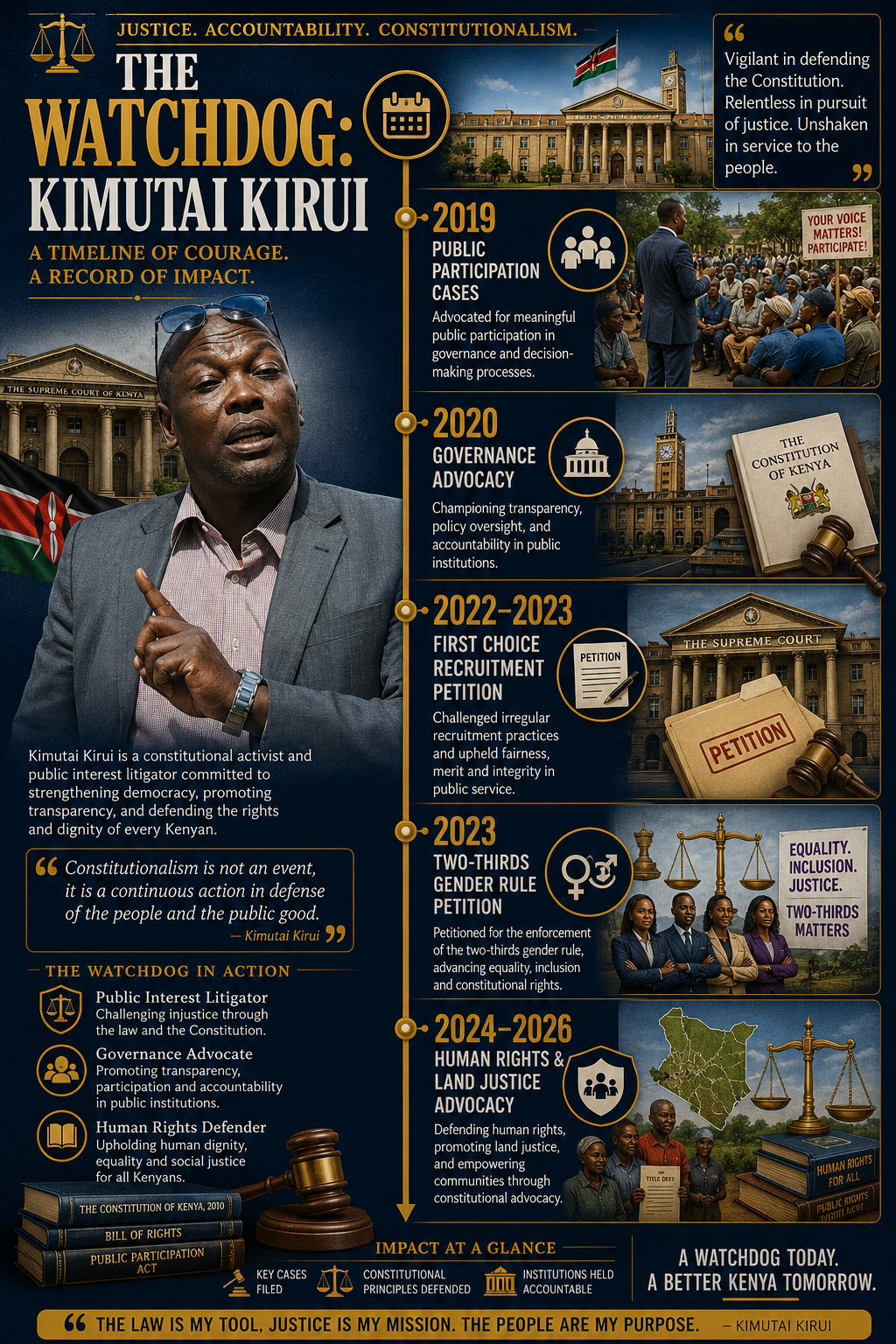
His activism has also touched on public participation disputes, county governance, environmental conservation, youth issues, labour migration governance, and institutional oversight.
Voice for Accountability
Beyond the courtroom, Kirui has used public forums, media engagement, petitions, and consultations with government officials to push for reforms.
His advocacy has included concerns over land governance disputes, environmental protection initiatives, public safety, illicit alcohol and narcotics, and governance practices within county governments.
Supporters describe him as a relentless watchdog who is willing to challenge powerful interests. Critics, however, view his confrontational style as controversial.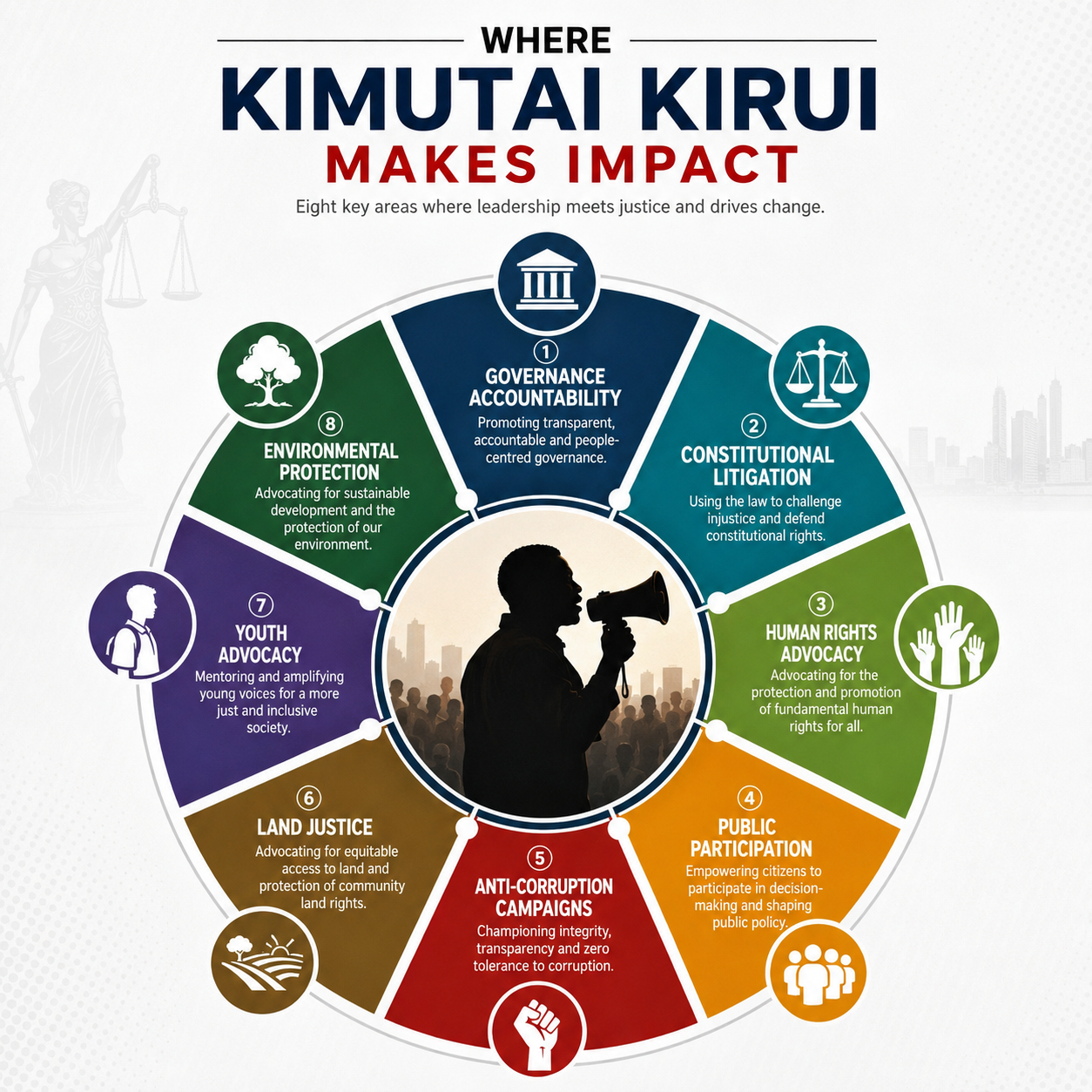
Regardless of perspective, few dispute his influence on governance conversations within Uasin Gishu and the wider North Rift region.
Risks and Challenges
Public-interest litigation often places activists at the centre of political and social controversy.
Kirui says his work has exposed him to intimidation, threats, public criticism, and legal battles. Yet he remains active in governance advocacy, insisting that constitutional accountability and citizen participation remain essential pillars of democratic governance.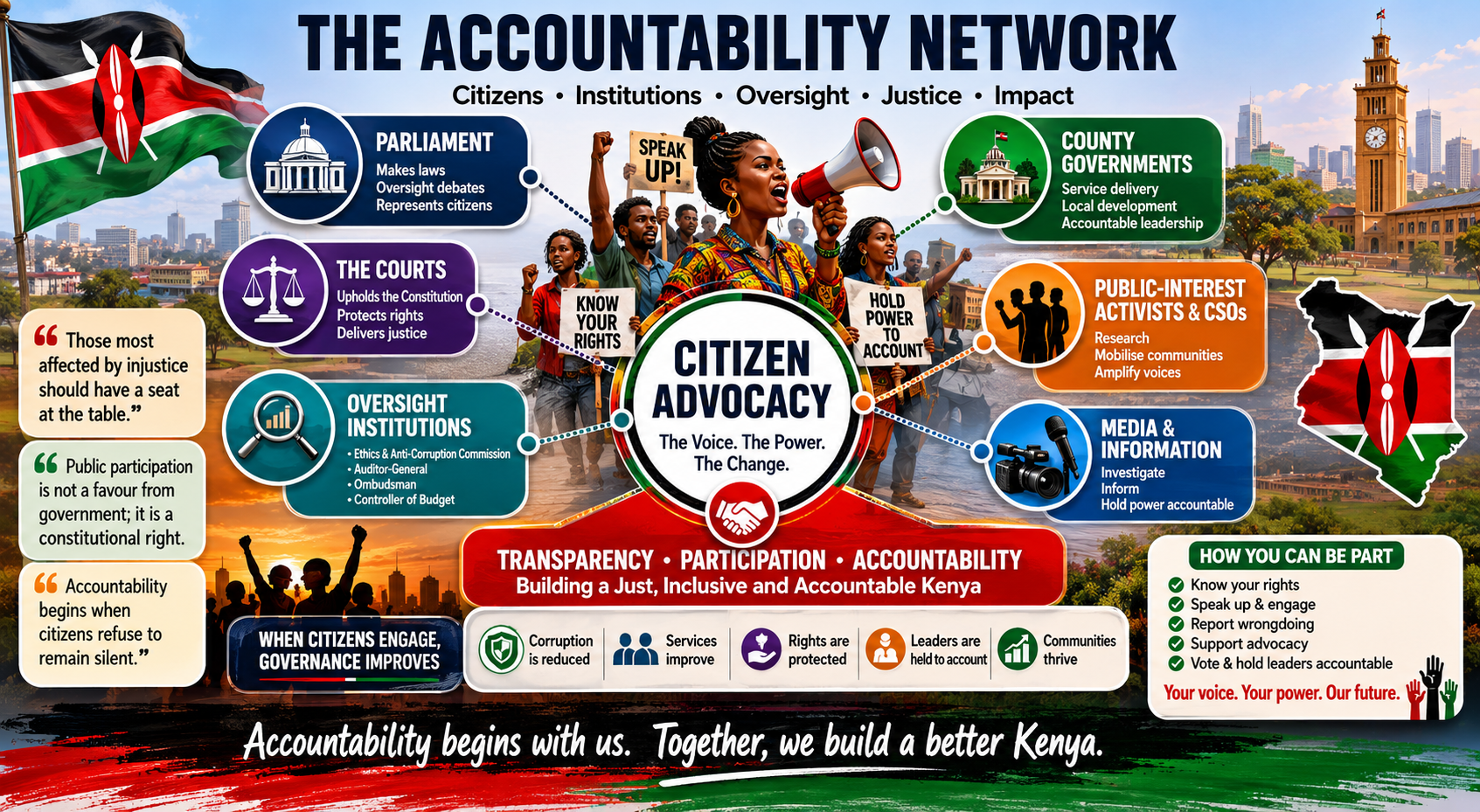
As Kenya continues to grapple with questions of transparency, public participation, and institutional accountability, Kimutai Kirui remains one of a growing number of grassroots activists using the courts, public petitions, and civic action to influence policy and governance outcomes.
Whether viewed as a reformist, activist, watchdog, or critic, his impact on public discourse continues to be felt far beyond the courtroom.
About Author