Nigeria Confirms Ebola Case in Woman From Uganda
According to health officials cited by the BBC, the woman developed symptoms on October 7, four days after arriving in Nigeria.
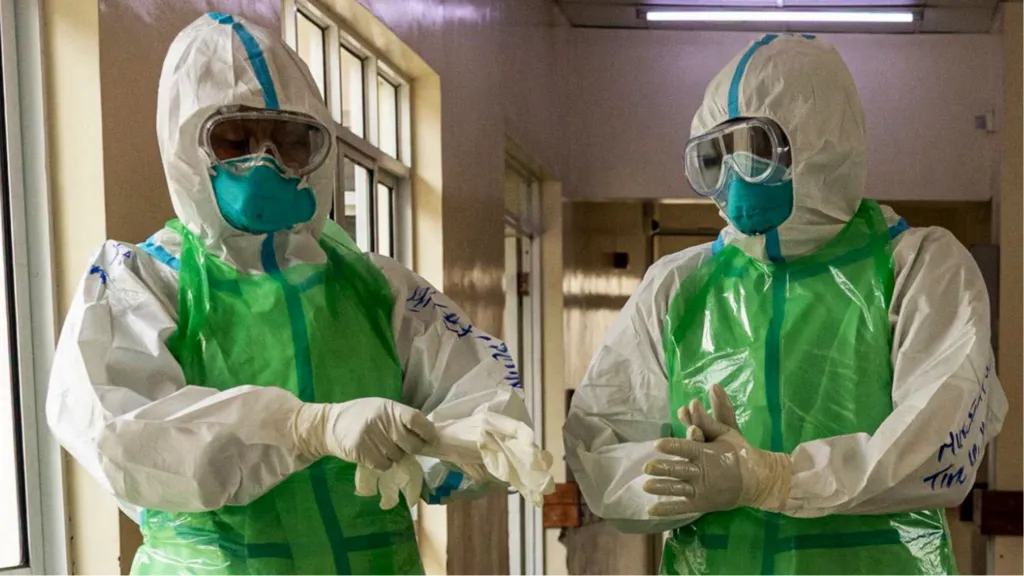
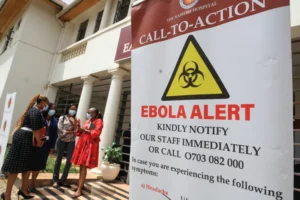
Nigeria confirms an Ebola case in a female patient who travelled from Uganda to Abuja, raising concerns about the possible spread of the disease beyond East Africa. Photo: BBC.
By Robert Mutasi
Nigeria has confirmed an Ebola case in a female patient who travelled from Uganda to Abuja, raising concerns about the possible spread of the disease beyond East Africa.
Health Minister Muhammad Ali Pate said laboratory tests confirmed the infection. The patient, who is reportedly a foreign national and the wife of a diplomat, has been isolated and is receiving medical treatment at a hospital in Abuja.
According to health officials cited by the BBC, the woman developed symptoms on October 7, four days after arriving in Nigeria. She reportedly had no symptoms when she entered the country.
Nigerian authorities have launched contact-tracing efforts to identify people who may have been exposed to the virus. At least 44 close contacts had been identified at the time of reporting as health officials moved to contain the infection and prevent further transmission.
Nigeria is the first West African country to report a case linked to the ongoing Ebola crisis in East Africa. The country previously contained an Ebola outbreak in 2014 through surveillance, contact tracing and a coordinated public health response.
Uganda’s Ministry of Health has maintained that there are no confirmed active Ebola cases in the country. Authorities said preliminary information indicated that the woman passed through Uganda without showing symptoms.
Uganda’s Director General of Health Services, Charles Olaro, said the patient had travelled to the eastern Democratic Republic of the Congo (DRC) for business before transiting through Uganda in early October.
Olaro said the woman developed symptoms after arriving in Nigeria. However, he noted that investigators were still establishing where she contracted the virus and reviewing her travel history.
He said information about the patient’s itinerary and clinical history from Nigerian authorities would be important in determining possible exposure sites and identifying additional contacts.
Nigeria’s health minister said the patient had not reported symptoms upon arrival. However, Pate told the Nigerian Television Authority that authorities suspected she may have contracted the virus in Uganda, although her travel history and possible exposure remained under investigation.
Health officials are expected to use her travel documents and other information to establish the people she encountered during her journey. Authorities have urged members of the public to remain calm and cooperate with health workers conducting contact tracing.
The development comes amid an Ebola outbreak involving the Bundibugyo virus species in the DRC and Uganda. The outbreak in the DRC has caused thousands of reported infections and deaths, according to the European Centre for Disease Prevention and Control.
The Bundibugyo strain is relatively rare, and there is no approved vaccine or specific treatment for it, although research and clinical trials are under way.
Ebola is a severe viral disease that can cause fever, vomiting, diarrhoea and, in serious cases, organ failure and bleeding. It spreads through direct contact with the bodily fluids of an infected person or contaminated materials.
The virus has an incubation period of between two and 21 days, meaning exposed individuals may develop symptoms several weeks after infection.
Kenya has also reported Ebola infections during the wider regional health crisis, prompting heightened surveillance and containment measures.
Public health officials continue to emphasise early detection, isolation of suspected cases, contact tracing and good hygiene practices as essential measures for limiting the spread of the disease.
About Author