Duale Assures Kenyans After First Imported Ebola Case
Duale spoke after commissioning a borehole he personally funded following requests from residents over persistent water shortages in the area.
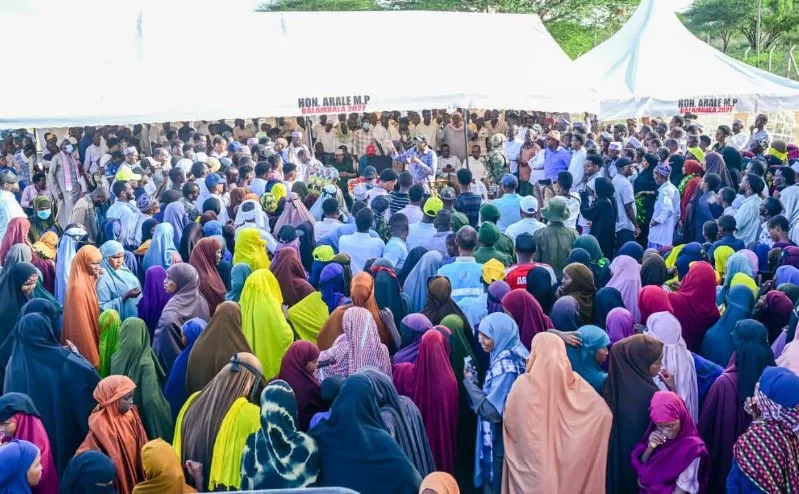
Health Cabinet Secretary Aden Duale assures Kenyans that the country remains safe following confirmation of its first imported case of Bundibugyo Ebola virus disease, urging the public to remain calm as the government strengthens measures to prevent further infections. Photo: The Star Kenya.
By Robert Mutasi
Health Cabinet Secretary Aden Duale has assured Kenyans that the country remains safe following confirmation of its first imported case of Bundibugyo Ebola virus disease, urging the public to remain calm as the government strengthens measures to prevent further infections.
Speaking in Kamuthe, Fafi Subcounty, Garissa County, on Friday, Duale said Kenya had the capacity to detect, isolate and manage suspected cases, adding that the confirmation of one imported case did not automatically mean the country was experiencing an outbreak.
Duale spoke after commissioning a borehole he personally funded following requests from residents over persistent water shortages in the area.
“On Ebola, I want to reassure the public that Kenya is not experiencing an outbreak. The confirmed case was imported, and we have put the necessary measures in place to contain the situation,” Duale said.
He urged Kenyans to continue with their normal activities while observing official public health guidance, saying the Ministry of Health was coordinating the response.
“We are safe, sound and ready. We detect and quarantine people, and I think our country is on the right track. I want to tell Kenyans that the country is safe. Let us continue with our normal daily lives. The Ministry of Health is on top of everything,” he said.
The CS was accompanied by former Garissa Governor Ali Korane, Lafey MP Mohamed Abdikheir and former Garissa Woman Representative Anab Gure.
Duale cautioned against spreading misinformation and unverified claims about the disease, warning that unnecessary panic could affect tourism, discourage investment and disrupt business activities.
He called on foreign governments and international partners to rely on verified health information when making decisions concerning Kenya, arguing that disproportionate travel and trade restrictions could harm the economy without necessarily improving public health protection.
The CS also urged airlines to maintain their operations, tourists to continue visiting the country and businesses to proceed with their activities as health authorities monitor the situation.
Government Intensifies Ebola Surveillance
The Ministry of Health confirmed Kenya’s first imported case of Bundibugyo Ebola virus disease on October 6, involving a Kenyan national who had been living in the Democratic Republic of Congo (DRC).
The patient reportedly travelled by road from the DRC to Kampala, Uganda, before flying to Nairobi on October 3. He was taken to Nairobi Hospital, where he was isolated and assessed before laboratory tests confirmed the infection.
He died on October 6.
Following the confirmation, health authorities initiated contact tracing, quarantine measures and enhanced surveillance to establish whether the patient had transmitted the virus to other people.
The World Health Organization also confirmed the imported case and said public health response measures had been launched in Kenya and Uganda.
The response has focused on identifying people who may have come into contact with the patient, monitoring their health and ensuring that suspected cases are assessed and isolated promptly.
Health authorities have also emphasised laboratory testing and strict infection-prevention measures in healthcare facilities to limit the risk of further transmission.
Although an imported case does not by itself establish sustained transmission within the country, continued contact tracing and surveillance remain necessary to determine whether additional infections have occurred.
How Ebola Spreads
Bundibugyo Ebola virus disease is a severe illness caused by the Bundibugyo virus, one of the viruses known to cause Ebola disease in humans.
The infection spreads primarily through direct contact with the blood or other bodily fluids of an infected person who is showing symptoms. Transmission can also occur through contaminated materials and contact with the body of someone who has died from the disease.
Symptoms may include fever, fatigue, muscle pain, headache, sore throat, vomiting and diarrhoea. In some cases, unexplained bleeding may occur.
Because the early symptoms can resemble those of other illnesses, medical assessment and laboratory testing are important for establishing whether a person has the infection.
Kenyans who develop concerning symptoms after a possible exposure have been urged to seek medical attention and follow instructions from health professionals.
The Ministry of Health has also advised the public to rely on official announcements and verified information rather than unconfirmed reports circulating on social media.
As the government continues its response, health authorities are expected to monitor possible contacts and assess any suspected cases to establish whether the infection has spread beyond the initial patient.
Duale maintained that Kenya was prepared to manage the situation and urged residents to remain calm while the government continues implementing measures to protect public health.
About Author