NCBA Deepens Asset Finance Push in Western Kenya as Demand for Productive Equipment Grows
“Asset finance is supporting farmers seeking to mechanise agriculture, SMEs looking to expand and contractors acquiring equipment to execute projects,” Mugambi
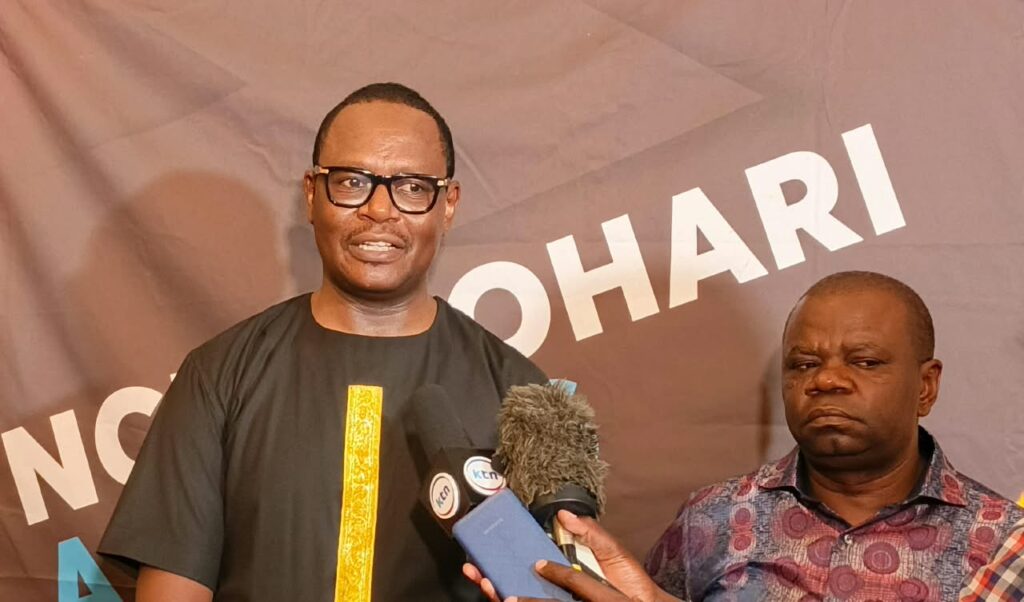
Lennox Mugambi, NCBA Group Director of Asset Finance and Business Solutions, speaks to journalists during the bank's 20th Johari anniversary celebrations in Kisumu.
By Grace Wafubwa
NCBA Group is stepping up its asset-financing business in Western Kenya as farmers, small and medium-sized enterprises (SMEs), contractors and other businesses increasingly turn to credit to acquire machinery, vehicles and equipment needed to expand their operations.
The lender is marking two decades of its Johari asset-finance programme, which has evolved from predominantly financing motor vehicles and other movable assets to a broader portfolio covering agricultural machinery, construction equipment, industrial and specialised equipment.
Speaking in Kisumu during celebrations to mark the 20th anniversary of Johari, NCBA Group Director of Asset Finance and Business Solutions Lennox Mugambi said the bank’s focus was to remove financial barriers that prevent businesses and individuals from acquiring productive assets.
“Asset finance is supporting farmers seeking to mechanise agriculture, SMEs looking to expand and contractors acquiring equipment to execute projects,” Mugambi said.
He said the bank’s partnerships with dealers, insurance providers and other players in the asset-finance ecosystem had been central to the growth of the business.
“Every vehicle, machine or piece of equipment financed represents a customer with a need and a partner who helped us understand that need and find the right solution,” Mugambi said.
The anniversary comes as NCBA seeks to strengthen its footprint in Western Kenya, a region where agriculture, trade, transport, construction and small businesses remain important sources of employment and economic activity.
Financing the productive economy
Unlike conventional borrowing, asset finance allows businesses to acquire income-generating assets while spreading the cost over an agreed repayment period, enabling them to preserve working capital for day-to-day operations.
NCBA’s asset-finance portfolio includes commercial vehicles, buses, trucks and pick-ups, tractors and related implements, construction equipment, specialised equipment, office and industrial equipment.
For farmers, the financing model can facilitate investment in tractors and farm implements, while contractors can use it to acquire machinery required for construction and infrastructure projects.
NCBA’s agriculture financing proposition also covers equipment financing and other financial solutions across the agricultural value chain.
The bank’s renewed focus on productive assets comes as businesses across the region seek to increase efficiency and expand their capacity while managing the high upfront cost of machinery and equipment.
Beyond vehicle financing
The evolution of Johari reflects a broader shift in Kenya’s asset-financing market, where lenders are increasingly targeting productive equipment rather than limiting financing to passenger and commercial vehicles.
NCBA has also expanded its offering to newer areas such as electric vehicles and solar solutions, responding to changing customer needs and growing interest in sustainable technologies.
The lender says its asset-financing business accounted for about 30 per cent of Kenya’s asset-finance market in the first half of 2026, as it continued to serve customers across agriculture and agribusiness, trade, transport and logistics, manufacturing and services.
The bank has also been using digital platforms and partnerships with asset dealers to make financing more accessible to customers.
Focus on Western Kenya
Mugambi said the bank’s continued growth would depend on understanding the specific needs of customers and strengthening relationships with businesses and industry partners.
The Western Kenya market presents opportunities in agricultural mechanisation, logistics, construction, retail and other SME-driven enterprises, where access to machinery and transport can directly influence a business’s capacity to increase production and reach markets.
Kisumu County Executive Committee Member for Infrastructure, Transport, Energy and Public Works Jerome Ochieng said access to finance remained critical for businesses seeking to translate viable ideas into sustainable enterprises.
“Finances are a key part of every other business. You could have a very fantastic business idea, but you only get a gridlock at the point where resources are not available,” Ochieng said.
The 20th anniversary of Johari comes at a time when lenders are competing to provide businesses with financing solutions that enable them to acquire high-value assets without committing all their available capital upfront.
For NCBA, the next phase of the programme will involve deepening relationships with customers, dealers, insurance providers and other partners while expanding the range of assets that can be financed.
As the bank marks 20 years of Johari, its renewed push into Western Kenya signals an attempt to position asset finance not simply as a vehicle-financing product, but as a tool for agricultural mechanisation, business expansion, enterprise productivity and job creation.
About Author