MCK Unveils 2026–2030 Strategic Plan, 2027 Election Guidelines and Nakuru Media Hub
The launch, held in Nakuru on Friday, brought together government officials, MCK leadership, editors, journalists, media associations and other industry stakeholders.
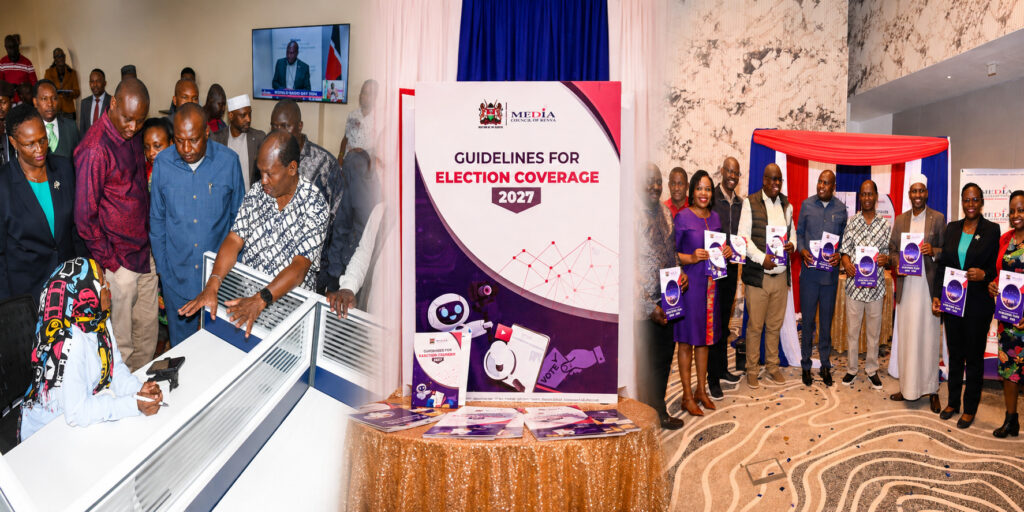
CS William Kabogo, MCK Chairman Maina Muiruri, CEO David Omwoyo, Kenya Union of Journalists (KUJ) Secretary General Eric Oduor and Kenya Editors Guild President Zubeida Kananu join media stakeholders during the launch of the Media Council of Kenya’s 2027 Election Coverage Guidelines and commissioning of the Nakuru Media Hub and Digital Content Production Centre.
By Hubzmedia News Desk
The Media Council of Kenya (MCK) has launched its 2026–2030 Strategic Plan and Guidelines for Election Coverage 2027, alongside the commissioning of the Nakuru Media Hub and Digital Content Production Centre, as the Council steps up preparations for professional and responsible media coverage of the 2027 General Election.
The launch, held in Nakuru on Friday, brought together government officials, MCK leadership, editors, journalists, media associations and other industry stakeholders. MCK officially confirmed the three milestones as part of its efforts to strengthen a free, independent, professional and safe media sector ahead of the elections.
Cabinet Secretary for Information, Communications and the Digital Economy William Kabogo Gitau, who presided over the commissioning of the Nakuru facility, said the new strategic plan would provide a framework for strengthening professionalism, accountability and public confidence in the media.
“The Plan will guide the Council’s work over the coming years. Its success will be measured by stronger media institutions, higher professional standards and increased public trust,” Kabogo said.
Kabogo said the early launch of the 2027 election coverage guidelines would give media organisations sufficient time to incorporate the standards into their editorial operations before the campaign period gathers momentum.
“As we launch the Guidelines for Election Coverage 2027, preparation must begin now. Media organisations need to review and integrate the guidelines into their editorial processes early enough to ensure accurate, fair and balanced coverage,” he said.
The Cabinet Secretary also pointed to the rapidly changing information ecosystem, particularly the growing use of artificial intelligence and the spread of misinformation and disinformation.
“Artificial Intelligence can generate false text, images and videos within minutes, while misinformation can spread before the truth catches up. Responsible use of technology is critical to protecting public trust and the integrity of our democratic processes,” Kabogo said.
Election guidelines to help journalists navigate information disorder
MCK Chief Executive Officer David Omwoyo said the election coverage guidelines would provide journalists with a framework for navigating the intense pressures associated with election reporting while maintaining accuracy and credibility.
“The Election Coverage Guidelines will help the media filter the noise, verify information, and publish facts,” Omwoyo said.
He cautioned journalists against allowing the pressure to break news to compromise verification and accuracy.
“The duty to secure scoops and break news must not outweigh the responsibility to deliver credible facts,” Omwoyo said.
Omwoyo described the Strategic Plan as a five-year roadmap for the Council, while the election guidelines are intended to help journalists navigate the complex editorial environment expected during the 2027 electoral cycle.
MCK Chairman Maina Muiruri said the three initiatives represented an important investment in the future of Kenya’s media industry.
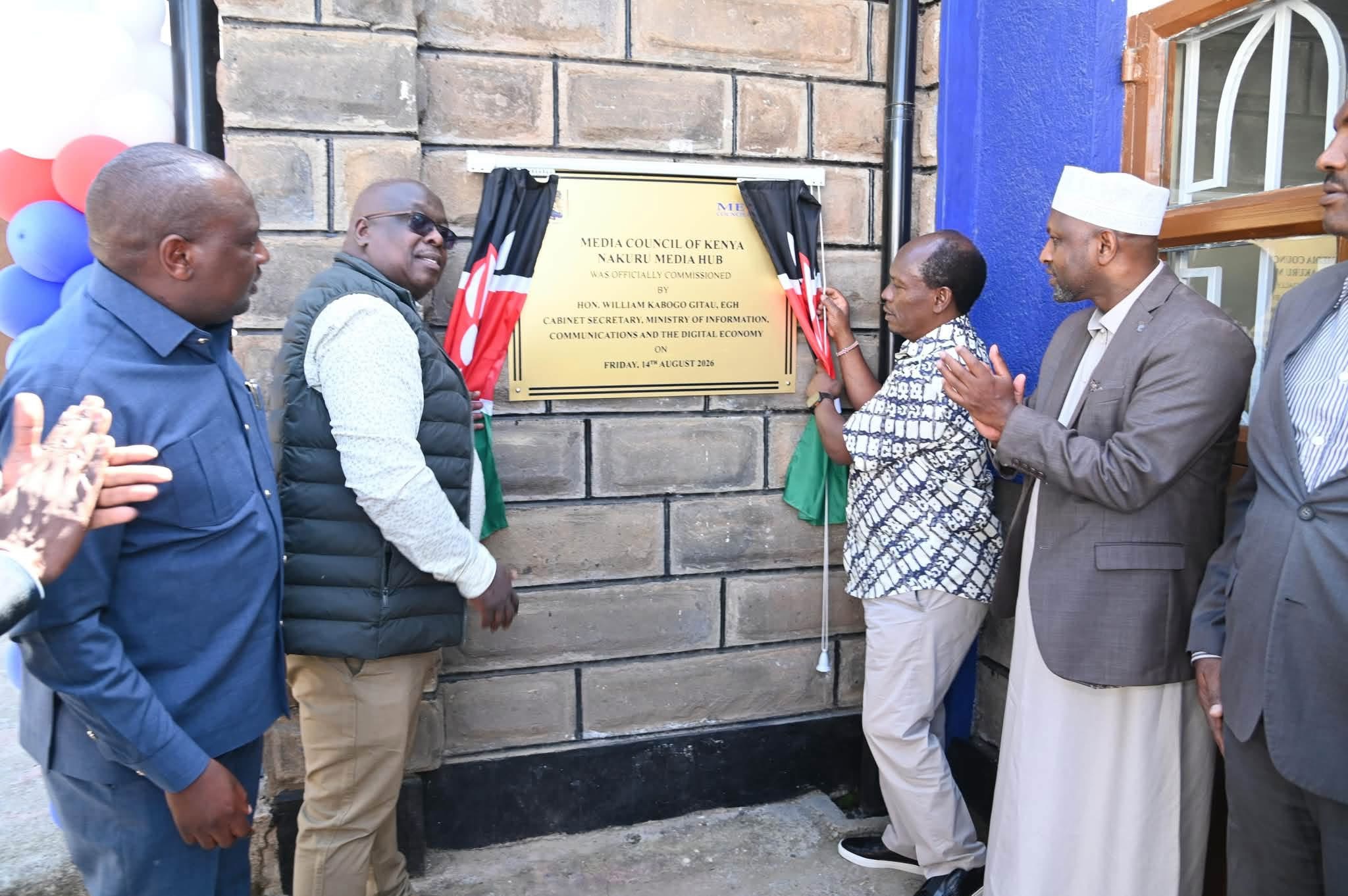
“The success of the Strategic Plan, the election guidelines and the Nakuru Media Hub will ultimately be measured by the environment we create for journalists, the freedoms we protect and the trust that the public places in the media,” Muiruri said.
Muiruri said credible elections would partly depend on the quality and reliability of information available to voters.
Editors call for verification and public-interest journalism
Kenya Editors Guild President Zubeida Kananu challenged journalists and editors to remain focused on verification, accuracy and public-interest journalism as technology continues to transform the media landscape.
Kananu said the increasing use of artificial intelligence and digital platforms would require newsrooms to strengthen verification systems and ensure that speed does not compromise journalistic standards.
“The responsibility of journalists during the electoral period is to verify information, protect the public interest and ensure that what reaches audiences is credible,” Kananu said.
Her remarks come as MCK and other media stakeholders increasingly focus on the impact of misinformation, disinformation and emerging technologies on election reporting. The Council has previously called for early preparation and sustained collaboration ahead of the 2027 polls.
Nakuru journalists welcome new media hub
The commissioning of the Nakuru Media Hub and Digital Content Production Centre was welcomed by members of the Nakuru Journalists Association, led by chairman Joseph Openda, who described the facility as a long-awaited investment for journalists in the region.
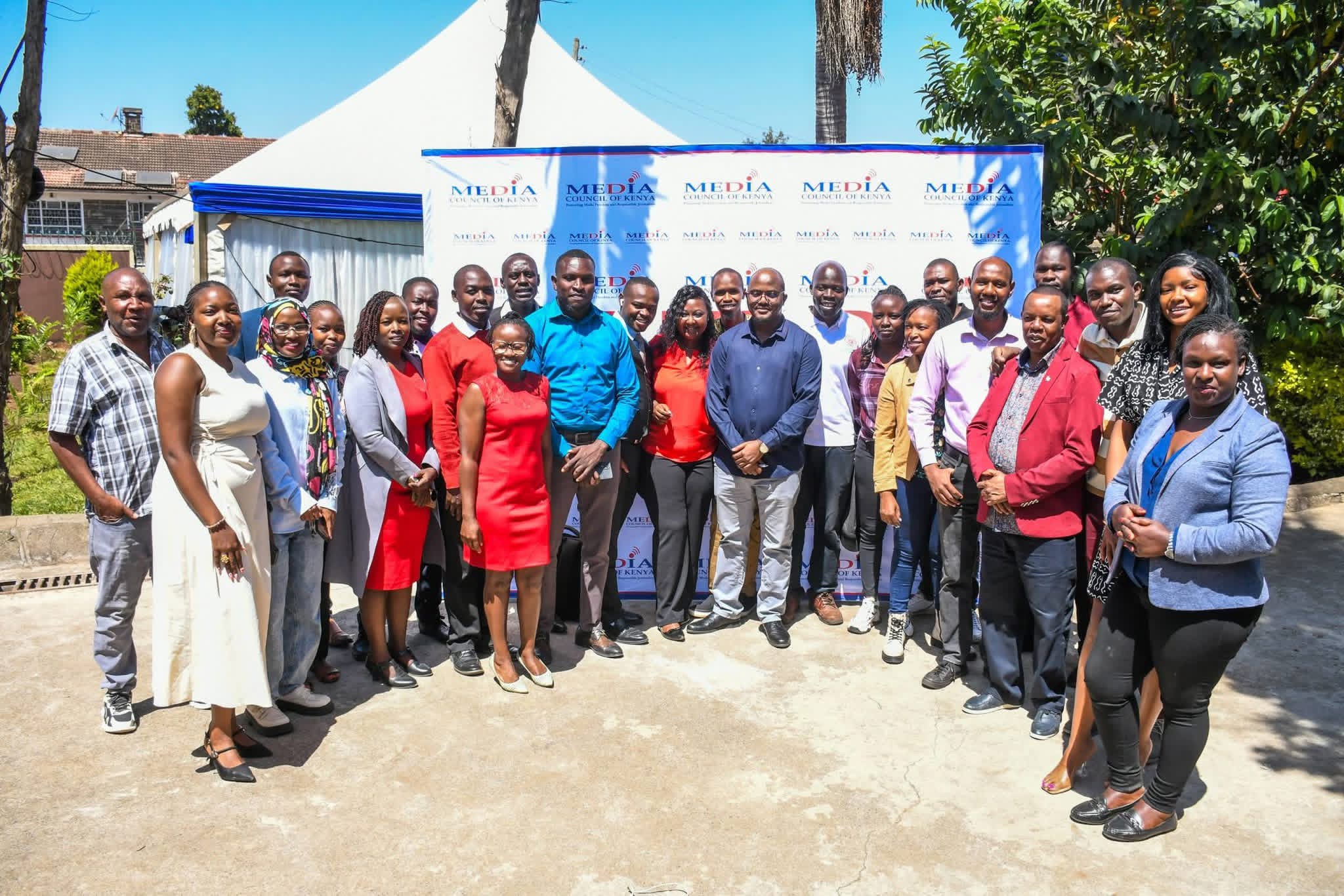
Openda said the facility would provide journalists with a dedicated and professional working environment while creating opportunities for collaboration, training and digital content production.
“For a long time, Nakuru journalists have looked forward to having a facility of this nature. We appreciate the Media Council of Kenya for responding to a need that has existed for many years,” Openda said.
He said the hub would strengthen the capacity of journalists to produce quality content while providing a platform for members to interact, learn and develop professionally.
MCK challenges journalists to maximise facility
MCK Director of Media Training and Development Victor Bwire urged Nakuru journalists to take full advantage of the new facility and learn from the experiences of other regional media hubs.
Bwire pointed to the Eldoret Media Hub, established in 2021, as one of the pioneering grassroots media hub models, alongside facilities and initiatives in Siaya, Homa Bay, Meru and Kajiado.
“A media hub should not simply be a place where journalists come to work. It should be a centre for learning, innovation, collaboration and improving the welfare of journalists,” Bwire said.
He challenged journalists to use the facility to strengthen their skills and build partnerships that can improve the quality and sustainability of journalism in the region.
MCK Assistant Director of Training and Curriculum Development Christine Nguku similarly challenged journalists to exploit the opportunities created by the hub, particularly the studio and digital content production facilities.
“The opportunity is now available for journalists to produce clean and professional digital content. I challenge you to maximise the studio and also take advantage of training opportunities, including proposal writing,” Nguku said.
She said MCK would continue supporting journalists through capacity-building initiatives aimed at strengthening their professional and entrepreneurial skills.
Regional coordinators urge journalists to embrace sustainability
MCK Nakuru Regional Coordinator Joseph Mecha described the new facility as a long-awaited dream for journalists in the region and urged them to learn from successful media hubs across the country.
“The Nakuru Media Hub has been a long-awaited dream for journalists, and now that the facility is here, the responsibility is on journalists to use it fully, learn from their peers and explore opportunities that can make their work sustainable,” Mecha said.
MCK Kisumu Regional Coordinator Evans Teddy challenged journalists’ organisations to strengthen their leadership structures and adhere to their constitutions.
“Media hubs and press clubs must have strong and accountable leadership. Journalists need stable institutions that can represent their interests and remain focused on the purpose for which they were established,” Teddy said.
He also urged media organisations to remain competitive and explore ways of monetising quality content without compromising professional standards.
Eldoret Media Hub shares lessons from pioneering model
Eldoret Media Hub Director and Uasin Gishu Journalists Association Chairman James Gitaka welcomed MCK’s decision to expand the media hub model, saying the facilities can address several challenges experienced by journalists working at the grassroots.
Gitaka said the Eldoret experience had demonstrated that a media hub could become more than a physical workspace by creating opportunities for safety, training, partnerships, mentorship and content production.
“Eldoret Media Hub is privileged to have been one of the pioneers, and we thank the Council for expanding more media hubs across the country. Many of the challenges faced by journalists at the grassroots have been addressed through these setups,” Gitaka said.
He said the establishment of the Eldoret facility had contributed to a safer working environment and helped reduce some of the challenges previously experienced by journalists, particularly female journalists.
“In Eldoret, after the establishment of the hub, threats towards journalists were significantly reduced. Some of the unique challenges that used to face our female colleagues have also been minimised, and there has been an improvement in work output,” he said.
Gitaka said the facility had also enabled journalists to participate in donor-funded programmes, strengthen partnerships and improve local content production for community and regional media houses.
“We have been able to roll out donor-funded programmes, enhance local content creation and build strategic partnerships that benefit both journalists and media organisations,” he said.
He further said media hubs could play an important role in addressing journalists’ welfare and mental wellbeing while providing practical skills to young journalists through attachment and mentorship programmes.
“Media hubs and journalists’ associations have also helped us address issues affecting the mental wellbeing of journalists, while giving young and upcoming journalists practical skills through attachment opportunities,” Gitaka said.
Gitaka challenged Nakuru journalists to build partnerships with universities, civil society organisations, media houses and other institutions to expand the impact of the new facility.
“The Nakuru Media Hub should become a platform for partnerships. The journalists should not look at it merely as an office but as an opportunity to create content, develop skills, attract programmes and build partnerships that can strengthen the media sector in the region,” he said.
Media sector prepares for 2027
The Nakuru launch comes as Kenya’s media industry begins intensifying preparations for the 2027 General Election.
MCK has emphasised the need for early preparation, ethical reporting, verification and collaboration among media stakeholders to ensure that citizens receive accurate and balanced information during the electoral period.
The Council’s 2026–2030 Strategic Plan, the 2027 election coverage guidelines and the expansion of regional media hubs are therefore expected to play complementary roles in strengthening professional standards and improving the working environment for journalists.
For Nakuru journalists, the commissioning of the new hub marks the beginning of a new phase in regional journalism—one that stakeholders say must be defined by collaboration, innovation, professional development, responsible digital content and stronger journalist welfare.
About Author