Sifuna party launch adds new twist to opposition unity plans
Party leader Gilbert Marava said Sifuna would take over the leadership and contest the presidency under the party’s ticket.
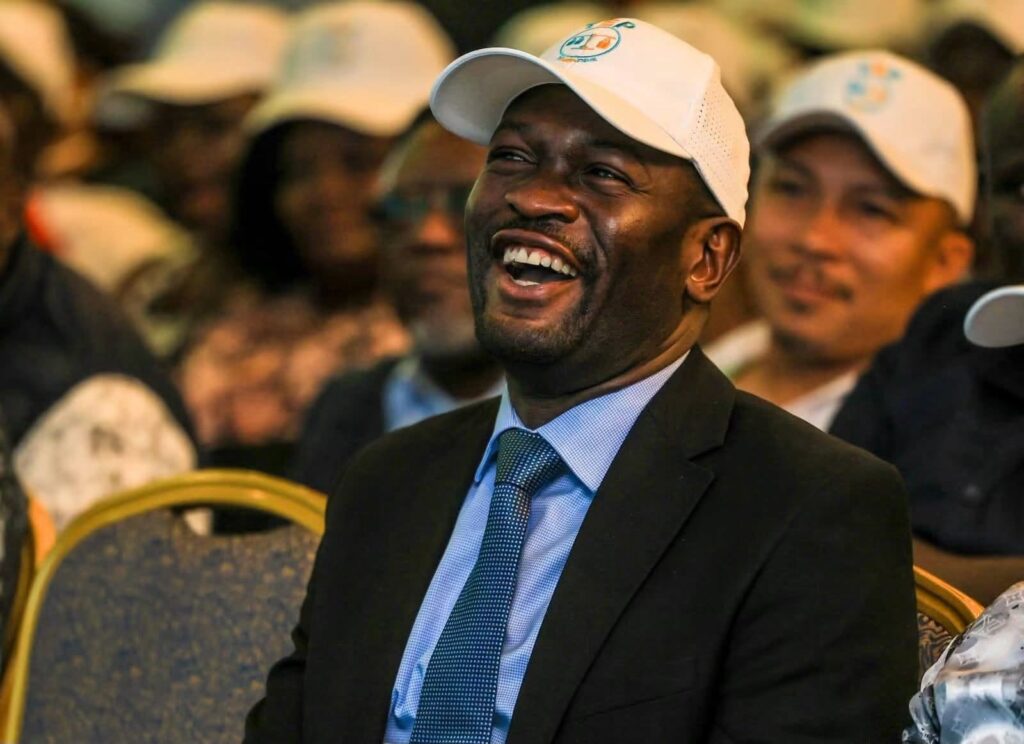
Nairobi Senator Edwin Sifuna launches The Equitable Party as he seeks to strengthen his presidential bid ahead of the 2027 General Election. Photo: Rigathi Gachagua.
By Robert Mutasi
Nairobi Senator Edwin Sifuna’s decision to take over The Equitable Party has added a new dimension to efforts by opposition leaders to form a united political front ahead of the 2027 General Election.
Sifuna unveiled the party on Sunday, October 4, positioning it as the political vehicle for his presidential ambitions.
The launch brought together several prominent opposition figures, including Siaya Governor James Orengo, Trans Nzoia Governor George Natembeya, Kakamega Senator Boni Khalwale, Vihiga Senator Godfrey Osotsi, Kisii Senator Richard Onyonka and Embakasi East MP Babu Owino.
Their presence signalled support for Sifuna’s political ambitions, even as the opposition continues to grapple with the question of how to settle on a single presidential candidate.
The new arrangement gives Sifuna control of a political party at a time when several leaders within the Linda Mwananchi movement are pursuing their own political vehicles.
The Equitable Party, commonly known as TEP, registered in March 2022 under the slogan “Tusawazishe”. Its leadership has agreed to restructure the party and accommodate Sifuna and his allies.
Party leader Gilbert Marava said Sifuna would take over the leadership and contest the presidency under the party’s ticket.
“On our end, we have decided to restructure, and in the process, those who registered will stay, and we will bring in our brothers,” Marava said.
Sifuna’s move follows months of political uncertainty after his fallout with the Orange Democratic Movement, where he previously served as secretary-general.
He later emerged as one of the leading figures in Linda Mwananchi, an opposition movement that has attracted politicians from different parties.
However, efforts to transform Linda Mwananchi into a registered political party faced delays and disputes over the proposed name. The difficulties forced Sifuna and his allies to consider an existing political party as an alternative vehicle for the 2027 election.
The decision has also placed new pressure on opposition leaders seeking to negotiate a joint presidential ticket.
Several politicians already control or have links to separate parties. Babu Owino has his Mwananchi Party, while former Deputy President Rigathi Gachagua leads the Democracy for Citizens Party. Natembeya has also been associated with the Ukombozi political push, while Orengo has signalled plans to establish his own political vehicle.
During the launch, leaders nevertheless urged Sifuna to work with other opposition figures.
Khalwale cautioned the senator against assuming that the new party alone could deliver victory in 2027.
He urged Sifuna to seek the support of senior opposition figures, including former Prime Minister James Orengo, Wiper leader Kalonzo Musyoka, People’s Liberation Party leader Martha Karua and former Cabinet Secretary Eugene Wamalwa.
Suba South MP Caroli Omondi said the new party would have one leadership structure and one presidential candidate.
“We are going to be led by one leader. We are going to have one presidential candidate,” Omondi said.
Other leaders called on Sifuna to give TEP a national outlook by recruiting members and candidates from across the country.
Bumula MP Jack Wamboka said Sifuna’s political project should focus on bringing Kenyans together rather than serving one community.
Former Deputy President Gachagua later congratulated Sifuna and urged him to move quickly to build the party ahead of the 2027 polls.
Gachagua asked Sifuna to identify strong candidates in areas where the party enjoys support and encouraged his backers to join TEP.
The former deputy president also linked Sifuna’s new political platform to the wider opposition effort to build a new administration after the 2027 election.
The emergence of TEP therefore gives Sifuna a stronger bargaining position as opposition leaders negotiate possible alliances.
At the same time, the growing number of political vehicles could make the search for a single opposition presidential candidate more difficult.
Sifuna’s allies insist the new party will pursue a national agenda and seek support beyond traditional political and ethnic bases.
The coming months will determine whether TEP becomes the centre of a wider opposition coalition or remains an independent vehicle for Sifuna’s presidential campaign.
About Author