Kenya Flags Nairobi, Mombasa and 23 Other Counties as High Ebola Risk as Surveillance Intensifies
Authorities say screening at border points has been intensified, with more than 1,000 health officers deployed and emergency response centres activated in 26 counties.
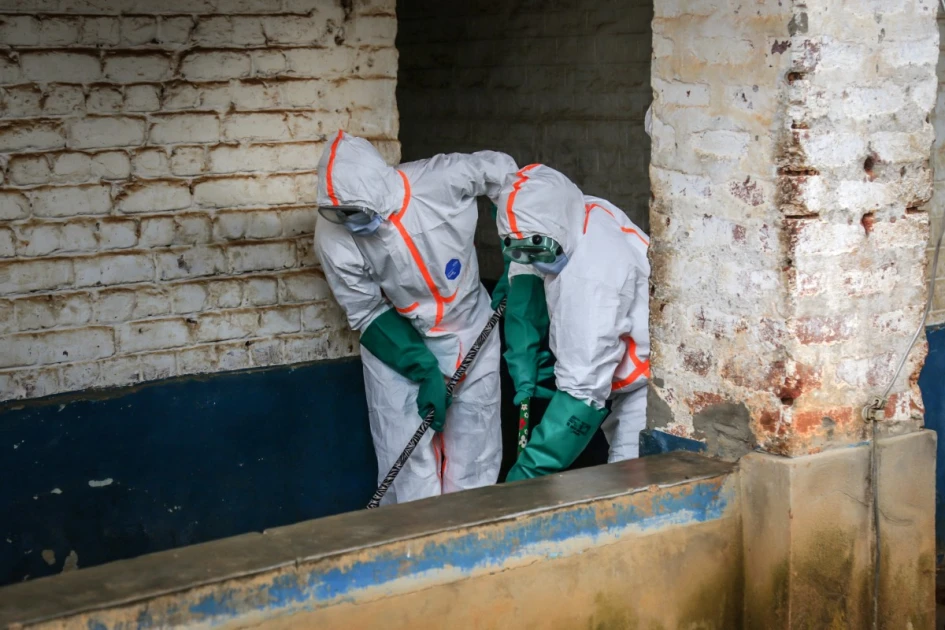
Health workers wearing protective equipment disinfect the isolation area for Ebola patients at the General Referral Hospital of Mongbwalu in DRC.Photo/Courtesy
By Ruth Sang
Kenya has flagged Nairobi, Mombasa and 23 other counties as high Ebola risk, even as monitoring is getting tightened, according to the latest government briefing that came out after outbreaks were reported in Uganda and the Democratic Republic of Congo, DRC. So yeah, the Ministry of Health says, 25 counties are now either “very high risk” or “high risk,” with the country pushing harder on preparedness.
Mary Muthoni, who is the Public Health and Professional Standards Principal Secretary, said Kenya hasnt recorded any confirmed Ebola cases, but surveillance has been put on high alert across all 26 points of entry. She added that teams will keep sending periodic updates as things evolve, basically saying “we are remaining on high alert at all points of entry and will continue providing periodic updates as the situation evolves,” during the briefing at Afya House on Tuesday.
Now the ministry named Nairobi, Mombasa, Uasin Gishu, Busia, Kisumu, Bungoma, Trans Nzoia, Siaya, West Pokot, Turkana, Homa Bay and Migori as “very high risk” counties, and a lot of them are said to sit along border zones or key transit corridors. Then there are the “high risk” counties too, including Vihiga, Kakamega, Nakuru, Kericho, Nandi, Kiambu, Machakos, Kilifi, Makueni, Taita Taveta, Isiolo, Elgeyo Marakwet and Garissa.
On the ground, screening is also being stepped up at entry points. The ministry reports that more than 13,500 travellers were screened in the last 24 hours alone, and about 67,000 have been screened cumulatively in recent operations. Muthoni also said the government is considering a mandatory 21-day quarantine for travellers arriving from countries considered high risk, as part of efforts aimed at stopping possible importation.
She noted that at border points, including airports, surveillance and screening have been enhanced, and that over 1,000 health officers have been trained and are ready to act fast if a suspected case comes up. In addition, emergency operation centres in 26 counties have already been activated, to support rapid response.
Kenyans are being urged to avoid non-essential travel to affected countries, while authorities push containment measures further. The plan is also to enhance exit screening, with travellers expected to present certified health clearance documents from where they are coming from. Authorities will also require more detailed screening reports to be shared with airlines and transport operators before passengers are allowed into Kenya, or before they enter, I mean.
The warning follows reports from the DRC of more than 1,000 suspected Ebola cases since the outbreak was declared on May 15, and nearly 250 deaths, according to the Africa Centres for Disease Control and Prevention. Uganda has also recorded infections, and even reported at least one death.
President William Ruto, meanwhile, has said Kenya has enough prevention systems in place to handle any potential cases. Still, the government has faced public questions after it approved a US-linked Ebola quarantine facility at Laikipia Air Base in Nanyuki.
About Author