KALRO and KEBS Raise Alarm Over High Aflatoxin Levels in Cereals Sold Across Kenya
KALRO has warned that some cereals sold in Kenyan markets contain aflatoxin levels up to 50 times above the legal safety limit, prompting KEBS to intensify inspections and food safety enforcement efforts.
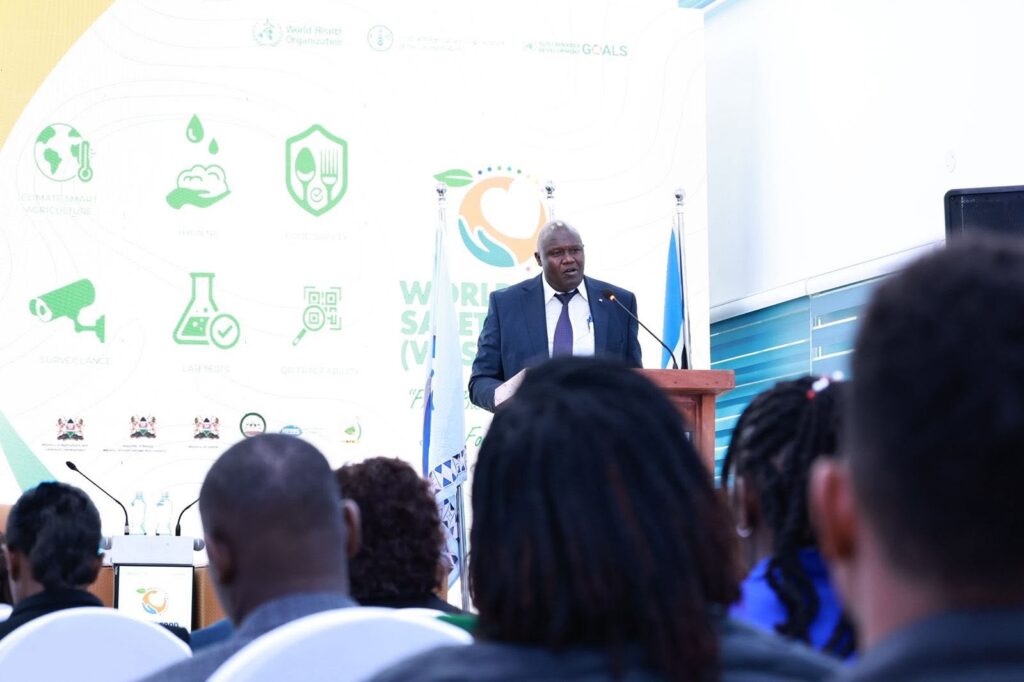
KALRO Director General Dr. Patrick Ketiem speaks during World Food Safety Day celebrations where he raised concerns over elevated aflatoxin levels detected in cereal samples collected from Kenyan markets. Photo/Courtesy
Public health officials have sounded the alarm over the growing presence of aflatoxin-contaminated cereals in Kenyan markets, raising fresh concerns about food safety and consumer protection.
The warning follows findings by the Kenya Agricultural and Livestock Research Organization (KALRO), which revealed that several grain samples collected from local markets contained aflatoxin levels far above the recommended safety threshold.
Speaking during this year’s World Food Safety Day commemorations, KALRO Director General Dr. Patrick Ketiem disclosed that some of the samples recorded aflatoxin concentrations of up to 500 parts per billion (ppb)—50 times higher than the legally accepted limit of 10 ppb.
“The World Health Organization has set a strict safety limit of 10 parts per billion. Any product exceeding that threshold is considered unsafe for consumption,” said Dr. Ketiem.
He warned that the findings underscore a significant public health risk and highlighted the urgent need for stricter monitoring and compliance across the food value chain.
Dr. Ketiem further noted that the high cost of food safety testing remains a major obstacle, particularly for smallholder farmers and traders who often lack the resources to verify the quality of their produce.
“Safety testing costs are keeping ordinary farmers in the dark. If we want safer food, testing services must become more affordable and accessible to those producing and selling our food,” he said.
Aflatoxins are toxic substances produced by certain fungi that thrive on poorly stored crops such as maize, sorghum, millet and groundnuts. The toxins are among the most serious food safety threats in developing countries and have been linked to liver cancer, weakened immunity, birth defects and impaired child development.
Experts attribute the contamination largely to poor post-harvest handling practices, including inadequate drying of crops and storage in poorly ventilated facilities, conditions that create an ideal environment for fungal growth.
In response to the latest findings, the Kenya Bureau of Standards (KEBS) has stepped up market surveillance efforts aimed at removing substandard food products from circulation and protecting consumers.
KEBS Quality Assurance Director Geoffrey Muriira said the standards agency has strengthened inspection and enforcement measures to ensure cereals sold in retail outlets comply with established food safety requirements.
“Food safety is a shared responsibility that requires commitment from every player in the agricultural value chain, from production and storage to distribution and retail,” said Muriira.
He added that KEBS is working closely with stakeholders across the sector to promote compliance with food safety standards and enhance consumer confidence in locally available food products.
The latest warning has renewed calls for greater investment in food safety testing, improved post-harvest management practices and stronger enforcement measures to curb the circulation of contaminated grains in Kenyan markets.
About Author