Iran Begins Days of Mourning as Funeral Ceremonies for Ayatollah Ali Khamenei Get Underway
Iranian officials have described the event as the “funeral of the century,” reflecting the late leader’s four decades at the helm of the Islamic Republic.
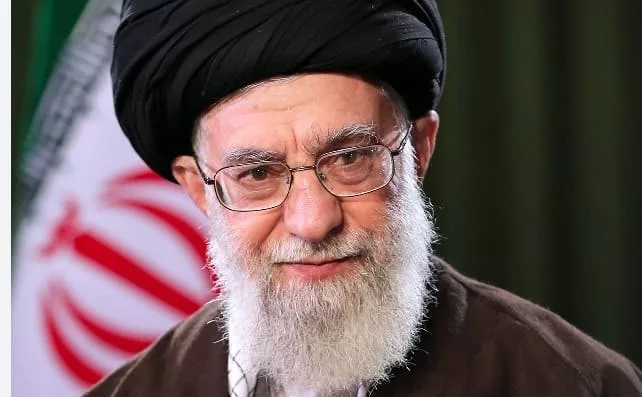
Former Supreme Leader, Ayatollah Ali Khamenei. Photo: Courtesy.
By Robert Mutasi
Iran has launched an extensive period of national mourning and funeral ceremonies for former Supreme Leader Ayatollah Ali Khamenei, more than four months after he was killed in coordinated U.S. and Israeli strikes.
The ceremonies, expected to draw between 12 million and 20 million mourners, began Friday as Khamenei’s body was placed in state at Tehran’s Grand Mosalla. Iranian officials have described the event as the “funeral of the century,” reflecting the late leader’s four decades at the helm of the Islamic Republic.
The funeral takes place against the backdrop of a fragile ceasefire between Iran and the United States following a preliminary agreement reached in June to halt weeks of military confrontation.
Public viewing of Khamenei’s body will continue through Sunday afternoon before an official state funeral in Tehran on Saturday. The ceremony is being organized by the Tehran-based Mohammad Rasulullah Corps, whose commander, Hassan Hassanzadeh, said the coffin would be displayed on an elevated platform designed to allow large crowds to move through the venue within 15 to 20 minutes.
Khamenei’s remains are displayed alongside those of family members who were also killed in the February strikes.
To accommodate the ceremonies, Iranian authorities have ordered the closure of government offices and many private businesses in Tehran from Saturday through Monday. Traffic restrictions have also been imposed across much of the city center, while portions of Tehran’s airspace are being closed during the funeral period.
The funeral procession will extend beyond Iran’s capital over the coming week.
On Tuesday, ceremonies will move to the holy city of Qom, where senior Shia clerics are expected to lead prayers at Jamkaran Mosque. The following day, Khamenei’s body will be taken to Iraq for processions in Najaf and Karbala, two of Shia Islam’s holiest cities.
Iranian Foreign Minister Abbas Araghchi traveled to Baghdad ahead of the ceremonies to coordinate arrangements with Iraqi authorities, describing the funeral as one of great symbolic importance.
The final burial is scheduled for Thursday at the Imam Reza Shrine in Mashhad, Khamenei’s birthplace and Iran’s most significant pilgrimage site.
Foreign delegations from several countries are expected to attend parts of the ceremonies, including a delegation led by Shehbaz Sharif.
Commemorative events will continue across Iran for 40 days before concluding with observances marking the first anniversary of Khamenei’s burial.
Attention has also turned to Khamenei’s successor, Mojtaba Khamenei, who assumed the country’s highest office following his father’s death but has not appeared publicly since taking power.
Iranian officials have not confirmed whether Mojtaba Khamenei will attend the funeral. Ali Akbar Pourjamshidian, secretary of the organizing committee, said any announcement regarding his participation would come from the offices of the commander-in-chief of the armed forces and the supreme leader.
Another closely watched question is who will lead the funeral prayer, a role that carries both religious and political significance within Shia Islam and is expected to signal the direction of Iran’s new leadership.
About Author