IEBC Push to End Live Streaming of 2027 Presidential Results
Polling station results and tallied constituency results will still be electronically transmitted to the national tallying centre. But Kenyans will have to wait for IEBC to verbally announce them or manually download Forms 34A from the portal.
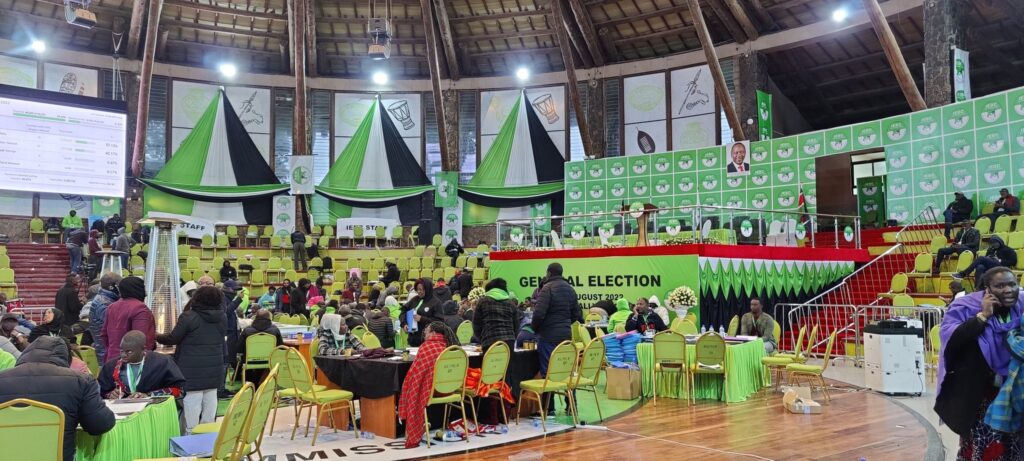
Photo: Courtesy.
By Robert Mutasi
Kenyans may not be able to follow live streaming of presidential election results in the 2027 General Election if a new proposal before Parliament is approved.
The Election Laws (Amendment) Bill, 2026, is proposing to delete the provision in the Elections Act that compels the Independent Electoral and Boundaries Commission (IEBC) to establish a mechanism for livestreaming results as they are announced at polling stations.
According to the draft Bill, Section 19 proposes to amend Section 39 of the Elections Act by deleting subsection (1G), which currently states “livestreaming of results as announced at polling stations for purposes of public information only.”
This means the live results display that Kenyans have become accustomed to seeing at the Bomas of Kenya National Tallying Centre may not be there in 2027. The media has often relied on those statistics to inform the public in real-time.
Constitutional lawyer Bobby Mkangi told The Star that the move amounts to a categorical removal of the statutory requirement for livestreaming results from polling stations to the national tallying centre.
“This is taking us back, unfortunately. The livestreaming of results is to meet the constitutional requirement for IEBC to conduct elections in a credible, transparent and verifiable manner. Any law that diminishes the constitution is taking us back to the pre-2010 constitution days,” Mkangi said.
However, the Bill does not mean IEBC is abandoning technology altogether. Polling station results and tallied constituency results will still be electronically transmitted to the national tallying centre. But Kenyans will have to wait for IEBC to verbally announce them or manually download Forms 34A from the portal.
The Bill also proposes major changes on how results are verified. It seeks to amend the current law which requires IEBC to verify that results are an “accurate record” of results declared at polling stations, to a new wording that says results transmitted are an “accurate reflection” of results tallied, verified and declared.
It also proposes to delete Section 39(1E) and 39(1F), which deal with discrepancies between electronically transmitted and physically delivered results and whether failure to transmit electronically invalidates results.
Another significant change is that IEBC would be required to wait for results from all 290 constituencies before declaring presidential results, deleting the current provision that allows declaration if remaining results cannot mathematically change the outcome.
Other proposals in the Bill include shifting candidate nomination power from political parties to IEBC, easing the threshold for recalling MPs to 30 percent, and compelling IEBC to provide a forensic image of servers when ordered by court under confidential cover.
About Author