El Niño Rains: Up to 100,000 Nairobi Households Face Flood Risk
Among the highest-risk zones are Mukuru informal settlements and the Industrial Area corridor covering Pipeline, Imara Daima and Kware.
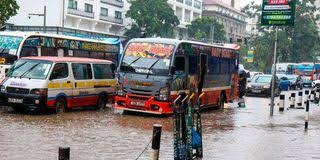
Photo: Courtesy.
By Robert Mutasi
Authorities have warned that up to 100,000 households in Nairobi County could be affected by flooding during the October–December short rains season as the country braces for above-average rainfall linked to the El Niño phenomenon.
A total of 246 areas across the city have been mapped as potential flood hotspots. The Kenya Meteorological Service has predicted wetter-than-normal conditions, prompting coordinated preparations by the National Disaster Operation Centre (NDOC), Kenya Red Cross and Nairobi County’s Disaster Management sector.
Nairobi County Chief Officer for Disaster Management Bramwel Simiyu said the county has already begun clearing drainages and waterways to reduce blockages and improve storm-water flow. Major roads expected to experience flooding include Uhuru Highway, Jogoo Road, Kangundo Road, Thika Road and several routes in Westlands.
“Our focus is on mitigation and preparation at this point in time but also preparing our response perspective to be ready, and in the worst case scenario, to help those who will be affected,” Simiyu said.
Among the highest-risk zones are Mukuru informal settlements and the Industrial Area corridor covering Pipeline, Imara Daima and Kware. A second corridor includes Gatina, Waruku and parts of Waithaka. Estates around Nairobi Dam, sections of Lang’ata and Kibra have also been flagged based on historical flooding patterns. The Central Business District is similarly expected to face challenges and will be closely monitored.
Simiyu outlined two scenarios: a medium-case projection of 22,000 to 25,000 affected households, and a worst-case scenario of up to 100,000 households. The county has identified schools and other facilities that can serve as temporary holding centres. Rescue teams, emergency lines, boats and relief support are being placed on standby to assist residents whose homes may become marooned.
The preparations come days after Health Principal Secretary Mary Muthoni announced that El Niño contingency plans have been activated. The plans provide a common framework for national and county governments, emergency agencies, humanitarian organisations and development partners to anticipate, prevent, detect and respond rapidly to flood-related health emergencies.
Particular attention is being given to water- and food-borne diseases such as typhoid, cholera, dysentery, hepatitis A and other diarrhoeal illnesses, which often surge when floodwater contaminates drinking water sources and sanitation systems.
“Through the National Health Sector El Niño Task Force and emergency operations structures, partners are supporting joint planning, rapid assessments, emergency medical services, referral and evacuation, community outreach, risk communication, relief support and assistance to vulnerable populations,” the PS stated.
Residents have been urged to follow official evacuation and safety instructions, avoid walking or driving through floodwater, and rely only on information issued by the Ministry of Health, county governments and authorised emergency agencies.
With the short rains approaching, Nairobi’s multi-agency efforts aim to minimise loss of life, protect property and ensure a rapid response should the worst-case flooding materialise.
About Author