AIC Bishop Raises Alarm Over Declining Enrollment in Nandi Day Schools, Donates Mattresses to Boost Girls’ Education
Church leaders call for urgent investment in rural schools as inadequate infrastructure and funding continue to undermine learning in Nandi County.
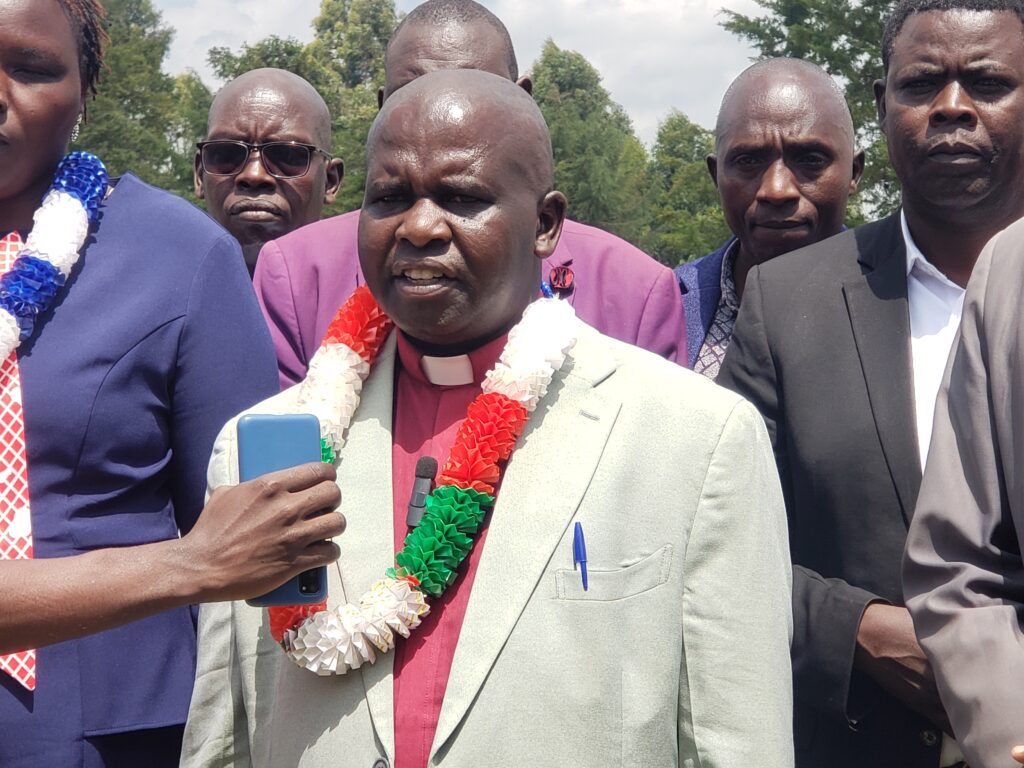
AIC Nandi Bishop David Moses Serem addresses the media after donating mattresses to Chepyagoris Secondary School, calling for increased investment in rural school infrastructure to improve enrollment and learning outcomes, particularly for girls. Photo by Zuriel Midambo | Hubzmedia.
Story by John Ayodi
The African Inland Church (AIC) Nandi area Bishop David Moses Serem has raised concerns over the declining state of education in Nandi County, warning that many public day schools are struggling with low student enrollment due to inadequate infrastructure, insufficient funding and a shortage of essential learning facilities.
Speaking after leading a special prayer service for Grade Six, Grade Ten and Form Four candidates at Chepyagoris Secondary School, Bishop Serem said many rural schools continue to operate without adequate laboratories, dormitories and classrooms, making it difficult to compete with better-equipped institutions.
As part of efforts to improve learning conditions and encourage more learners—particularly girls—to enroll and remain in school, the bishop donated mattresses to support Chepyagoris Secondary School’s transition into a mixed day and boarding institution.
“We call upon the area Member of Parliament and other government leaders to support this school by helping establish dormitories for both boys and girls. Boarding facilities will enable learners to remain in school, concentrate on their studies and improve academic performance,” Bishop Serem said.
He urged parents to play a greater role in nurturing their children during the school holidays by providing spiritual guidance and positive mentorship.
“Parents have a responsibility to guide their children and be good role models. When our day schools are properly supported through infrastructure development and adequate teacher deployment, they remain the best option for delivering quality education,” he added.
The bishop noted that the African Inland Church remains one of the largest education sponsors in Nandi County, managing approximately 70 secondary schools and more than 100 primary schools. However, he said many of the institutions continue to face serious infrastructure challenges that require urgent intervention from both the national and county governments.
The donation comes as Chepyagoris Secondary School works to reverse years of declining enrollment.
Acting Principal Eunice Rugut said the school currently has about 100 students, a remarkable recovery from just 11 learners at the beginning of the year.
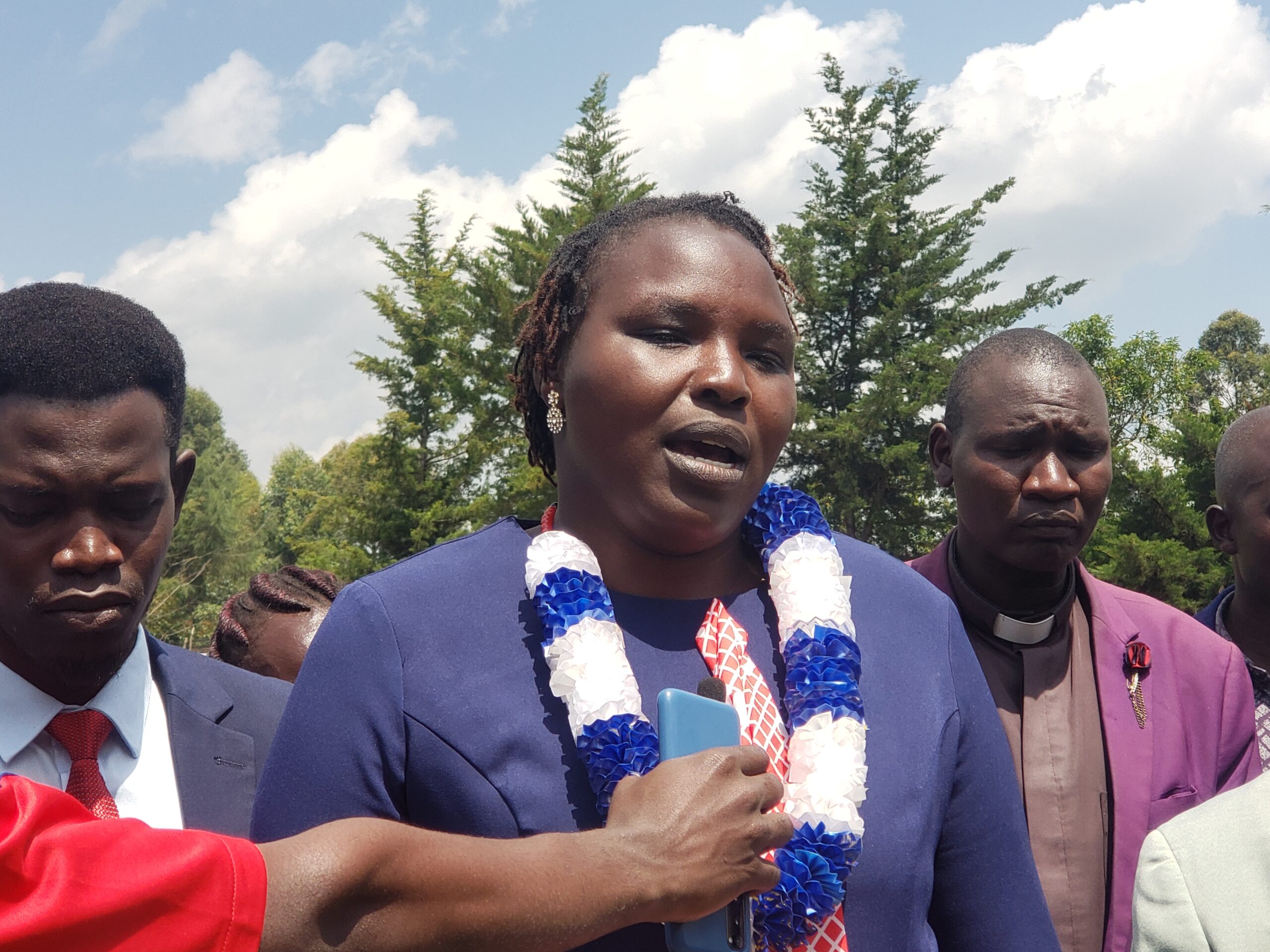
She attributed the improvement to support from the church, education stakeholders and development partners but said more investment is needed if the school is to sustain the gains and attract additional learners.
“I want to confirm that no parent pays school fees in this school. Our learners are fully supported through sponsorship from the church and assistance from the National Government Constituencies Development Fund (NG-CDF). We appreciate the support we have received, but we continue to appeal to our leaders because schools like ours are still being neglected,” Rugut said.
She said expanding boarding facilities would significantly improve enrollment, particularly among girls who travel long distances to school.
The school’s Board of Management Chairperson, Dennis Chirchir, said inadequate infrastructure remains the biggest obstacle to the institution’s growth, arguing that the current school infrastructure funding model disadvantages smaller schools.
“The biggest challenge facing this school is inadequate infrastructure because of the current funding model. Small schools like ours are disadvantaged. If you look at places such as Kiharu Constituency, school infrastructure funds are allocated directly to individual schools. The schools are able to employ labour, supervise projects and ensure value for money,” Chirchir said.
He contrasted that model with the system used in his constituency, where infrastructure projects are awarded directly to contractors.
“Here, an entire contract is awarded to a contractor. In some cases the workmanship is poor and projects remain incomplete. Instead of constructing two classrooms as planned, a contractor may only build one and disappear before completing the project. Schools are then left with stalled infrastructure while learners continue studying in inadequate facilities,” he said.
Chirchir noted that Chepyagoris Secondary School’s transition into a mixed boarding and day school is intended to increase enrollment and improve learning outcomes, but said the plan cannot succeed without adequate infrastructure.

“We urgently need dormitories and additional classrooms if we are to attract more students, especially girls, and provide them with a conducive learning environment. We appeal to the National Government, the NG-CDF and all education stakeholders to invest more in schools like ours so that every child has an equal opportunity to access quality education,” he said.
Education stakeholders in Nandi have continued to urge the Ministry of Education, Members of Parliament and the National Treasury to prioritize investment in rural schools by increasing capitation, improving infrastructure and deploying more teachers.
They argue that strengthening community schools will not only improve academic performance but also provide equal educational opportunities for learners from disadvantaged backgrounds while helping reverse the steady decline in enrollment witnessed in many rural day schools across the county.
About Author