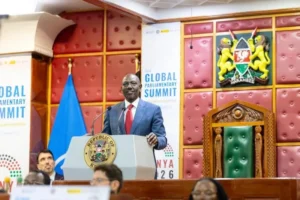
Murkomen’s Political Ambitions: Is He Strengthening Ruto’s Presidency or Building a Parallel Centre of Power?
GOVERNANCE | POLITICAL ACCOUNTABILITY | NATIONAL SECURITY
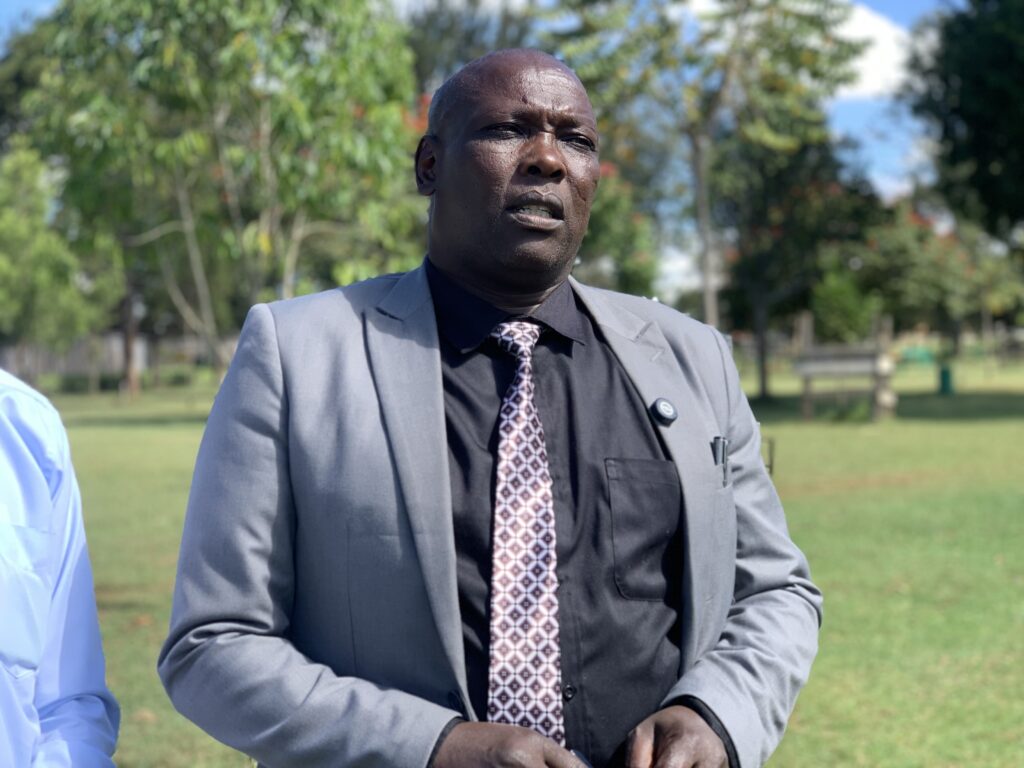
Kimutai Kirui-Eldoret-based human rights activist and governance champion.
By Kimutai Kirui
Eldoret-based human rights activist and governance champion
Kenya’s greatest governance challenges do not always originate from the political opposition. Sometimes, they emerge from within the very institutions and political establishments entrusted with implementing government policy and protecting the interests of the Republic.
The growing debate surrounding Interior Cabinet Secretary Onesimus Kipchumba Murkomen, his political allies and the influence of regional political networks raises an important question about the relationship between public office, political ambition and institutional accountability.
Is the political mobilisation associated with senior government figures genuinely intended to strengthen President William Ruto’s administration, or is it gradually creating competing centres of influence within the ruling establishment?
This is not an argument against political ambition. Every Kenyan leader has a constitutional right to participate in politics, build alliances and pursue legitimate political interests. However, the exercise of public authority must remain distinct from personal political mobilisation, particularly when that authority concerns national security and law enforcement.
The Interior Ministry is not a political kingdom. The National Police Service is not a political mobilisation machinery. And the authority entrusted to public officials must never become a private political asset.
These are questions that deserve serious public scrutiny.
The Interior Ministry is not a political kingdom
The responsibilities of the Interior Cabinet Secretary extend far beyond regional political calculations.
The ministry is central to internal security, national administration, coordination of security agencies and the protection of citizens. Its credibility depends on impartiality, professionalism and public confidence.
Murkomen, like every Cabinet Secretary, is accountable for the exercise of his public responsibilities. His political relationships and ambitions should therefore be assessed against the constitutional obligations attached to his office.
The concern is not whether he has political influence. The concern is whether the perception of political influence is beginning to overshadow the institutional responsibilities of the office he occupies.
President Ruto needs a cohesive administration in which Cabinet Secretaries work towards common national objectives. Competing political networks, personal loyalties and regional supremacy contests risk undermining that cohesion.
A government cannot effectively serve the public when its institutions are perceived to be operating as extensions of individual political interests.
The political economy of competing centres of power
Principal-Agent Theory offers a useful framework for examining the relationship between the President and senior government officials.
When a President appoints Cabinet Secretaries, authority is delegated to enable them to implement government policy and deliver public services.
That delegation comes with an obligation to act in the public interest and within the limits of the law.
An agency problem arises when officials begin pursuing personal interests that diverge from the objectives for which public authority was entrusted to them.
In political environments, this can manifest through competing patronage networks, independent political mobilisation, personal loyalty structures and the accumulation of informal power.
The danger is that public institutions gradually become entangled in factional competition.
A Cabinet Secretary may publicly profess loyalty to the President while simultaneously attracting political networks that generate questions about his independent ambitions.
Political influence is not inherently problematic. However, public authority must never be used to create personal political empires.
President Ruto needs effective implementers of government policy, not competing political centres operating within his administration.
Eldoret: The question of political goonism and police impartiality
Eldoret, the commercial and political centre of Uasin Gishu County, presents an important test of institutional neutrality as the country approaches the 2027 General Election.
Political competition is legitimate. What is unacceptable is the use of intimidation, violence or alleged connections within security agencies to frustrate political opponents.
A particularly important question must be asked: if political leaders enjoy genuine grassroots support, why should they rely on intimidation or groups of hired youths to maintain their influence?
Allegations involving groups described as political goons, including claims linking individuals associated with Koti Moja and political figures allied to Murkomen and Kapseret MP Oscar Sudi, require independent investigation.
There are also allegations concerning the conduct of sections of the police in Eldoret’s central business district and the role of particular officers in managing political tensions.
These claims should not be treated as established facts without corroborating evidence. The relevant authorities must investigate them impartially and establish whether any officers or politically connected individuals have breached the law.
The question is bigger than individual politicians.
Are security agencies maintaining professional neutrality, or are political rivalries increasingly influencing how law enforcement is perceived and experienced by ordinary residents?
The public deserves answers.
The President’s popularity should not become political capital that individual leaders appropriate to establish personal regional dominance.
The illicit alcohol crackdown: No sacred cows
The government’s campaign against illicit alcohol, adulterated ethanol, narcotics and other harmful substances presents another important test of institutional integrity.
President William Ruto’s administration has repeatedly pledged to intensify enforcement against illicit alcohol and drug trafficking. Interior CS Murkomen has also publicly defended the crackdown.
However, the effectiveness of such campaigns must be measured by more than public declarations, roadside arrests and the seizure of illegal consignments.
The critical question is whether enforcement reaches the entire commercial chain, including manufacturers, financiers, distributors, transporters and retailers who may be involved in unlawful operations.
There must be no distinction between politically connected business operators and ordinary traders when the law is being enforced.
A business permit cannot legitimise the production or distribution of prohibited substances. Equally, holding a legitimate licence should not, by itself, be treated as evidence of criminal conduct.
This distinction is essential.
In May 2026, Kenya News Agency reported Murkomen directing security and administrative officers to intensify enforcement against illegal alcohol outlets regardless of whether they held business permits. He also warned against police collusion with traders involved in the illicit alcohol trade.
Kenya News Agency+1
On November 4, 2026, Murkomen also warned that alcohol manufacturing facilities operating outside the law risked closure and withdrawal of their licences.
People Daily
These documented statements make it important to distinguish between the government’s stated enforcement policy and allegations of selective implementation.
If there are claims that particular licensed establishments in Eldoret enjoy preferential treatment because of political connections, the appropriate response is an independent investigation, supported by documentary evidence, licensing records and enforcement data.
The government must demonstrate that the crackdown is targeting criminal conduct rather than becoming a selective political exercise.
The ordinary mwananchi deserves equal protection under the law.
Homa Bay: Political intolerance is a national governance concern
The political violence witnessed in Homa Bay in August 2026 provides another disturbing illustration of how political competition can threaten democratic participation.
The violence surrounding the Linda Mwananchi political mobilisation raised serious questions about the protection of political freedoms, the responsibility of political leaders and the preparedness of security agencies.
Reporting by The EastAfrican documented clashes that left two people dead, including a police officer, and 46 injured.
The EastAfrican
Subsequent reporting and legal proceedings have also raised allegations concerning the mobilisation of groups of youths and the possible involvement of politically connected individuals.
These allegations must be subjected to independent investigation rather than converted into political conclusions before the evidence is tested.
The underlying constitutional principle is straightforward: every Kenyan has the right to participate in political activities without intimidation or violence.
Political leaders must be held accountable for their conduct, while police officers must protect citizens without discrimination.
No political faction should enjoy preferential treatment in the enforcement of the law.
Narok: Presidential authority must command political discipline
The political tensions described around presidential functions in different parts of the country also raise questions about coordination and leadership within the governing establishment.
A presidential event should provide an opportunity to demonstrate national unity, communicate government policy and showcase development achievements.
It should not become a platform for competing political factions to demonstrate personal supremacy.
Where political disagreements overshadow official government engagements, the public is entitled to question the maturity and discipline of the political leadership involved.
The Interior Ministry and relevant administrative structures have a responsibility to maintain security and facilitate orderly public engagements.
However, claims of specific failures or political interference in Narok must be supported by independently verifiable accounts before individual officials are held responsible.
The broader lesson is that public functions must serve the Republic, not individual political ambitions.
Police accountability: Responsibility must follow the chain of command
The debate about political influence and security institutions cannot end with political personalities. It must extend to institutional accountability.
Kenya’s Constitution establishes a clear framework governing the exercise of police authority.
Article 244 requires the National Police Service to maintain professionalism and discipline, prevent corruption, promote transparency and accountability, uphold human rights and strengthen relationships with society.
Article 239(3) goes further by expressly prohibiting national security organs and their members from acting in a partisan manner or advancing the interests of a political party or political cause.
These are not optional standards. They are constitutional obligations.
Kenya Law Reform Commission (KLRC)+1
Responsibility must also be understood within the proper command structure.
The Interior Cabinet Secretary has policy responsibilities. Under Article 245, the Inspector-General exercises independent command over the National Police Service.
The Cabinet Secretary may issue lawful directions on police policy but cannot direct the Inspector-General on investigations of particular offences, enforcement against particular individuals or personnel decisions.
This constitutional distinction is fundamental.
As of November 2026, Douglas Kanja is the Inspector-General of Police, while Eliud Lagat is the Deputy Inspector-General of the Kenya Police Service. Mohamed Amin heads the Directorate of Criminal Investigations.
National Police Service+1
Where allegations of police misconduct, political interference or selective enforcement arise, the relevant authorities must establish the facts and ensure accountability.
The Independent Policing Oversight Authority (IPOA) and other legally mandated oversight institutions must be allowed to perform their responsibilities without political interference.
The central question remains: who protects ordinary Kenyans when the impartiality of those entrusted with enforcing the law is called into question?
Kenya must never become a country where the poor face the full weight of the law while politically connected individuals enjoy preferential treatment.
The President needs leaders, not political kingpins
President Ruto’s administration requires leaders who can explain government policy, defend public institutions, build consensus and earn genuine public confidence.
It does not need political factions competing to establish regional supremacy.
The political activities of Murkomen, Oscar Sudi and other influential leaders within the ruling establishment should therefore be assessed on the basis of their contribution to governance, national cohesion and the administration’s broader development agenda.
Political mobilisation is legitimate. Building political alliances is legitimate. Seeking greater political influence is legitimate.
But none of these activities should compromise the integrity of public office.
There is a fundamental difference between building the President’s political support base and building an independent political empire around oneself.
There is also a difference between political loyalty and institutional responsibility.
The President’s supporters should not confuse personal allegiance to individual politicians with loyalty to the Republic.
A strong administration is not built through intimidation, political theatrics or the accumulation of loyalists. It is built through service delivery, institutional credibility, accountability and respect for constitutional principles.
Murkomen must choose between public responsibility and political ambition
Murkomen has every right to pursue his political ambitions. However, the responsibilities of the Interior Cabinet Secretary demand a level of institutional discipline that must transcend regional political calculations.
If his ambition is to become a dominant political figure in the Rift Valley, he is entitled to pursue that ambition through legitimate political engagement.
But public office must never become an instrument for consolidating personal political power.
My position is straightforward: Murkomen must demonstrate that his primary commitment is to the constitutional responsibilities of his office and the interests of the Republic.
If he believes his political ambitions are incompatible with those responsibilities, he should consider whether continuing to occupy the Interior Cabinet position serves the public interest.
The President needs Cabinet Secretaries who strengthen government institutions, not individuals whose political activities create perceptions of competing centres of power.
The final question: Is Murkomen serving the presidency or building his own political empire?
This debate is ultimately about more than Murkomen, Sudi or the political dynamics of the Rift Valley.
It is about the integrity of government institutions and the future of constitutional democracy in Kenya.
Can Kenyans trust security institutions to act independently, regardless of the political or commercial influence of those involved?
Can the government enforce its policies consistently, without favouring politically connected individuals?
Can political leaders disagree without mobilising intimidation or dragging security agencies into their contests?
And can President Ruto maintain a cohesive administration in which public appointments are understood as responsibilities to the Republic rather than opportunities to establish personal political kingdoms?
These questions deserve honest answers.
There is a difference between serving a President and using the President’s political capital to advance personal ambitions.
There is a difference between legitimate political influence and the misuse of public authority.
And there is a difference between building political support through public service and cultivating power through institutions entrusted with protecting citizens.
Kenya needs strong institutions, not political fiefdoms. Leaders, not kingpins. A professional police service, not one whose impartiality is constantly questioned.
Ultimately, history will judge public officials not by how loudly they profess loyalty to the President, but by whether they strengthened the Republic, protected constitutional institutions and placed national stability above personal ambition.
The President’s political popularity is not an inheritance for individual politicians to convert into personal political kingdoms. It is a public mandate that must be respected and protected.
About Author