Maasai Communities Race to Restore Degraded Amboseli Grasslands as Heavy Rains Loom
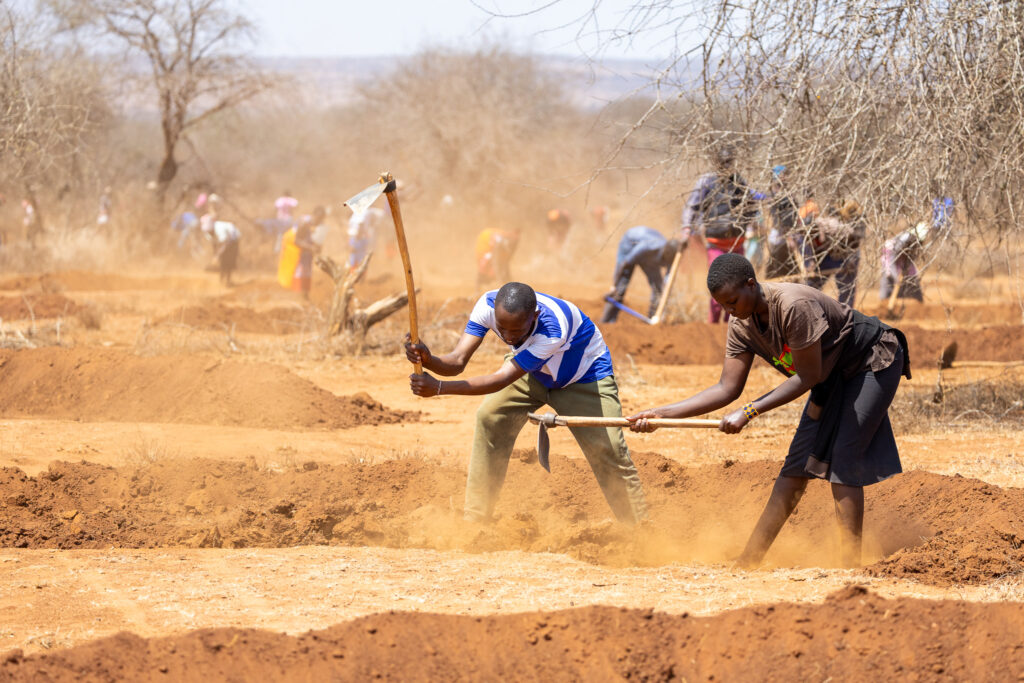
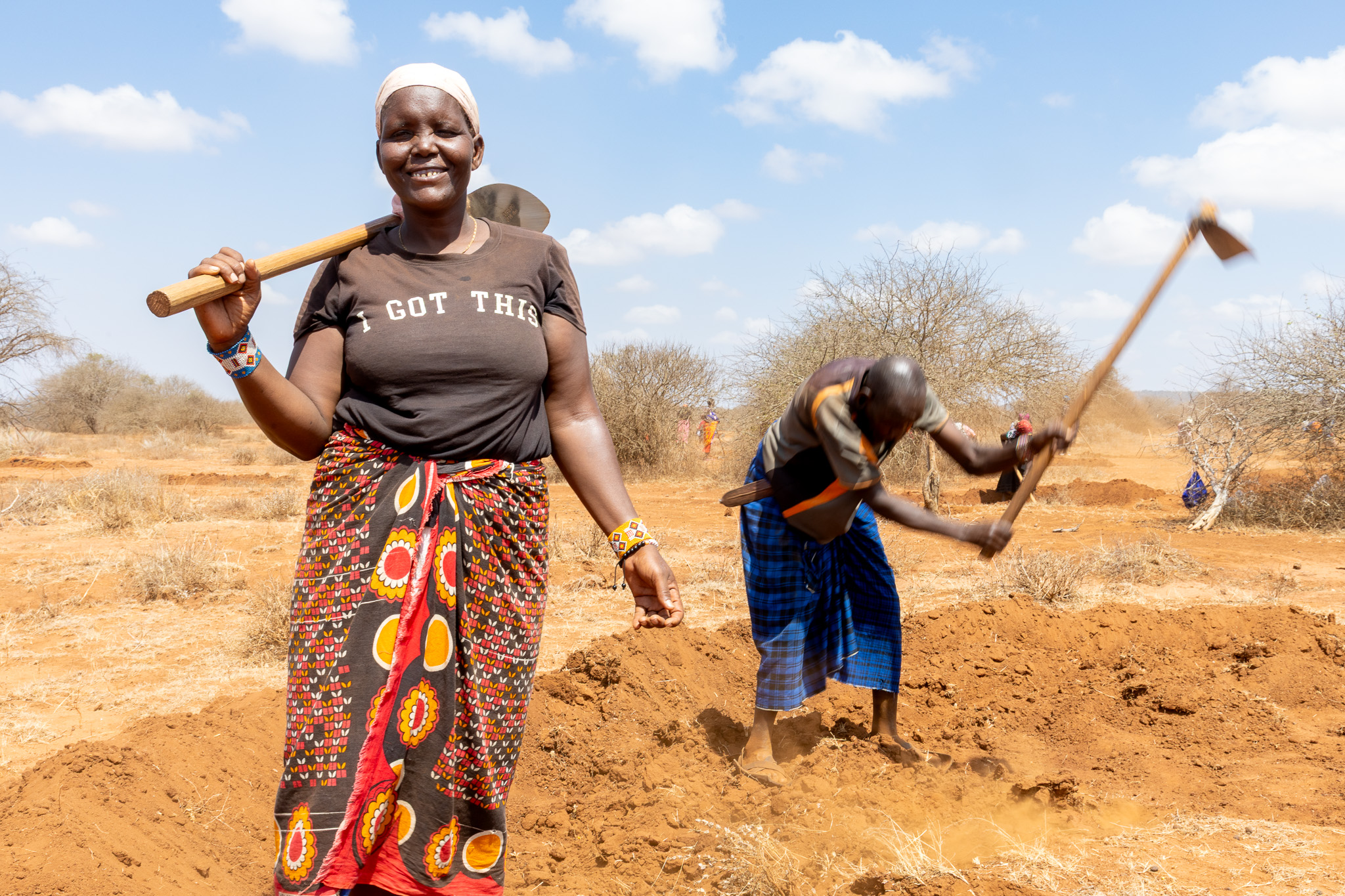
: Maasai men and women working together to dig crescent-shaped earth bunds at Mbirikani Ranch in Kajiado County. The structures are designed to capture rainwater, slow surface runoff, prevent soil erosion and improve soil moisture to support the regeneration of indigenous grasslands.
By James Gitaka
Across the dry, expansive plains of Mbirikani Ranch in the Greater Amboseli ecosystem, hundreds of Maasai men and women are working against time, digging their way towards a more secure future for their families, livestock and wildlife.
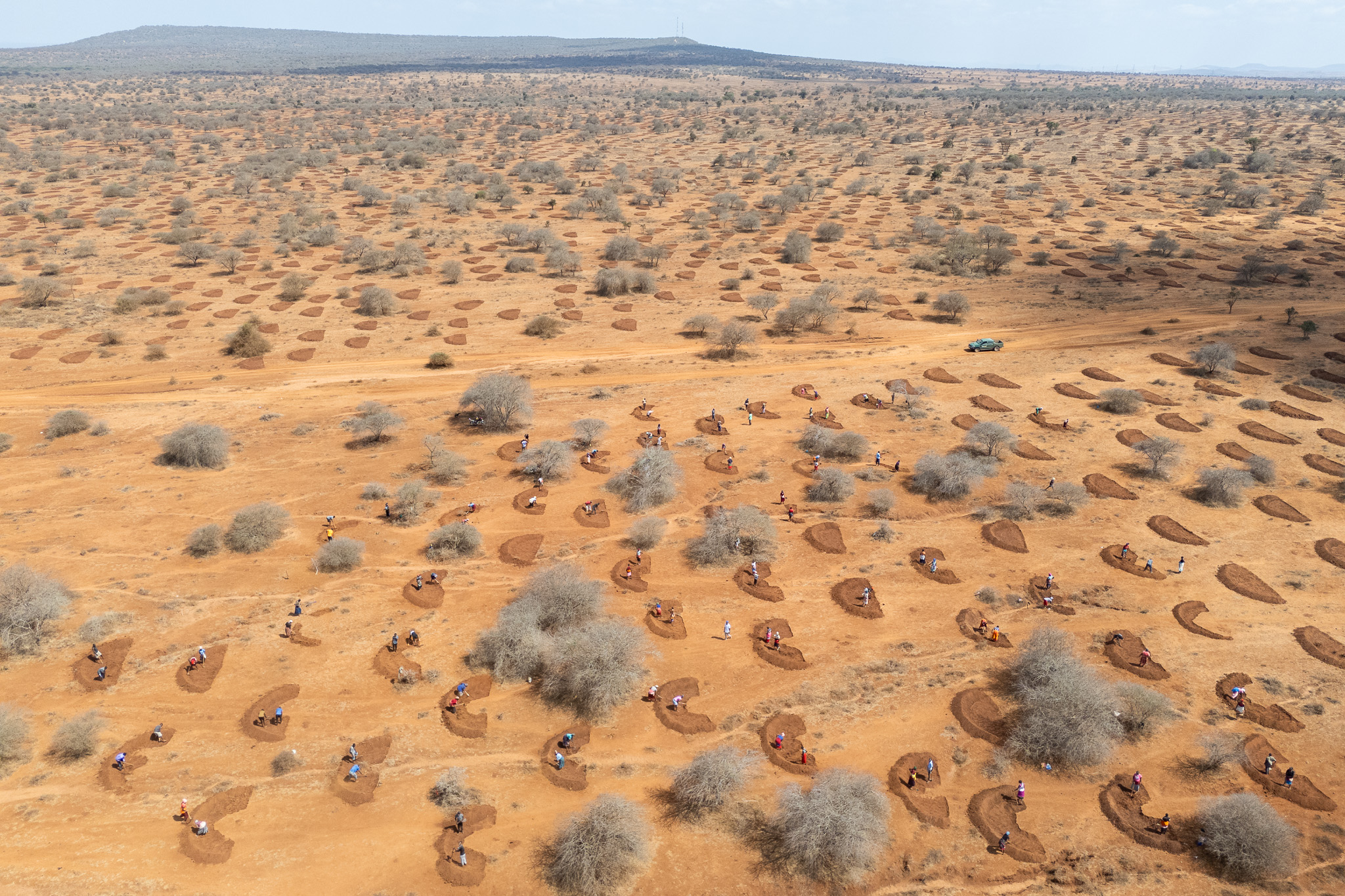
Armed with hoes and other simple tools, more than 600 community members are carving thousands of crescent-shaped earth structures into degraded grazing land. Their target is ambitious: 50,000 miniature water-harvesting structures, known as bunds, designed to capture rainwater, restore lost vegetation and breathe life back into landscapes battered by years of drought and soil degradation.
For many of the workers, the initiative represents more than an environmental restoration exercise. It is also an opportunity to earn an income, rebuild livelihoods disrupted by livestock losses and reclaim communal grazing areas that pastoralist families depend on for survival.
The restoration campaign, led by Big Life Foundation in partnership with Justdiggit Foundation and the TWENDE Project, is being implemented across four active sites on Mbirikani Ranch.
The urgency is underscored by Kenya’s October-December 2026 rainfall outlook. The Kenya Meteorological Department has forecast above-average rainfall in Kajiado County and much of the country, warning that prolonged wet spells and isolated storms could increase the risk of flooding and soil erosion in vulnerable areas.
For communities living in semi-arid environments, however, the prospect of heavy rainfall presents both an opportunity and a challenge.
While rain is essential for pasture regeneration and livestock production, degraded and compacted soils often struggle to absorb intense rainfall. Instead of replenishing underground moisture, water can rush across the surface, carrying away valuable topsoil and worsening land degradation.
It is this cycle that the Mbirikani initiative seeks to interrupt.
Turning rainwater into pasture
The bunds are carefully shaped into wide, semi-circular formations, measuring approximately 2.5 metres by five metres. They are strategically dug along natural water-flow paths to slow down surface runoff, retain moisture and encourage water to infiltrate the soil.
Unlike conventional water dams, these structures are designed primarily to restore soil moisture and vegetation rather than store large volumes of water for direct consumption.
Once the structures are completed, indigenous grass seeds are scattered around them, giving vegetation an opportunity to establish and gradually spread across the surrounding landscape.
The approach combines relatively simple land-management techniques with natural regeneration, allowing communities to restore degraded rangelands while making better use of seasonal rainfall.
At the four active sites, workers are digging more than 1,000 bunds daily, with 657 casual labourers recruited from neighbouring villages.
More than KSh9 million is being channelled into wages, providing an important source of household income in a region where prolonged droughts have weakened traditional pastoralist livelihoods.
Among those benefiting are Maasai women, including widows and women whose families lost livestock during recent droughts.
The economic dimension is particularly important in pastoralist communities, where livestock represents not only wealth but also food security, social standing and a family’s ability to withstand difficult seasons.
By creating paid employment within the restoration programme, the initiative is offering some households an alternative source of income as they work towards rebuilding their livestock holdings.
Ernest Lenkoina, Big Life Foundation’s Rangelands Restoration Manager, says pasture scarcity caused by degraded land has become one of the most pressing challenges facing pastoralist communities.
“One of the biggest crises facing pastoralist communities today is pasture scarcity caused by degraded land,” Lenkoina said.
“When heavy rain falls on bare, hardened ground, much of that water can simply run off. These bunds give it somewhere to collect and soak into the soil.”
He added that preparing the land before and during the rainy season gives indigenous grasses a better opportunity to establish and regenerate.
“We’re preparing the land now so that when the rains come, we can make the most of every drop and give grass the best possible chance to grow. If rain falls on compacted, bare earth, that life-giving moisture is lost in minutes,” he said.
A wider environmental crisis
The intervention comes against the backdrop of mounting pressure on Kenya’s southern rangelands, where pastoralist livelihoods and wildlife conservation depend on the health of interconnected grassland ecosystems.
The Greater Amboseli landscape supports Maasai communities alongside elephants, giraffes, zebras, wildebeest and other wildlife. Its ecological health is closely linked to the availability of pasture, water and functioning wildlife corridors.
However, recurring droughts, land-use changes, excessive grazing pressure and the loss of indigenous vegetation have contributed to the deterioration of some grazing areas.
The National Environment Management Authority (NEMA), in its 2025/2026 Ecoflash publication, identifies significant degradation in Kenya’s southern rangelands.
The publication reports that approximately 50 per cent of the southern rangeland ecosystem is degraded, while about 40 per cent is highly eroded.
It also identifies excessive logging, overstocking and intensive farming as among the factors contributing to the disappearance of native vegetation in parts of the landscape.
The findings highlight the importance of restoration interventions that go beyond responding to individual drought emergencies and instead address the underlying condition of the land.
For pastoralist communities, healthy grasslands mean more than green scenery. They determine whether livestock can survive dry spells, whether milk production can recover and whether families can avoid distress sales or the loss of entire herds.
For wildlife, the same landscapes provide essential grazing grounds and movement corridors.
Women at the centre of restoration
One of the defining features of the Mbirikani initiative is the involvement of women in both the physical restoration work and the wider grass-seed supply chain.
Eight community grass-seed banks, coordinated by Big Life Foundation and managed by women’s groups across group ranches in Kajiado County, supply indigenous seeds used in the restoration sites.
The seed banks are helping establish a community-based economic model in which women participate in environmental conservation while generating income from the natural resources they help protect.
Beyond selling grass seeds, the groups are involved in hay baling and integrated beekeeping enterprises, creating additional livelihood opportunities.
This approach recognises that successful landscape restoration requires more than digging structures and planting seeds. It also depends on giving communities an economic stake in protecting the land long after restoration activities have been completed.
Caroline Kerichu, Justdiggit Foundation’s Southern Landscape Manager, says communities must move beyond discussions about environmental restoration and invest in practical interventions that allow nature to recover.
“We cannot afford to spend more time talking about restoring our landscapes than actually restoring them,” Kerichu said.
“Nature has an incredible capacity to regenerate when given the opportunity. Our role is to create the right conditions, support communities, and combine indigenous knowledge with science and innovation to accelerate that regeneration.”
She said the scale of environmental degradation requires faster and more sustained restoration efforts, with local communities playing a central role.
Protecting restored land from grazing pressure
Digging bunds and introducing indigenous grass seeds is only the beginning of the restoration process. Protecting the recovering vegetation from premature grazing is equally important.
To achieve this, communities have established temporary grazing restrictions in designated restoration areas, allowing newly planted grasses sufficient time to establish, mature and produce seeds.
Community Land Management Committees (CLMCs), working alongside dedicated rangeland scouts, monitor the restoration zones and enforce the agreed grazing arrangements.
The approach is particularly significant in pastoralist areas where communal grazing resources are shared among households and competing demands can undermine restoration efforts.
By temporarily restricting livestock access, communities are giving the land an opportunity to recover naturally while building a more sustainable system for managing communal pastures.
Building on five years of restoration
The current 50,000-bund campaign builds on a wider, five-year rangeland restoration programme implemented by Big Life Foundation and partners, including Justdiggit Foundation and Conservation International, with support from organisations and initiatives such as Apple Inc. and the TWENDE Project.
According to programme figures provided by the implementing partners, more than 278,000 bunds have already been constructed across approximately 2,300 acres of land.
The restored areas are part of a broader landscape recovery effort that also incorporates natural regeneration and controlled grazing.
Big Life reports that the rangelands benefiting from its restoration interventions now cover more than 17,500 acres.
The organisation also points to improvements in pasture conditions at previously restored sites, including Ilchalai, Loosikitok and Olngosua, where regenerated grasslands have reportedly remained greener for longer and provided forage during difficult dry periods.
These areas offer an indication of what sustained restoration efforts can achieve when water conservation, indigenous vegetation and community-led grazing management are implemented together.
Beyond conservation: securing livelihoods and coexistence
For Big Life Foundation, restoring degraded grazing land is closely connected to its wider conservation model, which seeks to ensure that communities living alongside wildlife benefit directly from protecting the ecosystem.
The Greater Amboseli landscape is home to some of Kenya’s most important wildlife populations, but maintaining coexistence requires addressing the needs of the people who share the land with them.
Pasture shortages can increase pressure on grazing resources, intensify competition between livestock and wildlife and push pastoralists to seek alternative grazing areas.
Restoring communal rangelands therefore has implications beyond livestock production. It can help maintain wildlife habitats, reduce pressure on neighbouring farms and strengthen the conditions necessary for peaceful coexistence between people and wildlife.
The Mbirikani initiative demonstrates how environmental restoration can simultaneously address ecological degradation and economic vulnerability.
Its success, however, will ultimately depend on whether the newly restored grasslands are protected, whether community grazing agreements are respected and whether the benefits extend beyond the immediate period of paid employment.
As the rains replenish the dry landscape, the 50,000 bunds represent an investment in the future of the Amboseli ecosystem.
For the Maasai families involved, the hope is that every crescent dug into the earth will help retain a little more water, support another patch of indigenous grass and bring their grazing lands closer to recovery.
In a landscape where livestock, wildlife and people depend on the same fragile natural resources, restoring the land may prove to be one of the most important investments communities can make in their shared future.
About Author