Eldoret’s Investment Boom: KSh382 Billion Uasin Gishu Economy Fuels City’s Transformation
The county’s 2025 Statistical Abstract estimates that the population reached approximately 1.28 million in 2024.
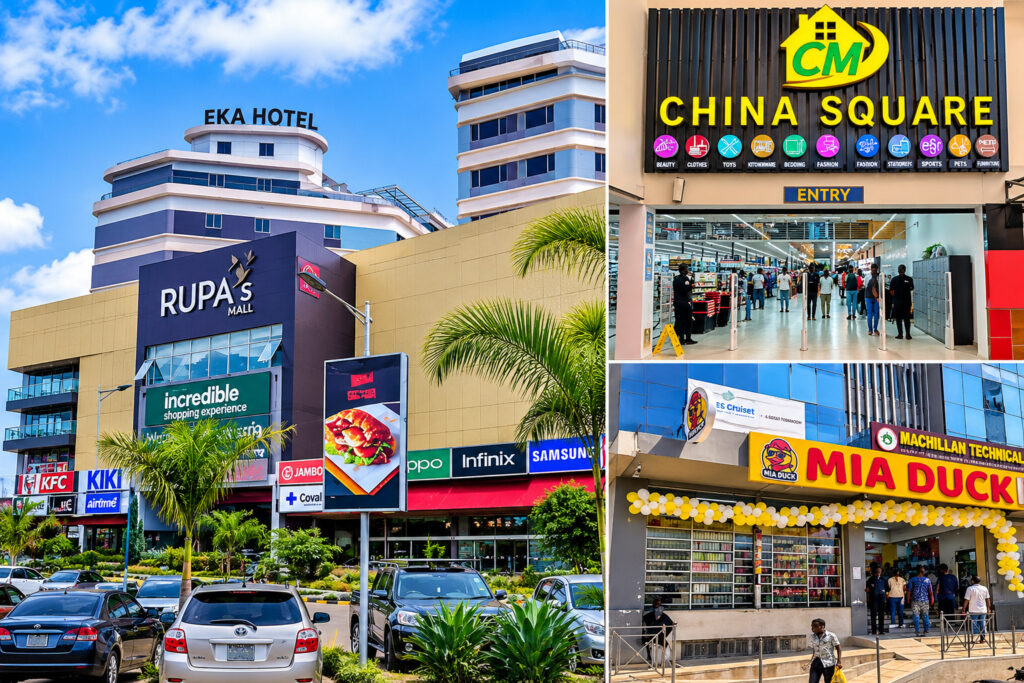
Rupa's Mall, China Square and Mia Duck are among the retail developments reshaping Eldoret's commercial landscape, reflecting growing investor confidence and the city's emergence as a major shopping and business destination in the North Rift.
By Camilla Lunani
Two years after attaining city status on August 15, 2024, Eldoret is experiencing a growing wave of commercial, hospitality and entertainment investments, reinforcing its position as one of Kenya’s emerging regional business destinations.
From a proposed KSh7 billion five-star hotel to the entry of international retail brands, modern shopping outlets and new entertainment facilities, the city’s changing investment landscape reflects growing confidence in its economic potential and its expanding consumer market.
The transformation is underpinned by the economic strength of Uasin Gishu County, which ranks among Kenya’s wealthiest county economies by Gross County Product (GCP).
According to the Kenya National Bureau of Statistics (KNBS) Gross County Product 2025 report, Uasin Gishu recorded an estimated GCP of approximately KSh382.7 billion in 2024, placing it seventh among Kenya’s 47 counties and accounting for about 2.6 per cent of the national economy.
The county’s economic output increased by approximately 11 per cent from the previous year, highlighting its growing contribution to Kenya’s economic activity.
Agriculture remains a major pillar of the county’s economy. Data from the KNBS-based county economic statistics indicate that agriculture, forestry and fishing generated approximately KSh115.1 billion in 2024, representing 30.1 per cent of Uasin Gishu’s economic output.
The county is also one of Kenya’s leading maize-producing regions, with production estimated at 483,211 tonnes in 2024, making it the country’s largest maize producer.
Beyond agriculture, Uasin Gishu’s economy is supported by wholesale and retail trade, transport, real estate, manufacturing, education, healthcare and other service industries, with Eldoret serving as its principal commercial and administrative centre.
The city was officially conferred city status on August 15, 2024, by President William Ruto, becoming Kenya’s fifth city after Nairobi, Mombasa, Kisumu and Nakuru.
During the conferment ceremony, President Ruto said the elevation would help unlock the region’s economic potential and called on county leaders and professionals to prioritise spatial and urban planning to support orderly development.
The President also highlighted the importance of infrastructure investment, including waste management, connectivity and socioeconomic facilities, in building a functional city.
Two years later, a series of developments across Eldoret’s commercial landscape is beginning to reflect the ambitions associated with its new status.
KSh7 billion hotel project signals confidence in hospitality market
One of the most significant developments is a KSh7 billion five-star hotel project near Moi Teaching and Referral Hospital.
Groundbreaking for the proposed 205-room luxury facility began in late October 2026, marking a major addition to the city’s hospitality investment pipeline.
Upon completion, the hotel is expected to increase Eldoret’s capacity to accommodate international visitors, business travellers, conference delegates and tourists.
The investment comes at a time when Kenya’s hospitality industry is experiencing renewed growth, supported by increased business travel, tourism and demand for accommodation and conference facilities.
For Eldoret, the development presents an opportunity to strengthen its position as a regional destination for conferences, corporate meetings, medical-related travel and sporting events.
The city’s established institutions, including Moi Teaching and Referral Hospital, Moi University and the University of Eldoret, provide an important foundation for attracting visitors and business-related activities.
International retail brands expand their presence
The retail sector is also undergoing a notable transformation, with international and local brands increasingly establishing operations in Eldoret.
Chinese variety retailer Mia Duck recently opened its Eldoret branch along Bandaptai Road, adding to the growing number of businesses targeting the city’s expanding consumer market.
In August 2026, China Square opened its first North Rift outlet at Rupa Business Park along the Eldoret-Nakuru Highway.
The wholesale retail establishment stocks a wide range of household products, furniture, electronics, kitchenware and hardware, offering consumers and small-scale businesses additional shopping options.
The entry of these retailers reflects the growing attractiveness of Eldoret’s commercial environment, supported by its strategic location, expanding population and influence as a trading centre for the wider North Rift region.
According to the 2019 Kenya Population and Housing Census, Uasin Gishu had a population of approximately 1.16 million. The county’s 2025 Statistical Abstract estimates that the population reached approximately 1.28 million in 2024.
This growth is creating additional demand for retail services, housing, transport, entertainment and other urban amenities.
The expansion of modern shopping outlets is also changing consumer experiences, introducing new retail formats and increasing competition within the city’s commercial sector.
Entertainment industry attracts new investment
Beyond shopping and hospitality, Eldoret’s entertainment industry is attracting new investment as developers respond to demand for modern recreational facilities.
Grace Mall is set to introduce the city’s first dedicated indoor bowling alley through Pins Entertainment, bringing a new leisure experience to residents.
The facility is expected to target families, young people and corporate groups seeking alternative recreational activities.
Its introduction represents a diversification of Eldoret’s entertainment industry, which has traditionally relied heavily on restaurants, bars, outdoor recreational spaces and conventional entertainment establishments.
The investment could also create employment opportunities while supporting complementary businesses within the hospitality and leisure industries.
The expansion of entertainment facilities is increasingly becoming an important component of modern urban economies, where shopping, recreation and hospitality establishments complement one another.
64 Retail Market redevelopment targets small traders
While private-sector investments are reshaping Eldoret’s modern commercial landscape, plans to upgrade traditional trading infrastructure are also progressing.
The proposed redevelopment of the 64 Retail Market is among the key public-sector initiatives expected to transform trading activities within the city’s central business district.
Architectural designs for the proposed modern market were completed in August 2026 by the Uasin Gishu County Government in collaboration with national housing authorities.
The project is expected to provide improved trading spaces and facilities for small-scale and informal traders operating within the town centre.
An artistic impression of the modern 64 Retail Market in Eldoret, a planned transformation of the city’s traditional trading space aimed at providing improved facilities for traders, supporting small businesses and strengthening Eldoret’s growing commercial landscape.
Its implementation will be significant in ensuring that small businesses remain part of Eldoret’s evolving commercial economy as modern shopping complexes and large retail outlets expand.
The redevelopment also presents an opportunity to improve the organisation of informal trading, enhance the working environment for traders and strengthen the contribution of small businesses to the city’s economy.
Infrastructure and local business opportunities remain critical
Eldoret’s expanding commercial profile reflects a broader transition from traditional street-level trading towards modern shopping complexes, large retail establishments, hospitality developments and mixed-use commercial spaces.
However, sustaining this growth will require corresponding investment in infrastructure and public services.
The increasing number of commercial establishments will place additional demands on roads, parking facilities, drainage systems, water supply, electricity, waste management and urban security.
There is also a need to ensure that local entrepreneurs, small-scale traders and young people benefit from the emerging investment opportunities through employment, business partnerships and access to commercial spaces.
For the county government, the challenge will be to create an investment-friendly environment while maintaining an inclusive urban economy that does not leave smaller businesses behind.
The proposed modernisation of the 64 Retail Market, alongside private-sector developments, will therefore be an important indicator of how effectively Eldoret balances large-scale commercial investment with the interests of local traders.
A changing economic identity
With a Gross County Product of approximately KSh382.7 billion and a seventh-place national ranking, Uasin Gishu has a strong economic foundation on which Eldoret can build its ambitions as a regional commercial hub.
The entry of new retail brands, expansion of hospitality facilities and diversification of entertainment services signal a changing urban identity for a city whose economic influence extends beyond county boundaries.
However, the success of Eldoret’s transformation will not be measured solely by the number of new buildings, shopping outlets or luxury developments.
Its long-term economic impact will depend on the jobs created, investment retained within the local economy, opportunities extended to small businesses and the ability of public infrastructure to support an expanding urban population.
As Eldoret approaches its third year as a city, the growing investment momentum presents an opportunity to translate its rising commercial profile into sustainable economic growth and improved livelihoods for residents.
About Author