Hateful Speeches That Threaten Eldoret Peace Are Loaded Gun Pointed at Kenya
What happens in Eldoret is a barometer for the rest of the country, and Uasin Gishu County is the best representative of Kenya.

Photo: Hubz Media.
By Robert Mutasi
Eldoret’s peace is better understood at the tip of the tongue. That is why the comments by the nominated Member of Parliament Joseph Wainaina Iraya at Ngeria on Saturday, August 29, should concern all Kenians, not just the National Cohesion and Integration Commission.
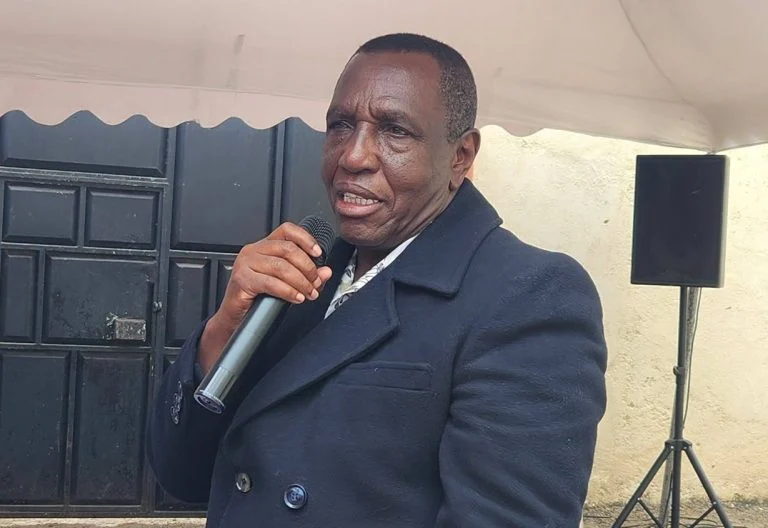
The NCIC in its notice dated August 31 and signed by its CEO Dr. Daniel Mutegi Giti, calls upon the accused to appear at Britam Towers in Nairobi on September 17, 2020, to explain his comments which included urging those Kikuyus in Uasin Gishu who do not support President William Ruto and his party UDA to return from whence they came.
According to the commission’s notice, Iraya said: “Sisi jamii ya wakikuyu wenyewe hapa sisi dio tutapiga hao wakikuyu ambao hawataki William Ruto hapa waende,” and told them to “watangulie kwenda” until the end of the political impasse.
The context in which these comments were made by Iraya as a sitting MP are sufficient to generate tension and mistrust among the people of Nandi and the Kikuyus who have co-existed in relative peace in the past decade.
Eldoret peace is built on amnesia but the body remembers
If you were a resident of Kapseret, Kiambaa, Burnt Forest, and Huruma during the 2007/2008 violence, you do not need to be reminded that the nearest road to safety was either Marigat or Cherangany Hills. You also do not need to be told that people who had lived together in peace suddenly asked for IDs from each other and that churches turned into mourning centres. It took us ten years to heal from the trauma and form Amani Mashinani committees, for churches to reconnect, and for elders to shake hands. It took the entire county to agree that a Kikuyu, Nandi, Luo, Luhya, Kamba, and Kisii farmer could live together in Langas with relative peace. That is why Iraya’s statements are extremely sensitive and should be taken seriously by all Kenians.
They are akin to re-opening old wounds and are reminiscent of the kind of tribal rhetoric that was used to fuel the 1992, 1997, 2002, and 2007 violence. Iraya’s remarks are a reminder that unless people in positions of authority change their rhetoric, the land will continue to experience ethnic tension and violence. He conveniently forgets that Uasin Gishu is the breadbasket and commercial hub of the North Rift and that the county cannot afford to turn away its traders, farmers, and businesspeople for voting for the wrong person.
Hate speeches are poison that takes time to show effect
Hate speeches do not take immediate effect. There are three stages in which hate speeches take root and flourish, and Eldoret has seen all of them.
First, hate speeches demonize the target group. Iraya’s comments are an attempt to portray the Kikuyus in Uasin Gishu who oppose him as traitors to their community and by extension, all Kikuyus. His comments delegitimatize dissent and undermine democracy and freedom of conscience.
Second, hate speeches encourage violence and intimidation against the target group. The comments by Iraya are an open call for violence against the Kikuyus by his supporters. Ordinary youths in Ngeria, Kimumu, Kiembeni, and other parts of Nandi will interpret his remarks as a licence to attack any Kikuyu individual, business, or farm. Iraya should understand that Nandi’s youth is as tribal as his own and can retaliate with even more severe violence when provoked. This is what happened in 2007 immediately after the presidential results were announced.
Third, hate speeches encourage eviction of the target group. By stating that the Kikuyus should “watangulie kwenda”, Iraya is suggesting that they are unwelcome and should leave Uasin Gishu. Iraya has opened the floodgates for every tribe to evict the other in case of tribal tensions. His remarks will give everyone the moral right to claim that they are being hosted by another tribe. Thus, Iraya has set the stage for further tribal clashes and violence in the future.
What happens in Eldoret is a barometer of national sentiments
What happens in Eldoret is a barometer for the rest of the country, and Uasin Gishu County is the best representative of Kenya. When there is tension in Eldoret, there is always tension elsewhere, only varying in intensity. Iraya’s comments, therefore, must worry all Kenians because if such tribal rhetoric is allowed to continue in 2026, what will happen in 2027 when the presidential results are at stake?
The response by the NCIC to calls for investigations into Gachagua’s rhetoric and the recent threats by Githunguri MP Gathoni Wamuchomba to take action if Iraya and Health CS Aden Duale are not prosecuted for hate speeches show that tension is already high. We can expect more tribal rhetoric as we approach the 2022 elections.
The Kenyan constitution protects freedom of expression, but it does not protect incitement to commit crimes, especially violence and targeted hate speech, and the National Cohesion and Integration Commission should act firmly. The relevant sections of the NCIC Act that penalize hate speech must be enforced for the crime to be a lesson to all politicians. The UDA party must stand up and condemn Iraya’s remarks because the party’s reputation is at stake.
Most importantly, the people of Nandi must remember that they are Kenians living in a country that guarantees freedom of conscience and settlement anywhere. Therefore, they must oppose any attempt by people in power to drive them out of their homes or businesses using tribal intimidation. The people of Nandi, particularly those in Kapseret and Kiambaa, should remember that their children attend the same schools, shop from the same markets in Kimumu and go to the same churches in Kapseret.
Unless the people of Nandi want to live in perpetual tension, they must not fall for tribal hate speeches. If they have disagreements with President Ruto or the UDA, they must do so through the ballot and not tribal violence.
About Author