Moi University Wins Inter-Institutional Anti-Corruption Debate as Students Showcase Talents
University of Eldoret finishes second while Eldoret National Polytechnic takes third place in a contest organised under the TUNU programme.
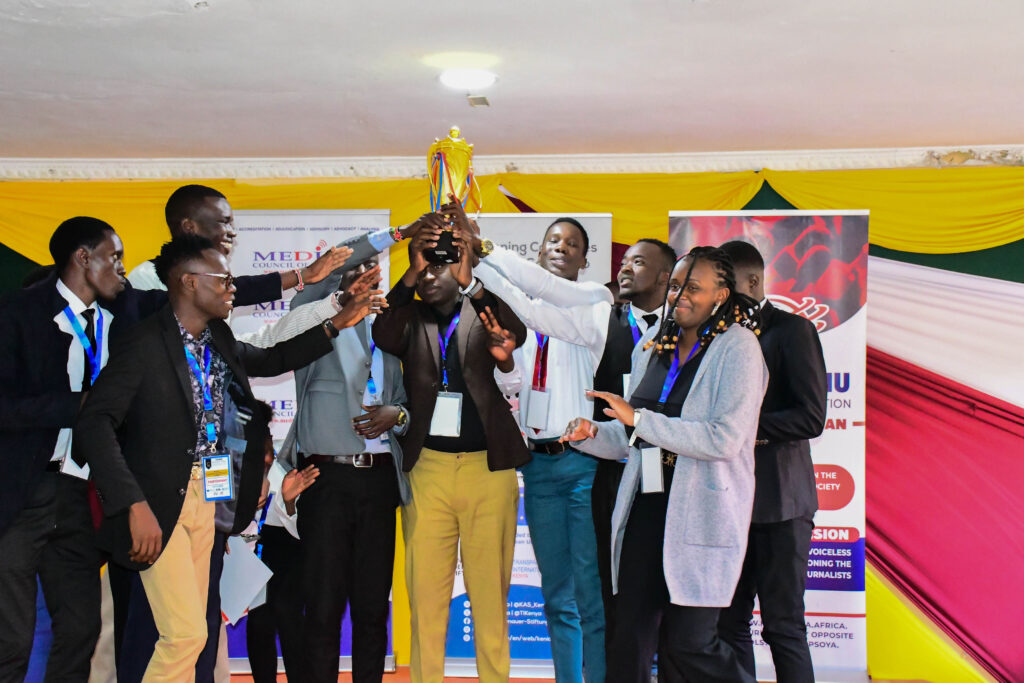
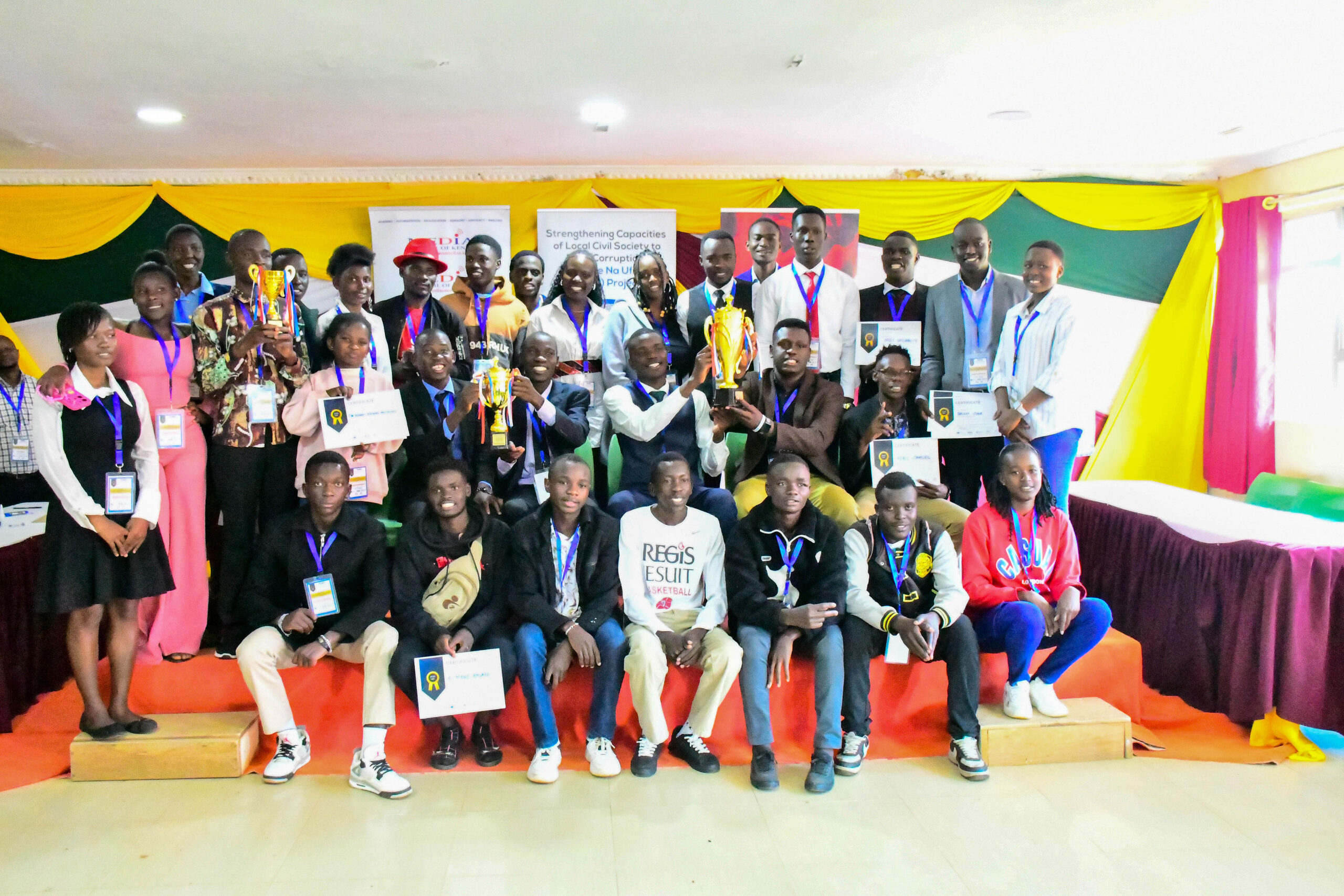
Members of the Moi University Integrity Club celebrate after emerging winners of the inter-institutional anti-corruption debate hosted by The Eldoret National Polytechnic under the Tupigane na Ufisadi (TUNU) Project. The competition brought together students from Moi University, the University of Eldoret and The Eldoret National Polytechnic to promote ethical leadership, accountability and youth participation in the fight against corruption.
By Hubzmedia
Moi University emerged the overall winner of an inter-institutional anti-corruption debate bringing together students from three higher learning institutions in Uasin Gishu County, in a competition aimed at strengthening youth participation in the fight against corruption and promoting ethical leadership.
The University of Eldoret secured second position, while Eldoret National Polytechnic finished third in the contest organised under the Tupigane na Ufisadi (TUNU) Project.
The debate centred on the motion, “Corruption is sustained more by the culture that normalises it than by weak accountability systems,” challenging students to examine the social attitudes, institutional failures and individual choices that allow corruption to persist in society.
The competition provided a platform for students to discuss whether corruption thrives primarily because of inadequate enforcement and accountability mechanisms or because citizens have gradually accepted bribery, favouritism, dishonesty and misuse of public resources as normal practices.
Beyond debating issues of good governance and integrity, students also got an opportunity to showcase their talents through spoken-word performances, using artistic expression to communicate messages on integrity, leadership and the fight against corruption.
In the individual speaking awards, Martha Seko from Moi University emerged as the overall best speaker, followed by Lydia Njambi from the University of Eldoret, who took second place, while Joseph Amimo secured third position.
Gitaka challenges youth to champion integrity
Speaking during the event, TUNU Project Executive Director James Gitaka said the competition was designed to move young people beyond theoretical discussions about corruption and encourage them to become active participants in promoting ethical leadership.
“The fight against corruption cannot be left to institutions and enforcement agencies alone. It must begin with individual choices, personal integrity and a collective willingness to reject practices that normalise dishonesty in our society,” Gitaka said.
He emphasised that accountability mechanisms alone could not eliminate corruption if citizens continued to tolerate or participate in unethical practices.
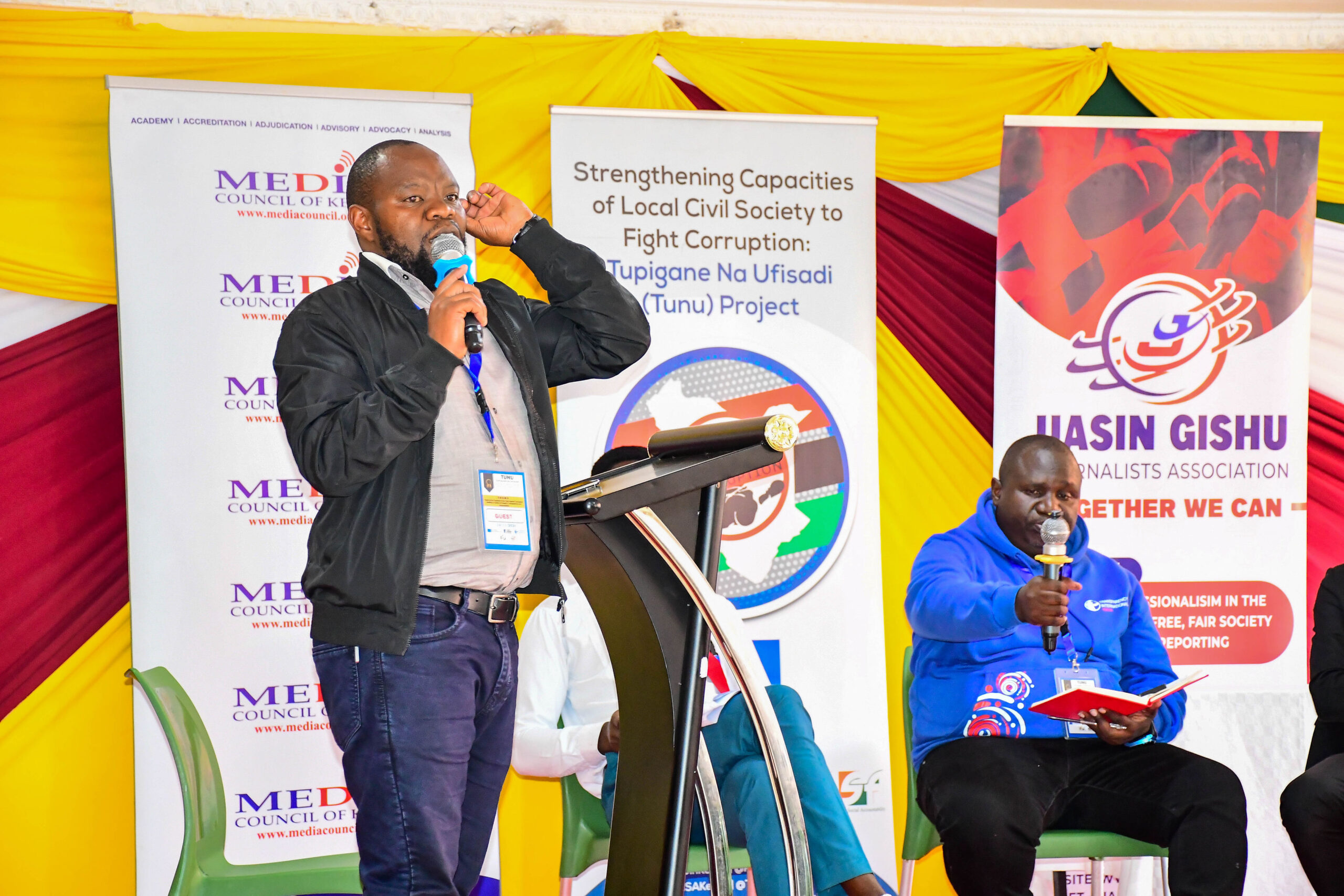
“Through the TUNU programme, we want to nurture a generation that does not simply complain about corruption but is willing to challenge it, starting with their own conduct and extending that responsibility to their institutions and communities,” he added.
Gitaka urged students to take the lessons from the programme beyond their campuses by engaging fellow students, families and communities in conversations about transparency, responsible leadership and the consequences of corruption.
He further challenged young people to use their influence as voters to shape the country’s governance direction ahead of the 2027 General Election, warning against allowing short-term political inducements to compromise their democratic choices.
TI-Kenya underscores role of integrity clubs
Tom Juma, representing Transparency International Kenya in the North Rift region, underscored the importance of involving young people in challenging corruption at both individual and institutional levels.
Juma said integrity clubs provide an important platform for nurturing a generation that understands the cost of corruption and is prepared to challenge practices that undermine public trust.
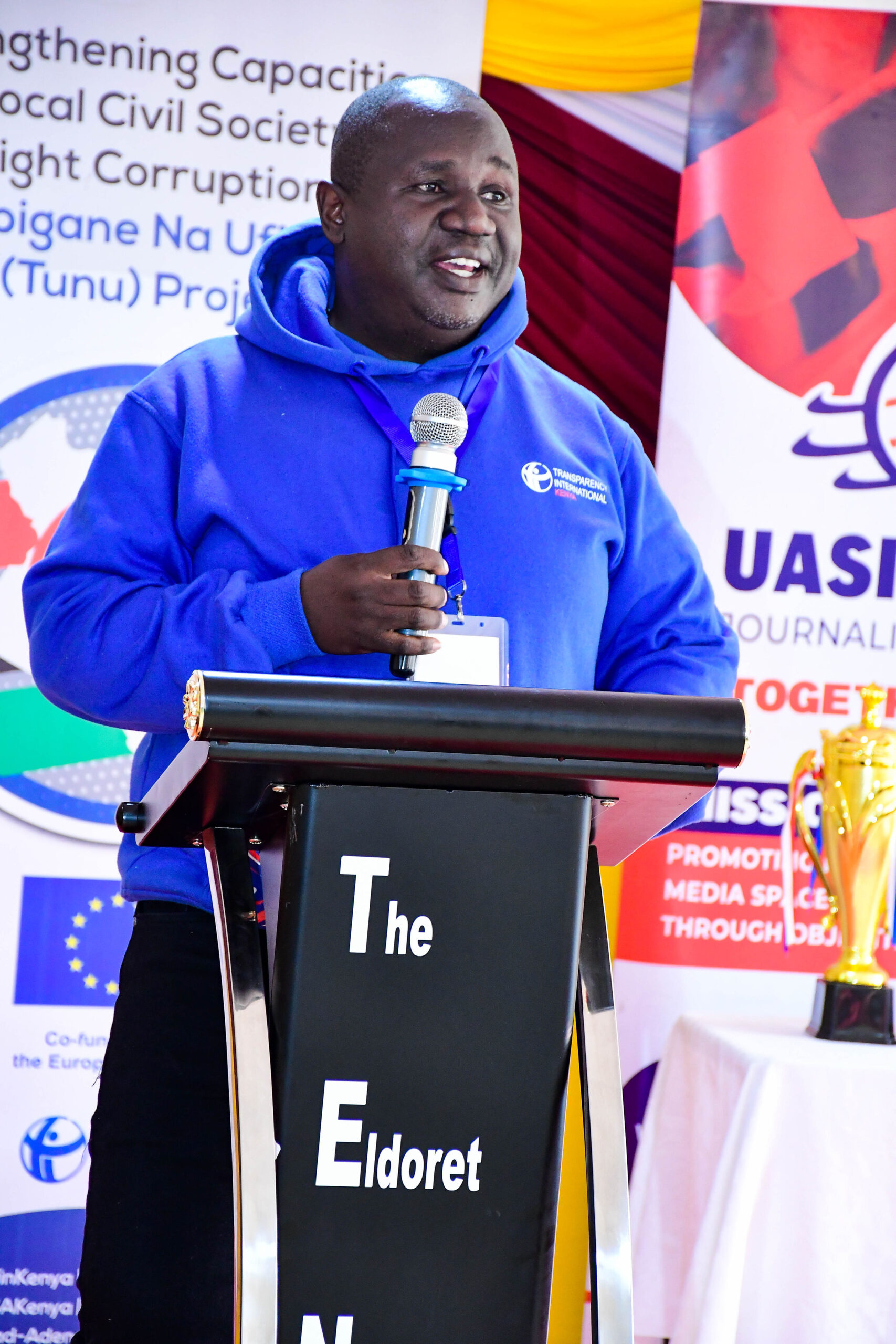
“Integrity is not something that should only be discussed in classrooms or during organised activities. It must become part of our everyday decisions, how we relate with others and how we respond when confronted with unethical practices,” Juma said.
He noted that empowering students with knowledge of transparency and accountability would enable them to question the use of public resources, demand responsible leadership and resist attempts to compromise their values.
Juma encouraged students to sustain the momentum created through the programme by turning their integrity clubs into active platforms for civic education, peer engagement and accountability within their respective institutions.
Trainer highlights importance of sustaining integrity clubs
Atambo Jannai, a trainer at Eldoret National Polytechnic, highlighted the importance of equipping students with practical skills to identify, challenge and report unethical conduct.
Jannai underscored the role of debate, mentorship and peer-to-peer learning in helping young people develop confidence to speak against corruption and question practices that compromise institutional integrity.
“Debate gives students an opportunity to research, interrogate issues and defend their positions. More importantly, it helps them develop the confidence to speak out against practices that undermine integrity and accountability,” Jannai said.
The trainer noted that the establishment of integrity clubs should not be treated as a short-term academic activity but as an opportunity to develop lasting platforms for ethical leadership, student participation and accountability.
Jannai further called for continued institutional support to ensure students remain engaged in integrity-related activities even after the conclusion of the programme.
Students urge youth to reject electoral bribery
The students also called on fellow young people across Kenya to register as voters, participate in democratic processes and make informed choices in the 2027 General Election.
They particularly cautioned against accepting money, gifts or other inducements from political aspirants in exchange for votes, urging their peers to assess candidates based on integrity, competence, development records and commitment to public service.

The students argued that electoral bribery perpetuates poor leadership by allowing individuals to purchase political influence rather than earn public confidence through credible policies and accountable leadership.
They further challenged young people to recognise that their voting rights provide an important opportunity to influence the country’s future and should not be surrendered for short-term financial benefits.
TUNU programme promotes youth participation in governance
The inter-institutional debate was part of a wider series of activities undertaken through the TUNU programme to strengthen students’ capacity to participate in governance and demand accountability.
The initiative has involved establishing and strengthening integrity clubs at Moi University, the University of Eldoret and Eldoret National Polytechnic, with activities including training on governance, transparency, accountability, ethical leadership, public speaking, media literacy and fact-checking.
The programme has also incorporated mentorship, civic education and social accountability approaches aimed at equipping students with practical skills to identify governance challenges and engage institutions constructively.
The TUNU initiative is part of the wider Strengthening Capacities of Local Civil Society to Fight Corruption project, implemented by Konrad-Adenauer-Stiftung (KAS), Transparency International Kenya and the Institute for Social Accountability (TISA), with support from the European Union and the German Federal Ministry for Economic Cooperation and Development.
In Uasin Gishu, the Uasin Gishu Journalists Association has spearheaded implementation across the three participating institutions, working with Transparency International Kenya and other governance and integrity stakeholders.
As the programme approaches the end of its implementation period, organisers and students have expressed hope that the integrity clubs will remain active beyond the funded activities, providing lasting platforms for mentorship, civic education, ethical leadership and accountability.
The organisers believe that sustaining the clubs will help create a mindset shift among young people, encouraging them to reject corruption, demand responsible leadership and become active participants in building a more accountable society.
For the students, the ultimate measure of success will be whether the lessons learnt translate into everyday actions, informed electoral choices and a stronger culture of integrity across their institutions and communities.
About Author