Africa Pushes to Strengthen Quality Infrastructure to Boost Intra-African Trade
UNECA’s 2025 Economic Report on Africa identified significant disparities in the continent’s quality infrastructure.

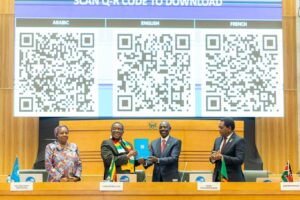
African countries are urged to strengthen quality infrastructure to boost intra-African trade and improve product standards under AfCFTA. Speaking in Nairobi, PAQI Chairperson Henry Rotich [in blue suit] says stronger quality systems are key to sustainable trade and regional cooperation. Photo: Courtesy.
By Camilla Lunani
African countries are being urged to invest in stronger quality infrastructure systems to eliminate technical barriers to trade, improve product standards and accelerate regional economic integration under the African Continental Free Trade Area (AfCFTA).
The call comes as policymakers, trade experts and quality assurance institutions push for greater cooperation in standardisation, accreditation, metrology and conformity assessment to ensure African products meet internationally recognised standards.
Speaking during the PAQI TBT/QI Stocktaking 2026 meeting in Nairobi, Henry Rotich, Chairperson of the Pan-African Quality Infrastructure (PAQI) Joint Committee, said the latest stocktaking report would provide an important foundation for strengthening regional cooperation and promoting quality and sustainable trade across Africa.
Rotich emphasised the importance of building an integrated quality infrastructure system capable of supporting industrial development, protecting consumers and improving the competitiveness of African goods in regional and international markets.
He expressed optimism that the continent would make significant progress towards establishing greener and more sustainable quality infrastructure by 2027.
The African Union Commission (AUC) also underscored the need for African countries to accelerate intra-African trade through harmonised standards, stronger regulatory systems and improved cooperation among national quality institutions.
Meanwhile, African Accreditation Cooperation (AFRAC) representative Ronald Josias revealed that 28 African economies now have fully operational, internationally recognised accreditation systems.
The development represents progress towards establishing reliable accreditation arrangements that allow products tested and certified in one African country to gain wider acceptance in other markets.
However, significant gaps remain. The stocktaking findings indicate that approximately 40 percent of African Union member states still lack adequate quality infrastructure, highlighting the challenges facing the continent as it seeks to expand cross-border trade.
Quality Infrastructure Remains Critical to AfCFTA Success
Quality infrastructure refers to the institutions, policies and technical systems responsible for ensuring that products and services meet established safety, performance and quality requirements.
It encompasses standardisation, metrology, accreditation, testing, inspection and certification.
These systems are particularly important under the AfCFTA, which aims to establish a single African market for goods and services by reducing trade barriers and improving economic cooperation among member states.
According to the United Nations Economic Commission for Africa (UNECA), weaknesses in quality infrastructure can prevent African businesses from competing effectively because products may undergo repeated testing and certification when entering different national markets.
UNECA’s 2025 Economic Report on Africa identified significant disparities in the continent’s quality infrastructure. Its assessment found that 22 of 54 African countries had minimal or no quality infrastructure, while another 13 had only partially developed systems.
The report identifies investment in testing facilities, accreditation systems, standards development and technical regulatory capacity as important requirements for improving the implementation of the AfCFTA.
PAQI Leads Continental Quality Cooperation
The Pan-African Quality Infrastructure (PAQI) provides a continental platform for coordinating efforts to improve quality standards and technical cooperation.
Established in August 2013, the initiative brings together four key institutions: the African Organisation for Standardisation (ARSO), African Accreditation Cooperation (AFRAC), Intra-Africa Metrology System (AFRIMETS) and African Electrotechnical Standardisation Commission (AFSEC).
The four institutions work together to strengthen standardisation, measurement systems, accreditation and conformity assessment across African economies.
The African Quality Policy, approved by the African Union in September 2021, provides a framework for aligning national, regional and continental quality infrastructure systems.
It seeks to improve the competitiveness of African products, facilitate international market access and support sustainable industrial development.
As Africa advances the implementation of the AfCFTA, stakeholders say increased investment in quality infrastructure will be essential to ensuring that businesses can trade across borders more efficiently.
The Nairobi discussions therefore called for stronger institutional capacity, increased government investment and closer cooperation among African countries to build reliable and sustainable quality systems.
Strengthening these systems is expected to reduce technical barriers, improve consumer protection, support industrialisation and position African businesses to benefit more fully from the continent’s expanding single market.

About Author