COVAW Calls for Stronger Legal Protection Against Online Violence Targeting Women and Girls
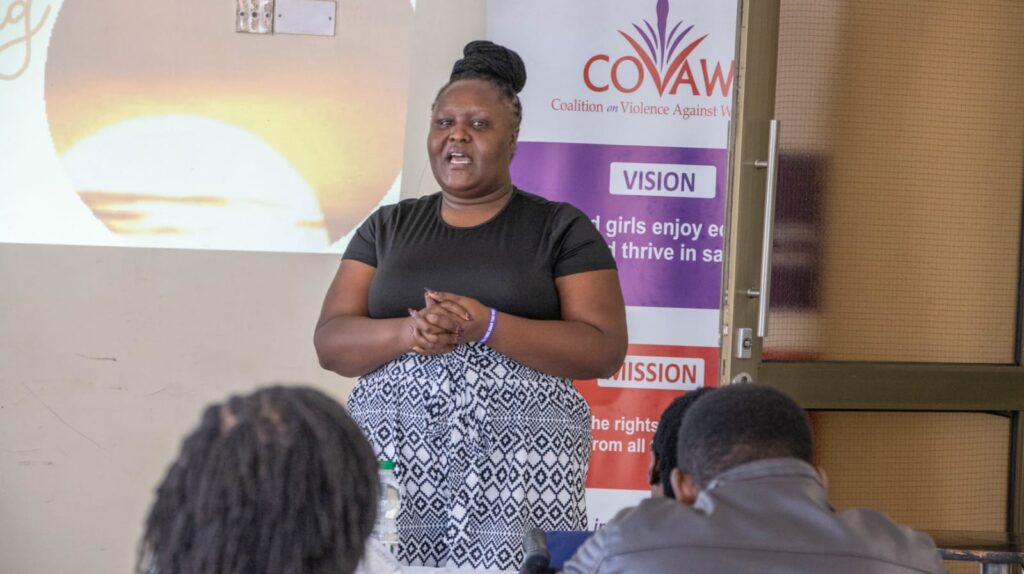
Faith Khalayi, Programme Coordinator at the Coalition on Violence Against Women (COVAW), addresses participants during a stakeholder training on technology-facilitated gender-based violence in Kisumu.
By Grace Wafubwa
The Coalition on Violence Against Women (COVAW) has called for stronger legal and institutional measures to address the growing threat of technology-facilitated gender-based violence (TFGBV), warning that women and girls are increasingly exposed to online harassment, exploitation and abuse.
The organisation says the rapid expansion of digital technology has created new opportunities for communication and empowerment but has also exposed women and girls to emerging forms of violence that existing laws and governance frameworks are struggling to address.
Speaking in Kisumu during the implementation of the Making All Spaces Safe (MASS) programme, COVAW Programme Coordinator Faith Khalayi said the pace of technological advancement had outstripped efforts to establish adequate safeguards against digital abuse.
“Technology is here with us and it is growing at a higher pace. But even with the growth and the benefits, a lot of harm is coming out of it,” said Khalayi.
COVAW, which has championed the rights and safety of women and girls for more than three decades, is calling for the formal recognition of technology-facilitated gender-based violence and its integration into existing gender-based violence prevention, response and referral mechanisms.
Khalayi noted that gaps in Kenya’s legal and policy frameworks, particularly the lack of a comprehensive understanding and definition of technology-facilitated gender-based violence, continue to undermine efforts to protect survivors.
“Many things are coming up that the law and governance around technology have not caught up with, especially in the Kenyan context, including even the definition of technology-facilitated gender-based violence,” she said.
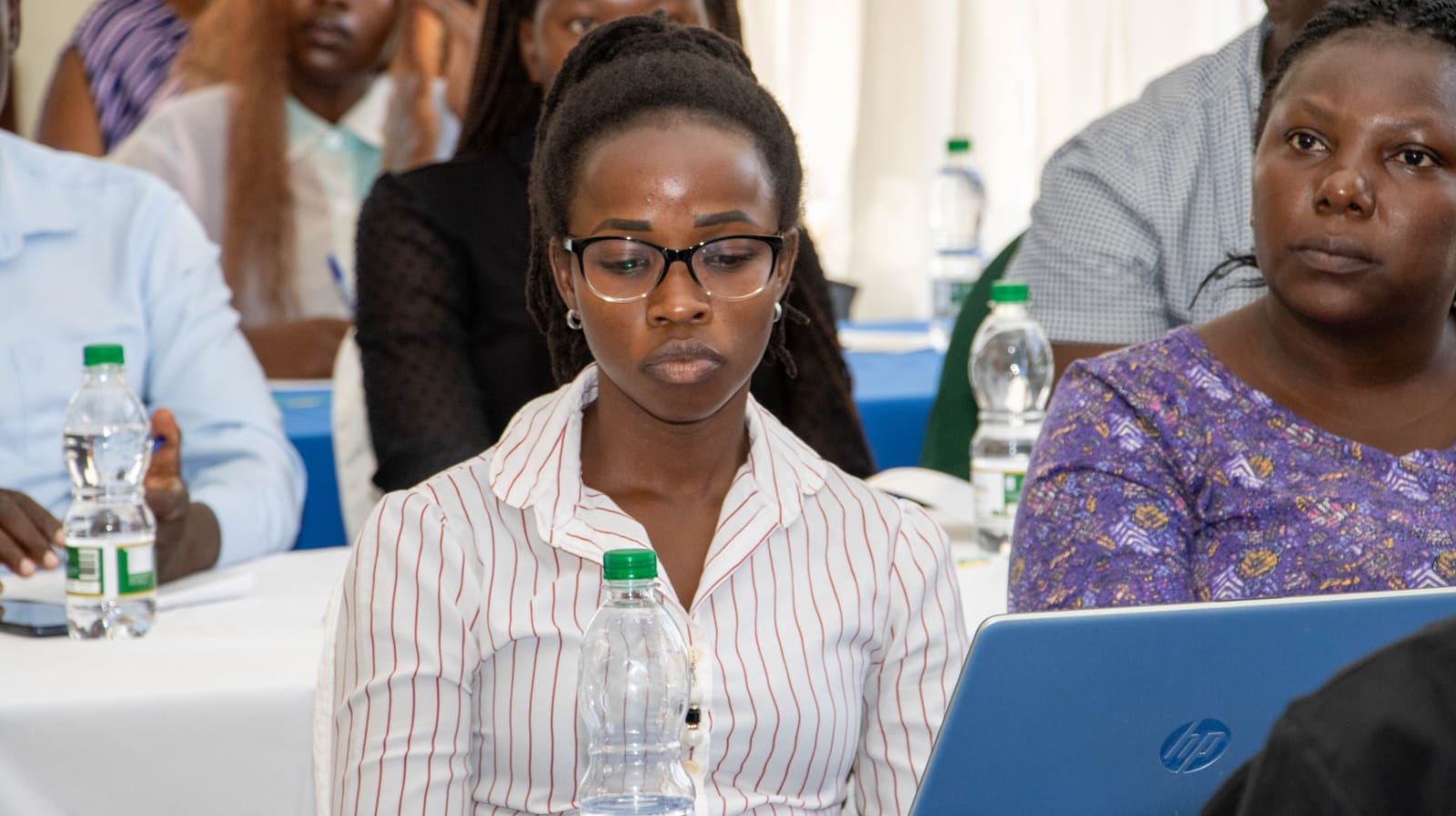
Through the MASS programme, COVAW is working with stakeholders in Kisumu County to strengthen prevention initiatives, reporting mechanisms, survivor support services and access to justice for victims of online violence.
The initiative seeks to ensure that survivors can access coordinated support from the point of reporting an incident to the pursuit of justice, while strengthening collaboration between state and non-state actors involved in addressing gender-based violence.
During a stakeholder engagement meeting in Kisumu, participants discussed the prevalence of technology-facilitated gender-based violence and explored ways of incorporating the emerging concern into the ongoing review of the Kisumu County Gender Policy.
The meeting also proposed the development of a joint communiqué to establish a coordinated approach among stakeholders in preventing and responding to online violence.
Participants welcomed discussions on the possible inclusion of technology-facilitated gender-based violence in the county policy, saying formal recognition would strengthen institutional accountability and improve responses to survivors.
COVAW has also established a Community of Practice bringing together experts and relevant stakeholders to generate knowledge, share experiences and develop advocacy materials aimed at addressing digital violence.
The organisation is preparing to intensify public awareness activities during the annual 16 Days of Activism Against Gender-Based Violence, which runs from November 25 to December 10.
Khalayi said technology-facilitated gender-based violence would feature prominently in this year’s activities in Kisumu County, with public education forums and information-sharing initiatives planned to help communities understand the nature of online abuse and available response mechanisms.
“In Kisumu County, I am glad that we will now be including TFGBV as part of the county recognition. We will have a whole tent speaking and educating the masses about this issue,” she said.
The planned activities will target wider community awareness, encouraging members of the public to identify digital violence, understand its consequences and support survivors in seeking assistance.
Khalayi called on government institutions, civil society organisations and other stakeholders to strengthen collaboration and develop practical interventions to address the growing challenge.
“I am just hoping that all stakeholders can come together and we finally address and find a way forward for TFGBV,” she said.
As digital technology increasingly shapes social interactions, COVAW maintains that efforts to protect women and girls must extend beyond physical environments to include safer, more inclusive and accountable online spaces.
The organisation says strengthening legal protections, institutional coordination and survivor-centred support systems will be critical in ensuring that women and girls can participate in the digital world without fear of violence, intimidation or exploitation.
About Author