Agroecology Helps 1,124 Households Improve Food Security in Kenya’s Mt. Elgon
agroecology-1124-households-food-security-mt-elgon-kenya
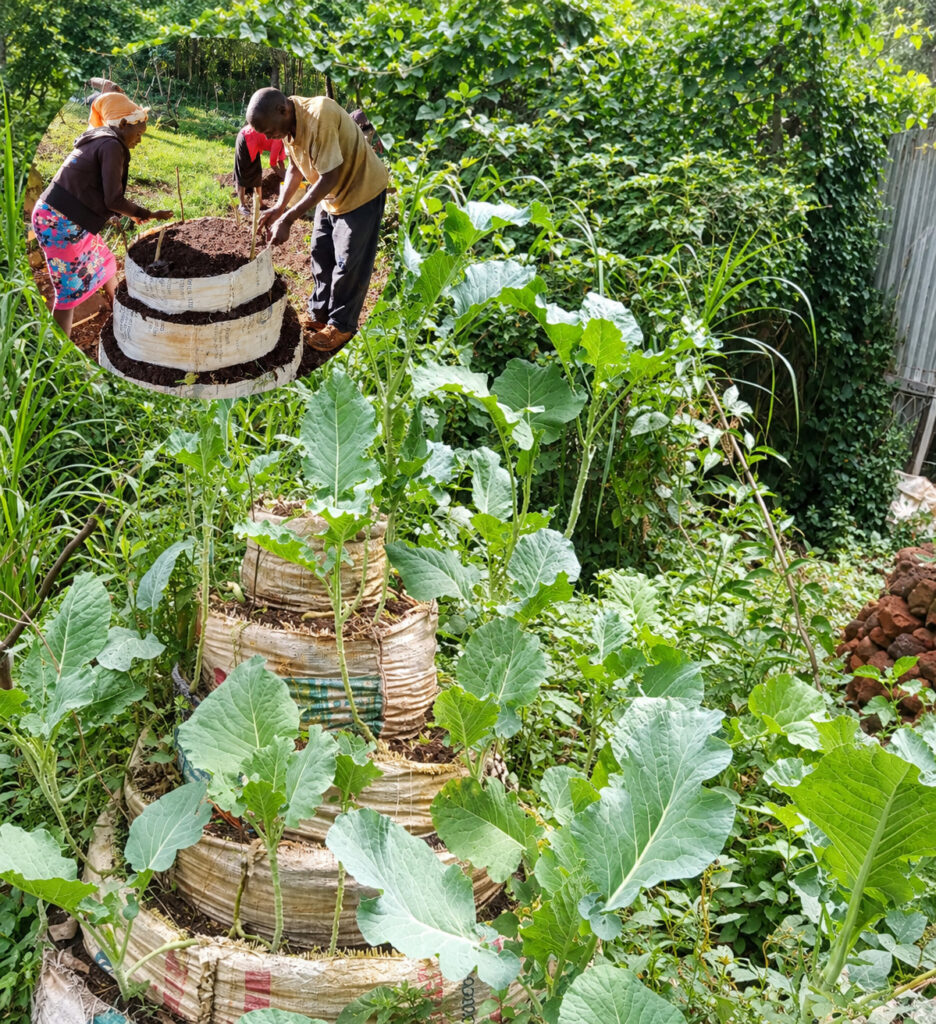
Farmers in Mt. Elgon, Bungoma County, prepare sack gardens as part of an agroecology initiative promoting sustainable farming, efficient use of limited land and improved household food security. The practice allows farmers to grow vegetables in compact spaces while making use of available resources. Photo: HubzMedia
By Phanice Monoo
Edited by James Gitaka, Chief Editor, HubzMedia
More than 1,124 households and several schools in Mt. Elgon are benefiting from an agroecology project aimed at improving nutrition, food security, environmental sustainability and livelihoods among small-scale farmers.
The project, implemented by Soet CBO and funded by Swiss Aid, started in September 2020 and seeks to promote sustainable farming practices while empowering communities economically.
Making the most of limited land
The initiative is helping farmers with limited land make better use of the available space through innovative farming practices, including the use of “corn gardens.”
Under the programme, farmers are trained to grow vegetables alongside maize and other crops in small spaces, enabling them to produce food for their families while generating income from surplus produce.
Speaking about the project, Savings Project Manager Ms. Petronilla Pkomu said 1,124 households have so far benefited from the initiative.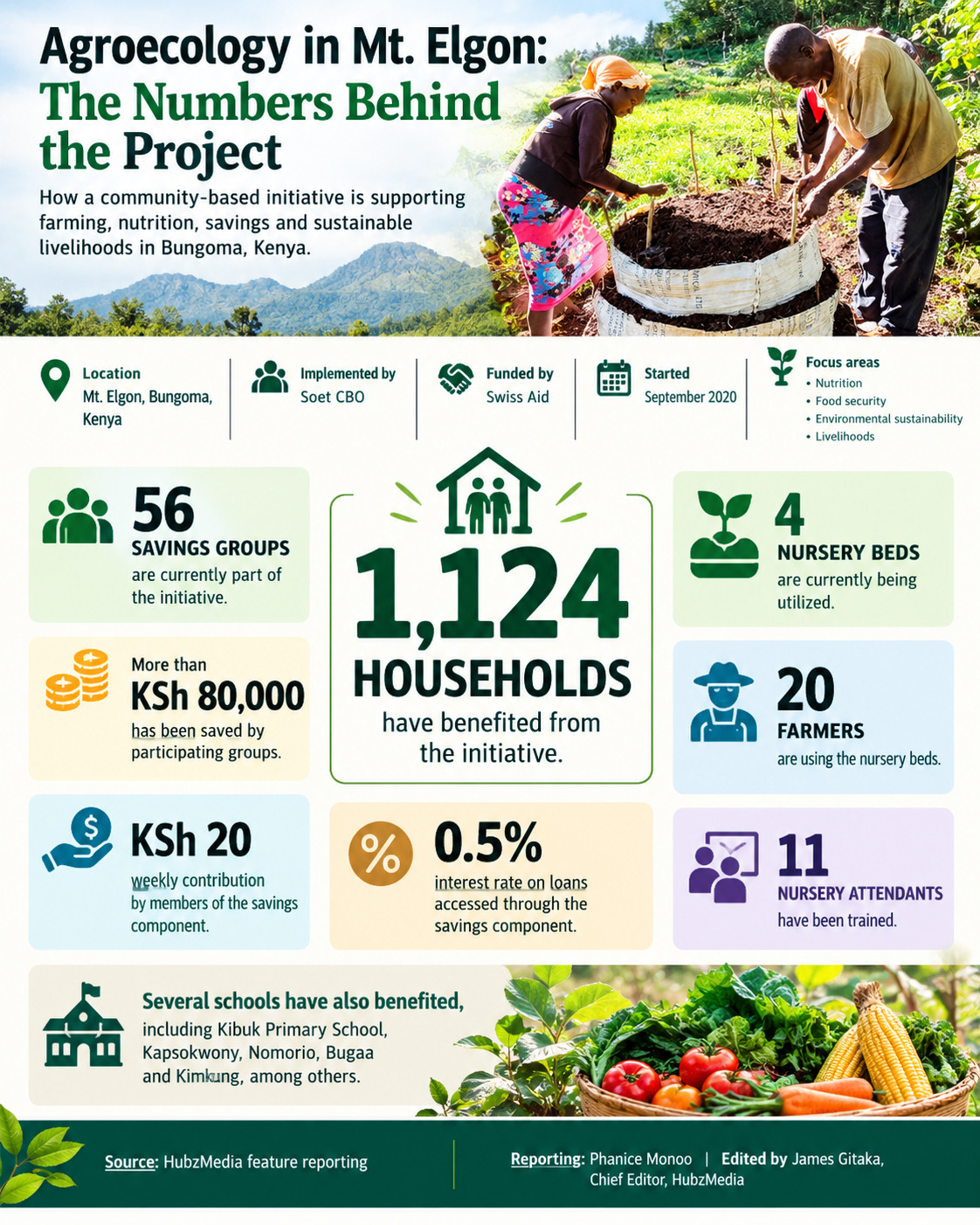
She explained that the project focuses on improving household nutrition while creating sustainable livelihood opportunities for community members.
“The essence of this project is to help households improve their nutrition and livelihoods by making good use of the resources and space available to them,” Pkomu said.
Savings strengthen household livelihoods
Members participating in the savings component contribute KSh 20 weekly, allowing them to build savings and access loans at an interest rate of 0.5 per cent.
The initiative currently has 56 groups across the region, with more than KSh 80,000 in savings.
Several schools have also benefited from the programme, including Kibuk Primary School, Kapsokwony, Nomorio, Bugaa and Kimkung, among others.
Farming beyond food production
Speaking on the implementation of the project, Project Officer Mr. Emmanuel Murambi said the initiative takes a holistic approach to farming, with its core objective being to contribute towards ending hunger.
“It is a holistic form of farming and its core objective is to end hunger. We conducted an assessment first and decided that the project would focus on three components: nutrition, environmental sustainability, and gender policy and advocacy,” Murambi explained.
Murambi said the project is structured around key objectives, including solidarity, economic empowerment and nursery management, where members are trained on soil tilling, making compost manure, saving, growing fruit trees and managing nurseries.
He said the project currently has four nursery beds, which are being utilized by 20 farmers, while 11 nursery attendants have so far been trained to take care of the seedlings.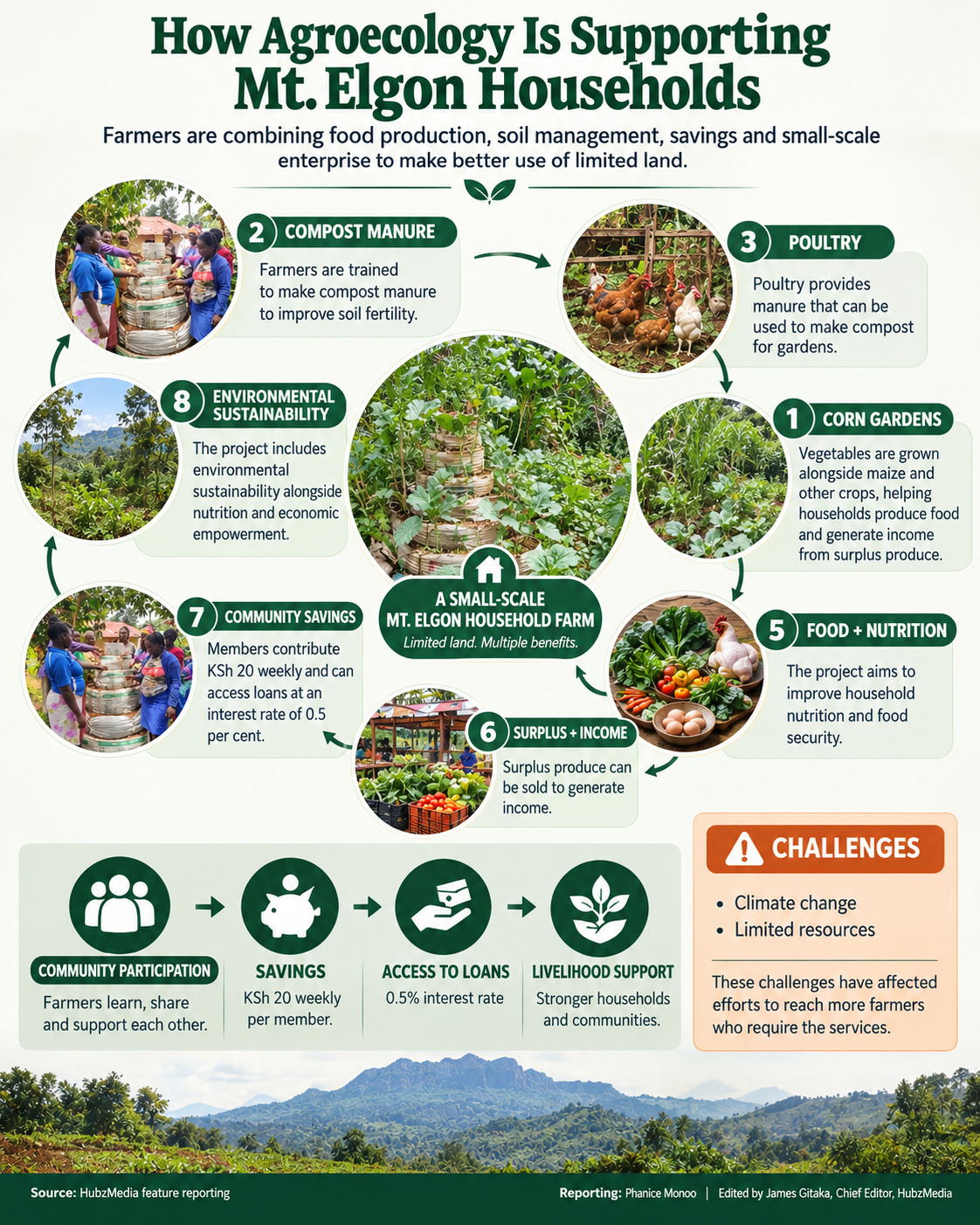
The project also incorporates poultry farming, which provides households with manure that can be used to make compost for their gardens.
This helps farmers improve soil fertility while reducing dependence on costly farm inputs.
Climate change remains a challenge
According to Murambi, the project has, however, faced challenges including climate change and limited resources, which have affected efforts to reach more farmers who require the services.
“Our main challenges are climate change and limited resources because we are unable to reach all the farmers who need our services,” he said.
A change in household food production
For beneficiaries, the project has brought significant changes to their households.
Madam Winrose Sirkoi, one of the farmers benefiting from the programme, said the initiative has helped her become more self-reliant in food production while equipping her with valuable agricultural knowledge.
“Nowadays I don’t buy vegetables, eggs and chicken from the market because I have them. It has also helped me to know how to make compost manure and plant fruit trees. This knowledge I will pass on to the next generation,” Sirkoi said.
She added that the savings component has also helped members develop a saving culture, which has improved their livelihoods while strengthening unity among community members.
According to Sirkoi, the project has not only improved food availability at household level but has also brought farmers together through collective savings and shared agricultural knowledge.
Introducing sustainable farming in schools
The project is also introducing learners and school communities to sustainable farming practices and the importance of producing nutritious food.
Pkomu encouraged more community members to embrace agroecological farming, saying the approach can help households address both nutritional and economic challenges.
She noted that with proper use of small pieces of land, households can grow nutritious vegetables for consumption and sell the surplus to generate income.
The agroecology project is therefore promoting sustainable agriculture, savings, environmental conservation, nutrition and improved livelihoods among households and schools in Mt. Elgon.
About Author