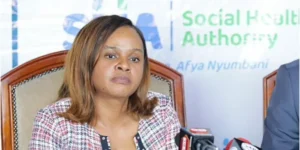
Government outlines reforms to improve healthcare delivery
The PS said laboratory capacity was also being improved to support early detection of diseases and enable faster responses to emerging health threats.

Photo: Courtesy.
By Robert Mutasi
The government has outlined a series of measures aimed at improving healthcare delivery through stronger primary healthcare services, digital systems, local manufacturing and expanded disease prevention programmes.
Speaking during an interview on Hot96 HotBreakfast, Principal Secretary for Public Health and Professional Standards Mary Muthoni said the government was working to create a more connected and efficient health system by improving access to essential services and strengthening health infrastructure.
Muthoni said data sharing remains an important part of the reforms, as the government seeks to improve how health information is collected and used across the country. She also pointed to efforts to expand local manufacturing of health products and technologies to reduce reliance on imported supplies.
The PS said laboratory capacity was also being improved to support early detection of diseases and enable faster responses to emerging health threats.
She highlighted progress in implementing the Primary Health Care Act of 2023, which provides for free services at Level Two, Three and Four health facilities. The reforms are intended to shift greater attention towards prevention, early treatment and community-based healthcare.
Muthoni also discussed the Digital Health Act of 2023, saying it is helping connect different parts of the health system. The digital framework is expected to improve access to health records and make it easier for healthcare providers to share information when treating patients.
The PS acknowledged challenges facing the healthcare workforce and said the government was taking measures to address staffing and other concerns affecting service delivery.
She further explained the role of various funds established under the Social Health Insurance framework. These include the Primary Healthcare Fund, the Social Health Insurance Fund and the Emergency, Chronic and Critical Illness Fund.
According to Muthoni, the funds are expected to support access to healthcare for Kenyans at different stages of treatment, including those requiring emergency and long-term care.
On disease prevention, the PS provided an update on Mpox and said the government was monitoring infections reported in different counties. She said improved laboratory capacity would help health authorities identify cases more quickly and strengthen the country’s response to outbreaks.
Muthoni also stressed the importance of sanitation and community health services in preventing disease. She said community health workers remain important in linking households with formal healthcare facilities and promoting preventive care.
The PS also touched on emerging areas of healthcare, including aesthetic medicine, which she said require proper standards and oversight to protect patients.
Muthoni urged Kenyans who have not registered with the Social Health Authority, SHA, to do so and make use of the healthcare services available under the new system.
She said wider registration would help more Kenyans access healthcare while supporting the government’s efforts to build a stronger and more accessible health system.
About Author