Uasin Gishu MCA Urges Parents to Return All Children to School, Cites Bursary Support for Needy Learners

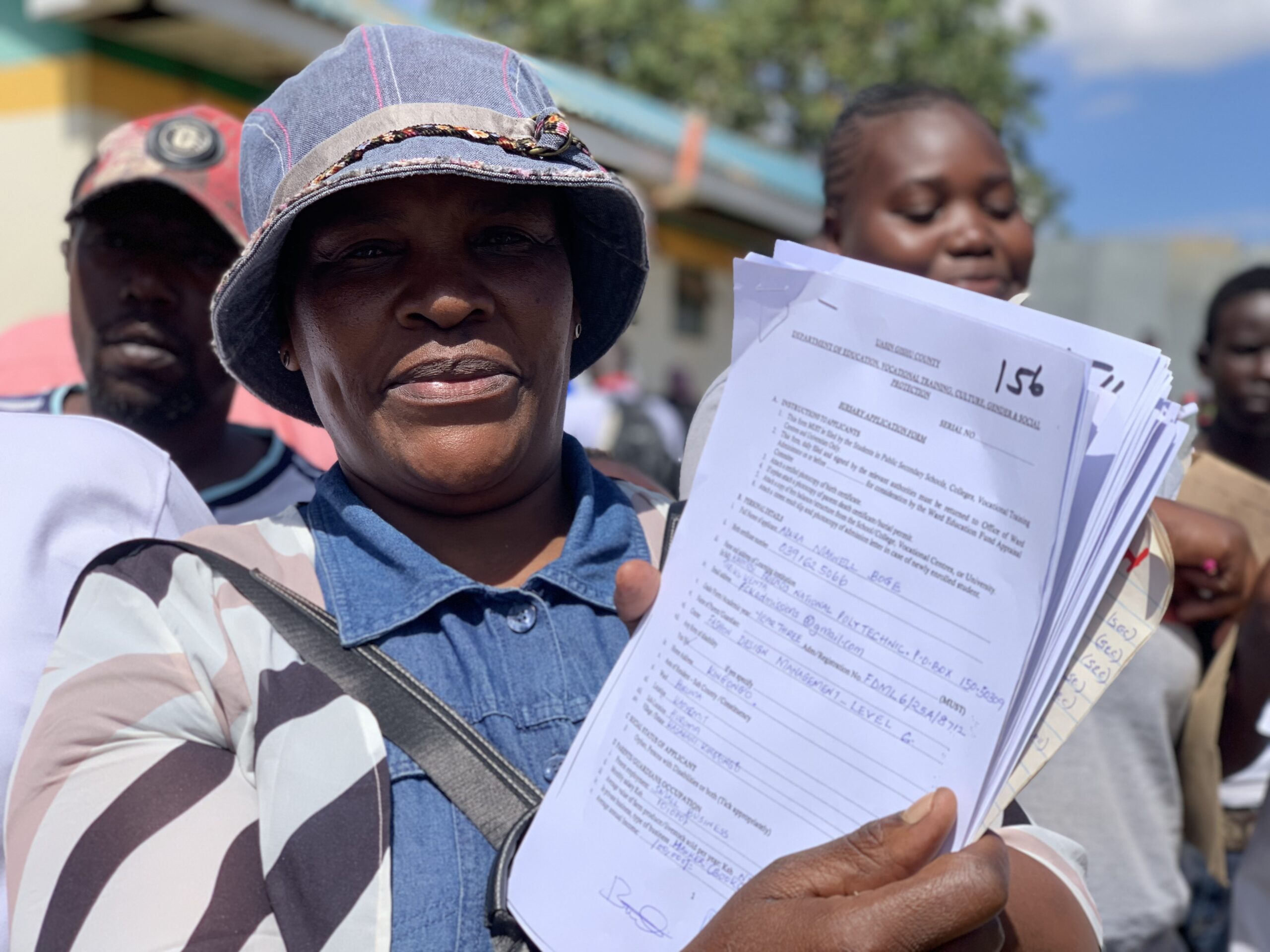
Huruma Ward MCA Kimani Wanjohi addresses journalists during the distribution of bursary application forms in the ward, as a parent and prospective beneficiary fills in the relevant details to apply for education support for their child.
By James Gitaka
Parents in Uasin Gishu County have been urged to ensure all school-going children return to class when schools reopen in January, with Huruma Ward Member of County Assembly Kimani Wanjohi calling on families not to allow financial difficulties to interrupt their children’s education.
Wanjohi said the County Government of Uasin Gishu was providing financial assistance to learners from disadvantaged households through its ward-based bursary programme, which is administered through Members of the County Assembly.
Speaking in Huruma ward Eldoret, the MCA encouraged parents experiencing difficulties paying school fees to seek assistance through the available county education support programmes rather than allowing their children to remain at home.
He emphasised that access to education should not be determined by a family’s financial circumstances, urging parents to take advantage of the bursary initiative to secure their children’s continued participation in school.
“the numbers of students who need bursaries has continued to increase , we noticed after the Bursary fund had been suspended many students had lost hope in their education , we are lucky that this bursary is back and many of the needy students we get back to school next year”Said Hon wanjohi
MCA questions cost implications of education reforms
While welcoming efforts to support needy learners through county bursaries, Wanjohi criticised aspects of Kenya’s ongoing education reforms, arguing that changes in the education system have increased financial pressure on families already struggling to meet school-related expenses.
He called on the national government to reconsider aspects of the reforms that he believes are making education increasingly expensive for low-income households.
His concerns come amid wider national discussions about the cost of implementing the Competency-Based Education (CBE) system, the transition to senior school and the financing of public education.
Kenya’s transition from the 8-4-4 system to the Competency-Based Curriculum began in 2017, with the first cohort of Grade 9 learners completing junior school in 2025 and transitioning to senior school under the new structure in January 2026.

The reforms have introduced new learning pathways, curriculum requirements and infrastructure demands, raising questions about the capacity of schools and households to meet the associated costs.
Although the government has maintained that education reforms are intended to improve learning outcomes, skills development and access to quality education, parents from economically disadvantaged backgrounds continue to face challenges related to school fees, uniforms, learning materials, transport and other essential requirements.
Wanjohi’s appeal adds to calls for stronger financial support mechanisms to ensure that learners are not excluded from education because of their parents’ inability to meet these costs.
County bursary programme targets vulnerable learners
The Uasin Gishu County Government has continued to use its ward-based bursary programme to support students from financially disadvantaged households.
In May 2026, Governor Jonathan Bii’s administration announced a KSh186.5 million bursary allocation targeting 24,949 needy learners across the county’s 30 wards.
According to the county government, the allocation represented an increase of KSh21.5 million compared with the previous financial year, with an additional 1,629 students expected to benefit.
The disbursement was undertaken through ward-level engagements, with the county administration maintaining that the programme was intended to improve access to education and ease the financial burden on vulnerable families.
The initiative has also faced questions about the equitable identification of beneficiaries and the need for transparent distribution to ensure that the most deserving learners receive assistance.
Wanjohi urged the county government to ensure that the bursary programme reaches more needy students and that the selection process is guided by fairness, accountability and the actual financial circumstances of applicants.
Bursary beneficiaries welcome education support
Some students who have benefited from the programme have welcomed the financial assistance, describing it as an opportunity to resume their education after prolonged interruptions caused by school fee challenges.
Among the beneficiaries is a student who had reportedly remained at home for an extended period because of an inability to pay school fees but now hopes to return to class in January following the bursary support.
The development highlights the difficulties faced by learners from vulnerable households, particularly those whose education is disrupted by unpaid fees and other school-related expenses.
“i was in a nursing school before i ventured into hawking to try and raise school fees , today i am happy through the support of our MCA i will be joining my college next year ” said Wanjiru one of the beneficiaries.
Parents have similarly welcomed the county’s intervention, saying the financial assistance will help reduce the burden of school fees and give children from disadvantaged families an opportunity to continue their education.
They have, however, called for stronger oversight to ensure bursary allocations reach deserving students without discrimination or favouritism.
The parents also urged county leaders to expand education support programmes and prioritise learners facing the greatest financial difficulties.
Calls for sustained investment in education
The concerns raised in Huruma Ward reflect the broader challenge of ensuring that financial hardship does not undermine access to education in Kenya.
While county bursaries provide an important safety net for vulnerable learners, education financing remains a shared national responsibility, with the national government responsible for the provision and financing of basic education.
The effectiveness of bursary programmes therefore depends not only on the amount of money allocated but also on transparent beneficiary selection, timely disbursement and coordination with national education support initiatives.
For families in Uasin Gishu, the immediate priority remains ensuring that every child has an opportunity to return to school when the new academic year begins.
Wanjohi’s appeal places renewed emphasis on the need for parents, county leaders and national education authorities to work together to prevent financial barriers from denying children their right to education.
About Author