Africa’s NGOs Are Changing Lives, But No One Is Counting – Experts Warn
Moderating the session, Chief Expert at HSE University, Vyacheslav Ivanov, said the biggest challenge facing the sector is the absence of comprehensive statistics.
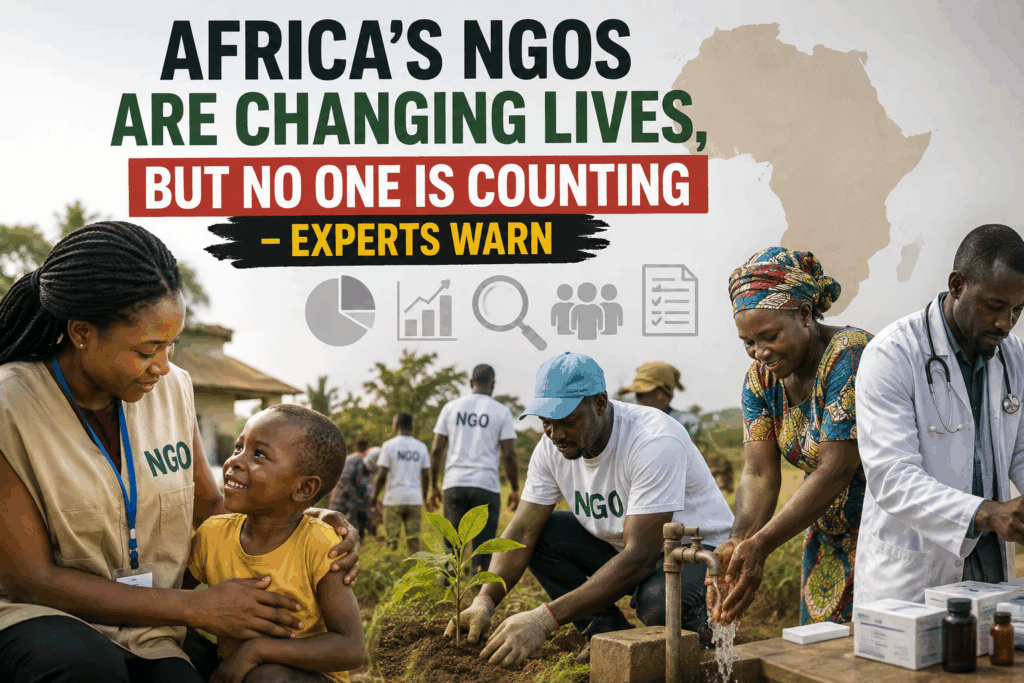
Photo: Courtesy.
By Lilian Chemutai
From running schools in remote villages to providing healthcare where government hospitals don’t reach, non-profit organizations have become Africa’s invisible engine of development. But experts now warn that their true impact remains largely unmeasured and unrecognized due to lack of reliable data.
This was the key message during a roundtable dubbed “NGOs in African Countries: The Invisible Force of Change,” held as part of the World Public Summit: Africa. The forum, themed “New World: Africa in Shaping a Shared Future,” was organized by the World Peoples Assembly in partnership with the Centre for Civil Society and Non-profit Sector Research at HSE University in Russia.
The meeting brought together policymakers, scholars, development practitioners and civil society leaders from Africa, Russia and Central Asia to reflect on the growing influence of NGOs in shaping Africa’s transformation.
Moderating the session, Chief Expert at HSE University, Vyacheslav Ivanov, said the biggest challenge facing the sector is the absence of comprehensive statistics.
“Many countries lack comprehensive statistical data to objectively assess the scale of NGO activities, their economic contribution, their impact on addressing social issues, and their role in achieving national development goals. This remains one of the key challenges,” Ivanov noted.
Speakers observed that NGOs are filling critical gaps in education, healthcare, environmental conservation, social protection, youth development and women empowerment – often operating in hard-to-reach areas where state presence is weak.
John Aggrey, Director General of the Ghana-Russia Centre for Trade and Relations, said NGOs have become indispensable.
“NGOs in Africa often operate in areas where government mechanisms are limited. This makes them key players in social transformation,” he said.
The experts called for modern statistical systems that can quantify the size, effectiveness and economic contribution of NGOs, including jobs created, services delivered and contribution to national development goals.
Irina Mersiyanova, Director of HSE University’s Centre for Civil Society and Non-profit Sector Research, said without credible data, governments cannot formulate effective policies to support civil society.
“Without systematic data, it is impossible to build an effective policy to support civil society. We must speak the language of measurable indicators,” she said.
Participants borrowed lessons from Russia, where HSE University has been continuously studying the non-profit sector since 2006. They agreed that adapting such models to Africa’s diverse contexts could help create a continent-wide methodology.
Anar Izden, Executive Director of Kazakhstan’s Qorqyt Public Foundation for International Cooperation and Development, underscored the need for global partnerships.
“International cooperation not only allows for the exchange of experience but also helps shape universal approaches that account for regional specificities,” she said.
The roundtable resolved to form an international working group to develop a research framework that blends Russian expertise with Africa’s unique realities. The experts said better measurement will enhance transparency, improve trust, and strengthen collaboration between governments, donors and civil society.
The recommendations will be presented at the Second World Public Assembly – “New World: Values That Unite” – set for September 2026 in Moscow.
About Author