THE FINLAND–CANADA STUDENTS’ SAGA: WHEN POLITICS OVERSHADOWS THE SEARCH FOR JUSTICE
Justice cannot be selective. Accountability cannot be political. And the truth must be allowed to lead wherever it goes.
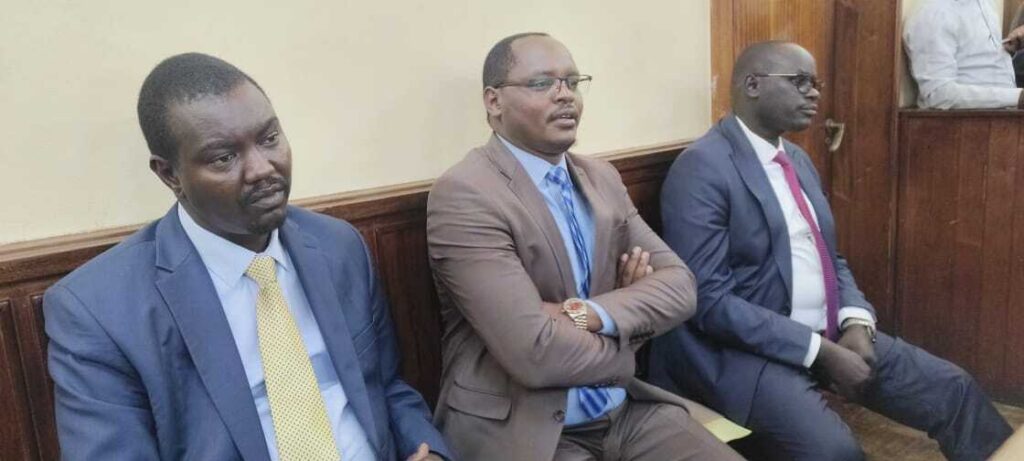
Former Uasin Gishu Governor Jackson Mandago and his co-accused have been freed by the court.
By Kimutai Kirui, Human Rights Activist
The students at the centre of the Finland–Canada education programme saga set out with one simple expectation: to pursue the education they had been promised and, in many cases, paid for. Instead, their dreams have become entangled in a complex dispute involving public accountability, political rivalries, competing narratives, and questions over responsibility.
At the heart of this matter are students and parents who deserve clear answers. They deserve to know what happened to their money, who made the critical decisions, what agreements were entered into, and who should ultimately be held responsible for the losses and disappointments they have suffered.
The public, too, deserves the truth—not carefully constructed political narratives designed to protect individuals or advance particular interests.
The greatest injustice would be for the dreams of these young people to become a battleground for political competition.
These students deserve justice, whether that justice comes through access to the education they were promised, reimbursement of their money, or accountability for those found responsible. What they do not deserve is to become political pawns.
Governor Jonathan Bii, as the current Governor of Uasin Gishu County, cannot simply distance himself from the matter. Leadership carries responsibility, particularly where decisions and transactions may have occurred during an administration’s tenure. The public is therefore entitled to clear and comprehensive answers about the role of the current administration in the programme.
Some of us stepped back from actively participating in the parents’ and students’ campaign not because we stopped sympathising with the affected families, but because we became increasingly concerned that the pursuit of justice was being overshadowed by political interests.
If public resources entrusted to the County Government of Uasin Gishu were mismanaged, accountability must be comprehensive and non-selective.
It cannot begin and end with the administration that initiated the programme while ignoring questions surrounding subsequent administrations that inherited the programme, continued aspects of its implementation, entered into agreements, or received payments from students.
Accountability must follow the timeline of events, the decisions that were made, the agreements that were signed, and the actions taken by every administration involved.
Every public official whose decisions or actions are materially connected to the programme should be subjected to the appropriate scrutiny.
The search for truth must not be narrowed to fit a convenient political narrative. It must examine the entire chain of events and establish responsibility based on evidence.
Justice loses credibility when the spotlight appears to be deliberately directed at one individual while equally important questions involving other actors remain unanswered.
Justice is not achieved by narrowing the investigation. It is achieved by following the evidence wherever it leads.
There is also a growing perception among some observers that political considerations may have influenced the direction of the campaign for accountability.
Questions have been raised about the roles played by Hon. Oscar Sudi and Reuben Chepses and whether their political differences with Senator Jackson Mandago may have influenced the manner in which the matter was pursued.
These are legitimate questions that should not be dismissed merely because they are politically uncomfortable.
The Finland–Canada students’ saga should never have been reduced to a political contest over who gains or loses politically. The primary concern should always have been the students, their parents, and the public resources involved.
Where there are competing claims about responsibility, the answer should be found through independent investigations, documentary evidence, financial records, contractual agreements, and due process—not through political mobilisation.
There have also been concerns that the affected students and parents were gradually divided, with different groups engaging separately with political leaders and public officials.
If true, such divisions have weakened what should have been a united demand for justice.
A matter involving hundreds of affected families should not become a contest between rival political camps. The victims should be united by a common objective: establishing the truth and securing a just resolution.
There have also been questions about the involvement of various public officials, county employees, and other actors who have been perceived by different sides as being politically aligned with either Governor Jonathan Bii or Senator Jackson Mandago.
Such political labelling does little to advance the cause of justice.
What matters is not who an individual supports politically, but what role they played in the programme and whether their actions were lawful and accountable.
Another critical issue is the timing of the transactions.
A significant number of students reportedly made payments after Governor Jonathan Bii had assumed office. It has also been alleged that his administration entered into agreements with institutions in Canada during its tenure.
If this is the case, it raises legitimate questions about administrative responsibility for transactions and decisions made after the change of government.
The fundamental question, therefore, is this: If agreements were entered into and payments were made during the tenure of the current administration, on what legal or factual basis can responsibility for the entire saga be placed exclusively on Senator Jackson Mandago?
That question deserves an evidence-based answer.
Accountability must follow the facts, not political convenience.
If the evidence points to responsibility across different individuals or administrations, then everyone implicated by the evidence must be subjected to the appropriate legal and administrative processes.
No political narrative should be allowed to rewrite the facts.
In any credible judicial or investigative process, conclusions must be based on evidence, documentation, testimony, and established facts—not on narratives designed to produce a predetermined outcome.
When some of us called for Governor Bii’s actions and role in the programme to be investigated, based on what we believed were legitimate questions requiring scrutiny, we were met with personal attacks instead of substantive engagement with the issues we raised.
Some of us were vilified, insulted, and accused of corruption. Claims were even circulated alleging that Senator Mandago had paid us KSh200,000 to influence our position.
These accusations were never accompanied by credible evidence.
Instead of addressing the questions raised, the debate increasingly became dominated by personal attacks and political accusations.
That is unfortunate.
Our position has remained consistent: A process that excludes relevant questions, ignores potentially significant actors, or focuses exclusively on one individual cannot uncover the full truth.
It is also important to address public statements concerning the judiciary.
Hon. Oscar Sudi has publicly raised allegations concerning the integrity of court processes. Such claims are extremely serious. If there is credible evidence of judicial interference, bribery, or any form of misconduct, the appropriate response is to present that evidence to the relevant investigative and oversight institutions, including the appropriate anti-corruption and judicial oversight bodies.
Serious allegations require serious evidence.
The same standard of accountability must apply to everyone.
There have also been questions about Governor Bii’s participation in court proceedings relating to the matter. Rather than resorting to speculation about what any individual may be “running away from,” the public deserves a factual explanation of the circumstances surrounding any failure to appear, where such an appearance was required.
The correct approach is to establish the facts and allow the legal process to take its course.
The people of Uasin Gishu, particularly the affected parents and students, deserve better than political battles, shifting blame, and competing narratives.
They deserve transparency.
They deserve accountability.
They deserve answers.
Most importantly, they deserve justice.
The Finland–Canada students’ saga must not become a contest for political survival. It must remain a search for truth and accountability.
If wrongdoing occurred, those responsible should face the consequences, regardless of their political affiliation or position.
If public funds were mismanaged, the responsible individuals must be held accountable.
If decisions were made by more than one administration, then responsibility must be examined across the entire timeline.
And if allegations have been made against individuals or institutions, those allegations must be tested through evidence and due process.
The students’ dreams should never have become collateral damage in a political struggle.
Their future must come first.
The time has come to move beyond political accusations and focus on the evidence.
Justice cannot be selective. Accountability cannot be political. And the truth must be allowed to lead wherever it goes.
The affected students and their parents deserve nothing less.
About Author