Massive Fire Ravages Gikomba Market, Leaving Traders Counting Millions in Losses
“We are investigating the cause of the fire and will provide a full report once the investigations are complete,” an official said.
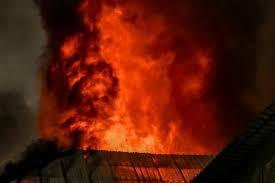
Traders are counting losses after a fire broke out at Gikomba Market, Nairobi, early Sunday Morning. Photo/Courtesy.
By Samwel Oyondi
Hundreds of traders at Nairobi’s Gikomba Market are facing an uncertain future after a devastating fire swept through the sprawling trading hub, destroying stalls and merchandise worth millions of shillings.
The blaze, which broke out on the night of Saturday, June 21, tore through sections of one of Kenya’s largest open-air markets, reducing businesses to ashes and leaving many traders with little or nothing to salvage.
Emergency response teams, including firefighters, police officers and rescue personnel, rushed to the scene as flames engulfed large sections of the market. Firefighters battled for hours to contain the inferno and prevent it from spreading further.
Authorities have confirmed that the tragedy claimed lives and left several people injured, adding to the suffering of traders who lost their livelihoods in the disaster.
Officials said investigations have been launched to establish the cause of the fire, which remains unknown.
“We are investigating the cause of the fire and will provide a full report once the investigations are complete,” an official said.
The incident has once again raised concerns about fire safety and disaster preparedness at Gikomba Market, which has experienced several destructive fires over the years.
Many traders accused emergency responders of arriving late, arguing that a faster response could have reduced the scale of the destruction.
“We watched everything burn before our eyes. If firefighters had arrived earlier, many businesses could have been saved,” said one trader as smoke continued to rise from the charred remains of the market.
The latest disaster has reignited calls for stronger emergency response systems in Nairobi’s major markets. Traders are urging authorities to increase the number of fire stations, improve access to water for firefighting operations and strengthen disaster management measures.
Experts have previously linked recurring fires at Gikomba to a combination of factors, including faulty electrical connections, overcrowded structures, poor planning and inadequate firefighting infrastructure.
The market plays a critical role in Kenya’s informal economy, providing affordable clothing, household goods and other products to customers from across the country. It also serves as a source of income for thousands of small-scale traders and their families.
For many of those affected, the fire represents more than the loss of merchandise. It has wiped out years of investment and threatens the livelihoods of families that depend entirely on daily sales at the market.
Government officials who visited the scene assured traders that investigations would be conducted thoroughly and promised support for those affected by the tragedy.
“Our priority is to establish the cause of the fire and help victims rebuild their businesses,” a government representative said.
As cleanup efforts continue, traders are appealing for financial assistance and long-term solutions to prevent similar disasters from recurring.
Many are calling for improved market infrastructure, better safety standards and regular inspections to reduce fire risks.
For now, the affected traders can only sift through the ashes of what once sustained their families, hoping that support from the government and other stakeholders will help them recover from yet another devastating setback.
The latest fire serves as a stark reminder of the vulnerability of Kenya’s informal trading sector and the urgent need for stronger fire prevention and emergency response measures in some of the country’s busiest commercial centres.
About Author