How a Cleft Palate Changed Lucy Chesegut’s Life for 19 Years
“Children born with cleft lip and palate often struggle with feeding because of the opening in the mouth and palate.”
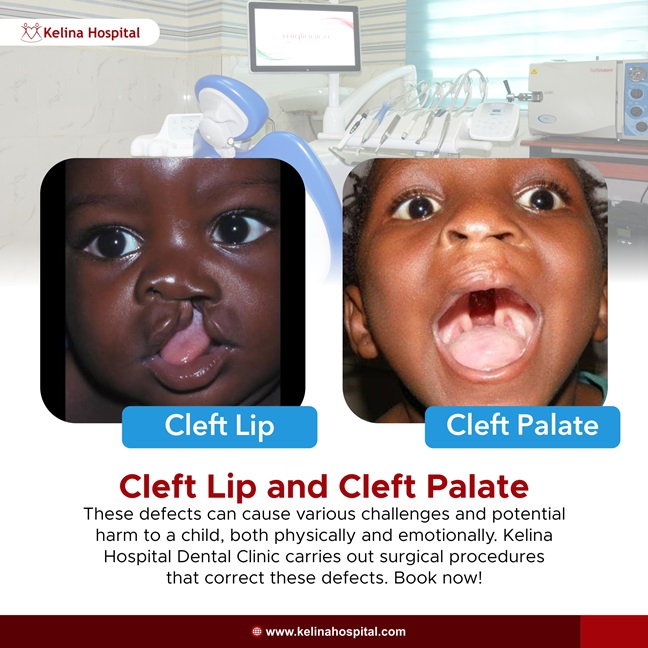
Kelina-Cleft-lip-and-cleft-palate, Image Courtesy Kelina Hospital
By Linda Olendo
At 19, Lucy Chesegut should be preparing to complete secondary school and pursue her dream of becoming a teacher. Instead, the Mt Elgon native works as a house manager, her education and ambitions cut short by a cleft palate that left her struggling with speech, feeding difficulties and stigma for nearly two decades.
Born with a cleft lip and palate, Lucy spent much of her childhood isolated from her peers and misunderstood by her community. Her story highlights the devastating consequences of delayed treatment for a condition that can often be corrected early in life, but continues to rob many children of opportunities, confidence and a normal childhood.
Prompted to share her experience, Lucy recounts how cleft palate affected her childhood, damaged her confidence and altered the direction of her life.
“Once the cleft palate has been sealed, I have been made to understand I will be in a position to eat without fear of choking, while a speech therapist will also take me through sessions so I can speak like everyone else,” says Chesegut.
Born in Milimani, Mt Elgon, Lucy is the fifth-born in a family of nine children. Unlike her siblings, she was born with an opening in her upper lip and another in the roof of her mouth, making feeding a major challenge from birth.
Even today, food particles frequently find their way into her nose, exposing her to choking risks. Certain foods, especially those requiring extensive chewing, remain difficult for her to consume.
Due to limited information, financial constraints and the absence of nearby health facilities offering corrective surgery, Lucy lived with the condition until she was two years old. During this period, she endured harsh stigma from members of her community.
Some neighbours believed she was cursed. Others feared she could infect their children or assumed she was living with HIV.
“I spent most of the time locked in our house playing alone to avoid the judgmental eyes of the villagers,” she recalls.
At the age of two, Lucy underwent surgery during a medical camp in Bungoma County. The procedure successfully repaired her cleft lip. Doctors advised her parents to return later for palate surgery once the initial wound had healed. However, the second operation never happened.
“I never received the cleft palate surgery until today because my parents felt that I was already better since my facial appearance had been fixed,” says Chesegut.
While her appearance improved, the underlying challenges remained.
At five years old, Lucy joined a nearby primary school, unaware of the ridicule that awaited her. Each time she attempted to speak, her classmates laughed. Some mocked her speech, while others cruelly suggested that her mouth should be sewn shut.
The constant humiliation slowly destroyed her self-esteem.
“My mother was pained seeing me struggle with stigma. One morning, as I readied myself for school, she simply told me to remove my uniform and stay at home henceforth,” she says.
Her education ended abruptly. As her siblings headed to school each day, Lucy remained behind, helping her mother with household chores and watching her dream of becoming a primary school teacher slip away.
With limited opportunities, she became a house manager at the age of 17 and now works in Kimilili.
For years, Lucy believed she would live with the condition forever. However, during a church service, one of the congregants who happened to be a doctor recognised her condition and referred her to the Inter-Christian Fellowships Evangelical Missions (ICFEM) Mission Hospital in Bungoma County.
The doctor assured her that treatment would be offered free of charge and that transport costs would be reimbursed. The referral marked a turning point in her life.
According to Smile Train, the world’s largest cleft-focused organisation, cleft occurs when certain body parts and structures do not fuse together properly during fetal development. The defects may affect the lip, the roof of the mouth, or both.
Globally, an estimated 200,000 babies are born with clefts every year. While the exact causes remain unclear, experts have linked the condition to genetic predisposition as well as environmental factors such as smoking, alcohol use, infections, certain medications and folic acid deficiency during pregnancy.
Smile Train notes that a woman may have a higher risk of having a baby with a cleft if she is a teenager or over 35 years old and is exposed to certain medications, chemicals, infectious diseases and environmental factors that may interfere with normal fetal development.
The organisation recommends repairing a cleft lip between three and six months after birth and a cleft palate between nine and 18 months. However, many children fail to access treatment due to poor medical access, lack of specialists and the cost of surgery.
To bridge these gaps, Smile Train has supported free access to cleft treatment in more than 75 countries over the last 25 years. Through partnerships with over 1,000 health facilities, the organisation has facilitated more than two million free surgeries worldwide.
“Beyond surgery, our local partners also provide speech therapy, psychological support, nutritional services, orthodontics and other essential forms of care to ensure that children with clefts have everything they need to not just live, but thrive,” says the organisation.
According to Miriam Musasizi, a nutritionist at the mission hospital, children born with cleft lip and palate often struggle with feeding because of the opening in the mouth and palate.
Without proper feeding techniques, milk can pass through the nose and enter the lungs, increasing the risk of choking and infection.
“When milk comes out through the nose, it is important to change the baby’s breastfeeding position to enable ingested food to go down the oesophagus with the help of gravity, instead of having them use their tongue and palate to push down the food like we normally do,” says Musasizi.
The limited number of speech therapists in the country remains a major barrier, with many families unable to afford the cost of therapy.
“We need strong community backup that goes back to check on those who failed to access palate repair or patients in need of speech therapy,” she concludes.
As Lucy awaits surgery, she remains hopeful that the procedure will finally give her a chance to reclaim what she lost nearly two decades ago.
For 19 years, cleft palate interrupted her education, isolated her from her peers and denied her the confidence to pursue her dreams. Now, she looks forward to speaking clearly, eating without fear and building a future that once seemed out of reach.
About Author