Keir Starmer Announces Resignation as UK Prime Minister and Labour Leader
Starmer’s resignation follows weeks of growing pressure from within Labour ranks amid declining confidence in his leadership.
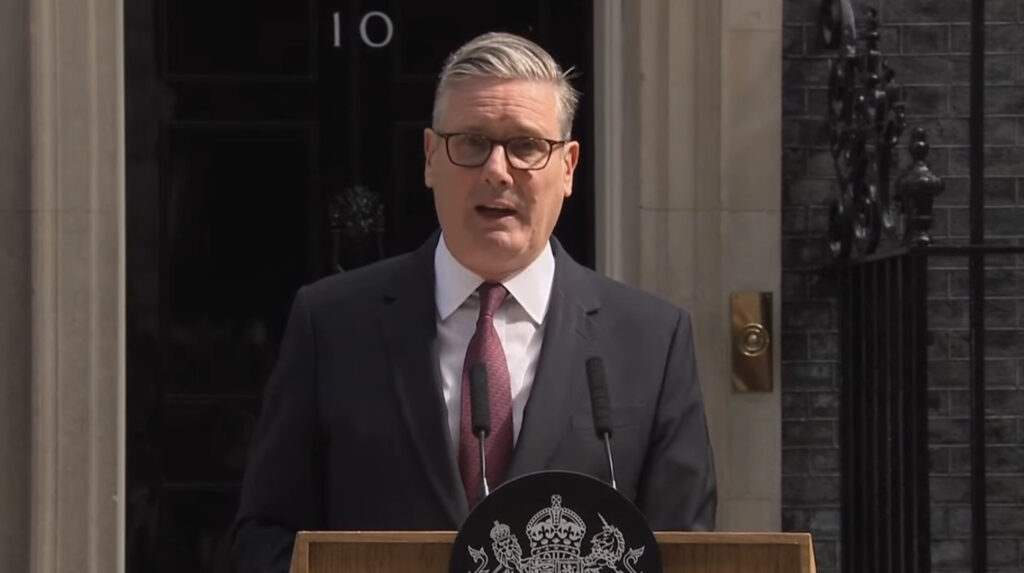
British Prime Minister Keir Starmer. Photo/ Courtesy.
By Robert Mutasi
British Prime Minister Keir Starmer has announced that he will step down as leader of the Labour Party and relinquish the country’s top political office, triggering a leadership contest that will determine both his successor and the United Kingdom’s next prime minister.
Speaking outside 10 Downing Street on Monday, a visibly emotional Starmer confirmed that he had informed King Charles III of his decision and had requested Labour’s governing body to begin the process of electing a new leader.
The outgoing prime minister said nominations for the leadership race would open on July 9 and close before Parliament’s summer recess on July 16, with the new Labour leader expected to be in place before lawmakers return in September.
Starmer said he would remain prime minister during the transition period to ensure continuity in government.
“I will do everything I can to ensure an orderly transition,” he said.
He also pledged his full support to whoever succeeds him, saying the next leader would inherit a country that was stronger and fairer than the one he took over when he entered office.
The announcement marks a dramatic turning point in British politics. Starmer became Labour leader in April 2020 and led the party to a decisive general election victory in July 2024, ending years of Conservative rule and securing his position as prime minister.
His departure means Britain is set to welcome its seventh prime minister since the country’s political upheavals began in 2016.
Accompanied by his wife, Lady Victoria Starmer, the Labour leader delivered a heartfelt farewell speech before supporters, colleagues and staff gathered outside Number 10.
At one point, his voice broke with emotion as he spoke about spending more time with his family after leaving office.
“When I leave the biggest job in the country, I shall spend more time on the most important job, being the best husband I can to my fantastic wife Vic, who has been a rock by my side through good times and bad, and being the best dad I can to my beautiful children, who are my pride and joy,” he said.
Starmer’s resignation follows weeks of growing pressure from within Labour ranks amid declining confidence in his leadership.
Calls for a succession plan intensified after the recent by-election victory of Andy Burnham in Makerfield. Burnham, who returned to Parliament with a commanding win against Reform UK, is widely viewed as one of the leading contenders to replace Starmer.
Political observers expect Burnham to formally take up his parliamentary seat this week as speculation over the leadership race intensifies.
Former Health Secretary Wes Streeting has also previously indicated that he would consider entering a future leadership contest.
Starmer’s position had weakened in recent months following disappointing election results for Labour across England, Wales and Scotland. His government also faced criticism after reversing course on several major policy proposals following pressure from within the party.
Questions about his leadership were further amplified by controversy surrounding the appointment of Peter Mandelson as the United Kingdom’s ambassador to the United States. The appointment came under scrutiny after new details emerged concerning Mandelson’s past association with convicted sex offender Jeffrey Epstein.
Despite the criticism, Starmer used his resignation speech to defend his record in office.
He pointed to achievements in employment rights, efforts to tackle child poverty and reforms within the Labour Party, which he said he inherited in a difficult state.
“The hard work of change was with a singular purpose, not power for power’s sake but to change Britain for the better, to build a fairer country with dignity and respect, where everyone is seen, everyone is valued, wealth and opportunity for all, not just the privileged few,” he said.
The announcement immediately triggered reactions from across the political spectrum.
Conservative Party leader Kemi Badenoch criticised Starmer’s tenure, describing him as a poor prime minister and blaming Labour’s policies for higher taxes and stalled welfare reforms.
Liberal Democrat leader Ed Davey said British voters were tired of frequent leadership changes and called for broader political reform.
Meanwhile, Reform UK leader Nigel Farage demanded a fresh general election, arguing that Labour should not simply install another leader without returning to voters.
Green Party co-leader Zack Polanski also weighed in, claiming Starmer had lost public confidence because of his failure to challenge entrenched political and economic interests.
As Labour prepares for a potentially fierce leadership contest, attention now turns to who will emerge as the party’s next leader and whether they can maintain Labour’s grip on power ahead of the next general election.
The coming weeks are expected to shape not only the future of Labour but also the direction of British politics for years to come.
About Author