High Blood Pressure: Why Hypertension Remains a Silent Killer in Kenya
Hypertension affects nearly a quarter of Kenyan adults and remains one of the leading causes of heart disease, stroke and kidney failure. Health experts warn that the condition often develops without symptoms, making regular screening and early treatment essential for preventing serious complications.
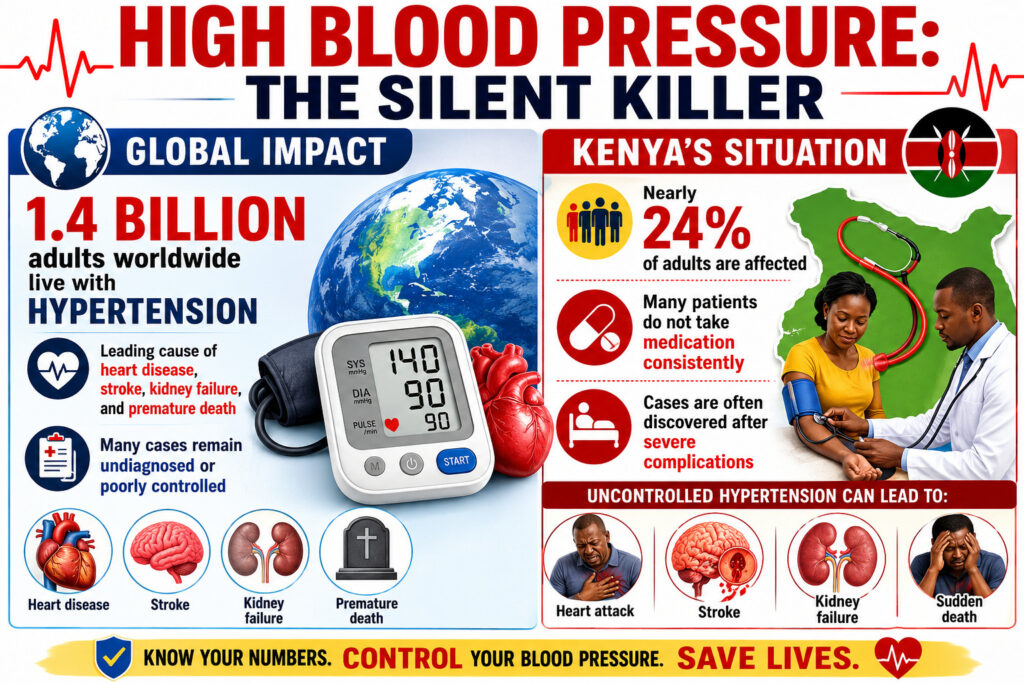
Health experts are urging Kenyans to undergo regular blood pressure screening and adopt healthier lifestyles to prevent hypertension, a condition often referred to as the silent killer.
By Mishael Akinyi.
High blood pressure, which is often called hypertension, keeps showing up as a big public health problem in Kenya, and also pretty much everywhere else in the world, it gets the nickname “the silent killer” because it can quietly build up without obvious symptoms, or any loud warning signs.
Health specialists point out that millions of people are living with it without realizing, and as time goes by their chance of serious complications climbs fast. Think heart disease stroke, and even kidney failure.
The World Health Organization says that around 1.4 billion adults worldwide are affected by hypertension. It stays among the main contributors to early deaths and non-communicable diseases globally.
More recent health updates show that many people are getting diagnosed late, or they have been detected but then struggle to manage it properly—like they can not keep it under control even after knowing.
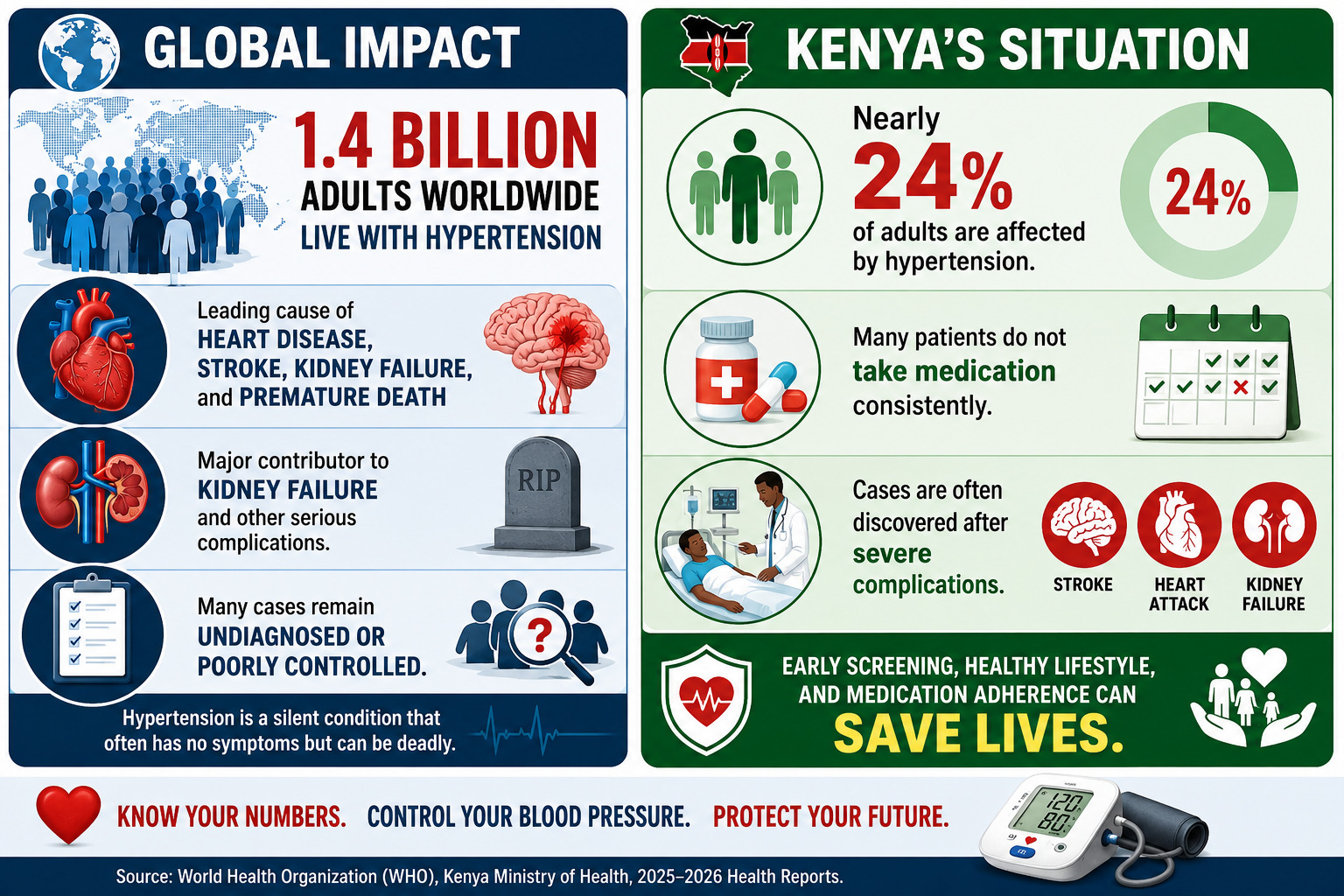
In Kenya, the Ministry of Health estimates that nearly 24 percent of adults are living with hypertension. Officials add that many patients do not follow the treatment plan the way it is supposed to, or they do not keep their blood pressure in a safe range, which then raises the odds of dangerous outcomes.
“Hypertension is a silent killer because many people live with it for years without any obvious symptoms. In many cases it is only discovered after serious complications like stroke, heart attack or kidney failure have already occurred,” the Ministry of Health said.
The World Health Organization describes hypertension as a condition where blood pressure stays consistently at or above 140/90 mmHg.
Common risk factors linked to it include too much salt, unhealthy eating habits, physical inactivity, obesity, heavy alcohol consumption, tobacco use and just getting older over time.
Health experts are urging Kenyans to use life adjustments that actually help, like cutting down salt, doing regular physical activity, staying at a healthy weight and going for routine medical check-ups.
“Regular screening matters a lot because early detection helps people manage the condition before it turns into irreversible harm,” health specialists advise.
Medical professionals also stress that routine blood pressure tests are still one of the most reliable methods for preventing severe outcomes tied to hypertension.
“Without regular screening, many people only find out they have high blood pressure after it has already caused damage to key organs such as the heart, brain or kidneys,” experts warn.
And as non-communicable diseases continue increasing, health authorities are asking the public to take preventive care seriously—then go for medical attention whenever something feels off.
About Author